Gaza's Yellow Line Creeps Forward as Israeli Forces Expand Zone of Control
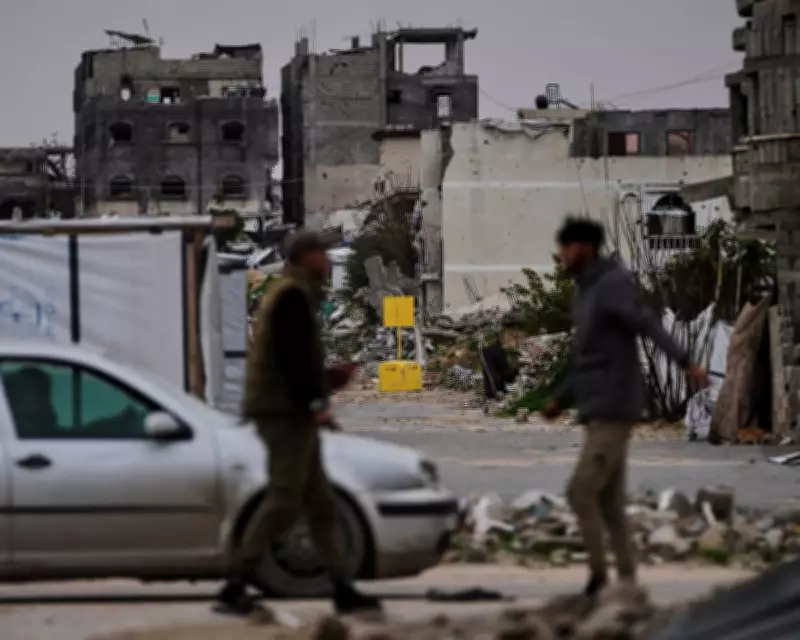
Residents in Gaza are waking to find that an agreed truce line, known as the "yellow line," has moved overnight, placing them suddenly within a free-fire zone as Israeli forces expand their territorial control. This development has intensified the state of limbo and danger for Palestinians across the strip, with the line creeping westwards over the six months since a US-brokered ceasefire in October.
Expansion Beyond Original Ceasefire Maps
The yellow line was initially intended as a temporary demarcation pending further Israeli withdrawals, but the truce has stalled amid disagreements over disarming Hamas and continued Israeli bombardment. According to research by Forensic Architecture, by December, Israel had taken 58% of Gaza territory, exceeding the 53% implied in original ceasefire maps. The line is marked in some areas by yellow concrete blocks, which were moved in December and January as the army advanced, particularly in urban zones like Khan Younis.
Faiq al-Sakani, 37, from al-Tuffah, reported that the line moved 100 metres in January, reaching al-Sanafour roundabout near Salah al-Din road. He noted that displaced people near this main route were targeted during these advances, with a recent uptick in demolitions, excavations, and new military constructions accompanied by constant heavy gunfire.

Military Fortifications and Berms
To solidify control, the Israeli military has extended earth berms—raised land areas—along the yellow line, providing tank gunners and snipers with oversight over ruined Palestinian neighbourhoods. Haaretz reports that over 10 miles of berms have been erected, mostly in northern Gaza, with new earthworks emerging in Gaza City and Khan Younis. Additionally, seven new concrete forts have been built along the line, bringing the total to 32 across the strip, reinforcing a sense of permanence around these security arrangements.
Unmarked Orange Line and Legal Controversies
As the yellow line advances, an unmarked "orange line" zone has also shifted, where any Palestinian person or vehicle is considered a legitimate threat. Aid organisations coordinate with Israeli liaison officers when crossing this zone, but its distance from the yellow line varies from 200 to 500 metres, depending on the deployed army unit. The UN reported in March that the orange line had moved forward, placing 10 UN facilities, including emergency shelters, on the wrong side.
Ahmad Ibsais, a Palestinian-American legal scholar, argues that these measures aim to drive out the Palestinian population, describing them as "a method of annexation deliberately designed to evade legal consequences." The Israel Defense Forces (IDF) defend their actions, stating they mark the line to reduce friction and protect soldiers from perceived threats. However, UN human rights commissioner Volker Türk has rejected this defence, calling the targeting of civilians a war crime.
Human Toll and Daily Fears
UN data indicates that of over 700 Palestinians killed during the ceasefire period, 269 were shot near the yellow line, including more than 100 children. Duaa Taima, 29, living in an abandoned UN clinic in Jabaliya refugee camp, described continuous random gunfire and the threat of advancing military vehicles. Similarly, Rafiq Mustafa, 60, from Beit Lahiya, noted that approaching the yellow line has become extremely dangerous, with drones monitoring movements and residents fearing for their safety.
Residents across Gaza report living under constant surveillance, with unpredictable security zones forcing them to stay indoors and avoid even basic activities like children playing in the streets. This creeping expansion underscores the ongoing humanitarian crisis and the fragile nature of ceasefire agreements in the region.