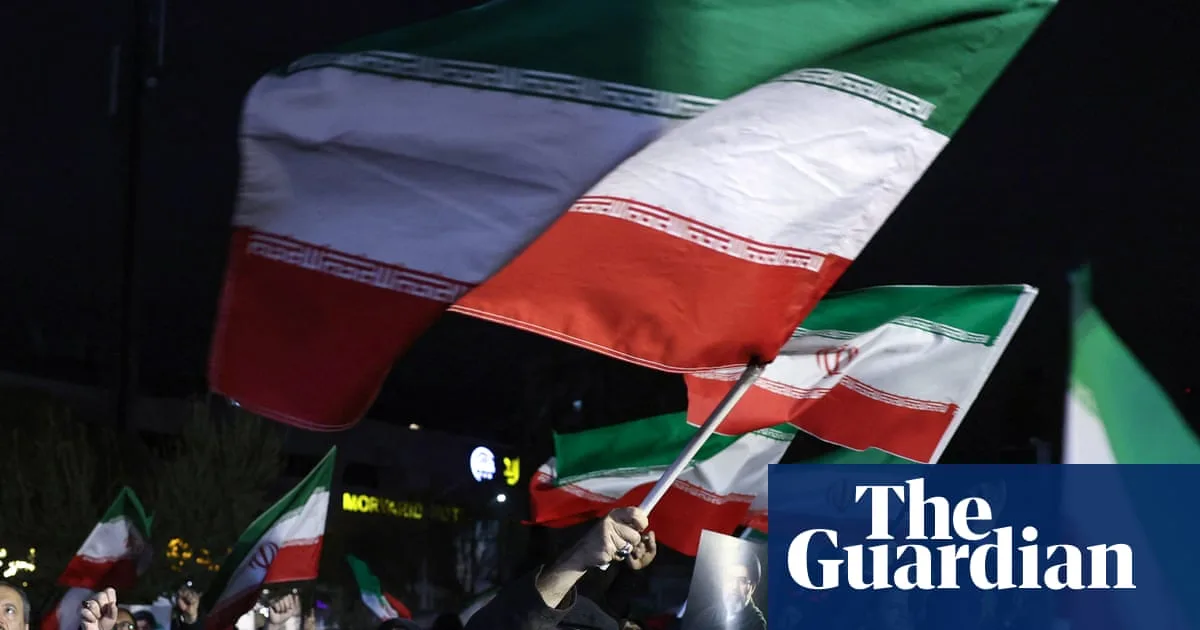
More than 850 public demonstrations of support for the Iranian government have been organised since the start of the war, according to research by the Armed Conflict Location and Event Data Project (Acled). The data also reveals at least 1,400 detentions in a continuing crackdown on unrest.
Experts say the high number of pro-regime gatherings and increasing detentions underline the resilience of the Islamic Republic, despite a month-long campaign of intensive airstrikes by the US and Israel. The war began with a surprise Israeli strike that killed Ayatollah Ali Khamenei, Iran's supreme leader, and many senior officials. Israel has since continued to assassinate senior commanders, most recently Alireza Tangsiri, the naval commander of the Revolutionary Guards.
Clionadh Raleigh, president of Acled, said: 'The US-Israeli decapitation strategy could not have been more successful and continues to be so … but the regime has not fragmented and there are no defections. The messaging within Iran is how they are winning, and that is constant and consistent.'

The research shows that US and Israeli strikes on Iran have remained steady at between 47 and 102 attacks daily, causing 'significant' civilian casualties. Tehran's retaliation has been largely ineffective, causing only 70 fatalities during the war, compared with 1,157 killed inside Iran, of whom 341 have been identified as civilians.
Acled counted 845 protests in total, of which 99.2% were pro-regime. The third week of the conflict saw the most sustained waves of mass public demonstrations in support of the regime, with nearly 300 from 13-19 March, focused on mourning for Khamenei and celebrating the succession of Mojtaba Khamenei. The single anti-regime protest on 25 March was met with lethal force, with 10 killed.
The researchers noted that the near total absence of anti-regime protests suggests either genuine nationalist consolidation under external attack, heavy self-censorship, or effective pre-emptive suppression through the arrest campaign. Details of repression are difficult to obtain, but recent incidents include the deaths of 10 people when Revolutionary Guards fired on anti-regime demonstrators in Tehran, and three killed in Chabahar when detainees protested over food ration cuts inside a prison.