Iran Unleashes Retaliatory Strikes on Israel and US Bases Following Deadly Airstrikes
Iran has launched a barrage of retaliatory missiles aimed at Israel and US military installations across the Middle East, denouncing recent joint airstrikes by the two nations as a blatant violation of the United Nations charter and an act of aggression that threatens diplomatic efforts.
Escalating Tensions and Diplomatic Fallout
The Iranian foreign ministry has urgently called upon both Muslim and non-aligned states to demand an immediate meeting of the UN Security Council. Officials emphasized that the US-Israeli strikes on Saturday marked the second such attack within a year, occurring while Iran was engaged in sensitive negotiations concerning its nuclear programme.
These crucial talks were designed to establish a verifiable process ensuring Iran could not acquire materials for a nuclear weapon. Just days before the escalation, Oman's Foreign Minister Badr Albusaidi, serving as chief mediator, expressed optimism that peace was within reach.

Targeted Attacks and Leadership Safety
Following the initial wave of Israeli attacks on Tehran early Saturday, Iranian officials were quick to assert that the nation's leadership, including Supreme Leader Ayatollah Ali Khamenei and President Masoud Pezeshkian, remained safe despite apparent assassination attempts. Satellite imagery revealed Khamenei's office complex in the capital appeared severely damaged, with several structures within the secured area showing heavy destruction.
While initial reports suggested the attacks had not successfully targeted military leadership on the scale of previous operations, the fate of Revolutionary Guards commander Mohammad Pakpour remained uncertain. Additionally, the residence of prominent reformist and former prime minister Mir Hossein Mousavi sustained significant damage.
Civilian Casualties and Humanitarian Impact
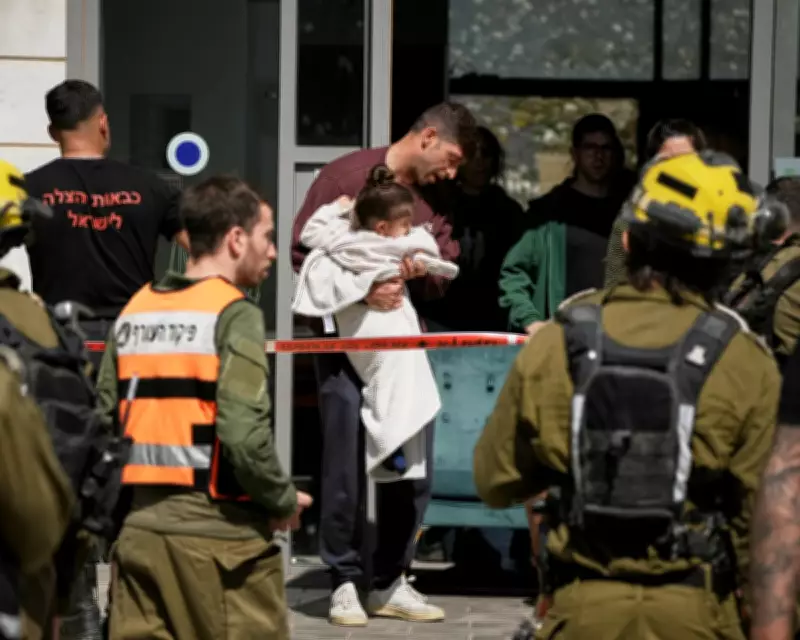
Tragically, at least forty schoolchildren were reported killed and forty-eight others injured when a girls' elementary school in Minab Hormozgan province was struck. Ambulances were witnessed transporting injured civilians to hospitals in central Tehran as the city faced continued assaults.
Photographic evidence indicated numerous Revolutionary Guards weapons warehouses and missile sites had been successfully hit during the counterstrikes. The Iranian foreign ministry issued a stern statement declaring the country "will not hesitate" in its response, posting on social media platform X that "the time has come to defend the homeland and confront the enemy's military assault."
Government Response and Public Instructions
The national security council advised citizens to relocate away from cities under attack, while the government information council sought to reassure the public about essential supplies. This evacuation directive appeared designed to prevent large protest gatherings, contrasting sharply with messages from Reza Pahlavi, son of the former shah, who indicated he would soon call for protesters to return to the streets.
In his address announcing the US attack, former President Donald Trump directly appealed to Iranian civilians, stating, "Bombs will fall everywhere. When we finish our work take control of your government."
Military Confirmation and Regional Reactions
The Iranian military confirmed deploying drones and firing short-range missiles at multiple strategic locations including al-Udeid air base in Qatar, Ali al-Salem base in Kuwait, al-Dhafra air base in the United Arab Emirates, Prince Sultan air base in Riyadh, the US base in Erbil (northern Iraq), Muwaffaq Salti air base in Jordan, and the US Fifth Fleet base in Bahrain.
Saudi Arabia and the UAE issued formal statements condemning Iran's violation of their sovereignty and warning of potential reprisals. Meanwhile, Iranian Foreign Minister Abbas Araghchi contacted counterparts from Saudi Arabia, UAE, Qatar, Kuwait, Bahrain, and Iraq, arguing that Gulf states bore responsibility for preventing the US from using their bases to launch illegal attacks against Iran.

Warnings and Future Implications
A senior spokesperson for the Iranian armed forces delivered a stark warning: "We will give a lesson to [Israel and the US] that they have never experienced in their history. Any base in the entire region that helps Israel will be a target of the sacred system of the Islamic republic and we will show no leniency."
Reza Nasri, a lawyer with close ties to the foreign ministry, directed a message to the American public: "This is not your war. But you will pay for it with your soldiers' lives, your national interests and your standing as Americans around the world. You will pay for it through the rise of anti-American sentiment globally, the tarnishing of your name, your flag and the hostile world your children will inherit."
As the conflict escalates, questions remain about whether Iranian security forces can suppress potential renewed street protests or if the attacks will instead forge renewed national unity amid existing economic challenges and state repression.