Supreme Leader's Assassination Creates Dangerous Power Vacuum in Iran
The joint American and Israeli military operation that eliminated Iran's Supreme Leader, Ayatollah Ali Khamenei, has thrown the Islamic Republic into unprecedented turmoil. Tehran retaliated with widespread drone and missile attacks, but the true crisis lies within Iran's borders, where the future remains perilously uncertain for its people.
Trump's Call to Action Meets Brutal Reality
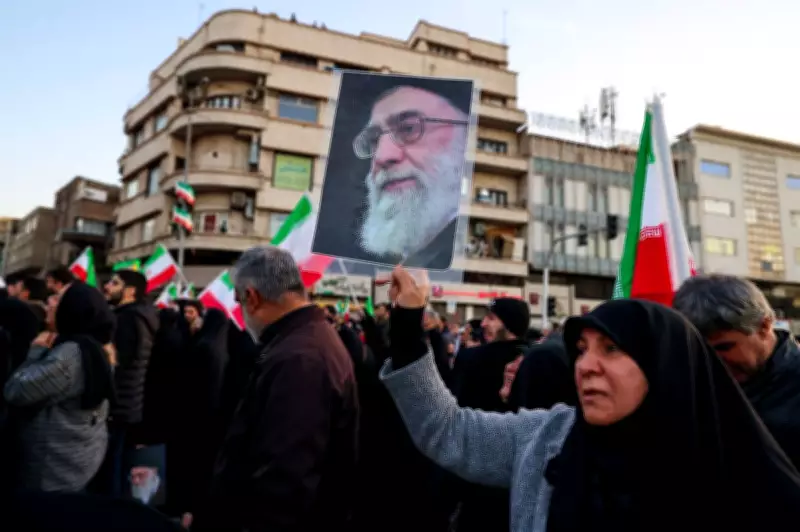
Former US President Donald Trump declared to Iranians that "the hour of your freedom is at hand," urging them to seize control of their government. However, this call comes after months of bloody crackdowns on protesters who have bravely demanded regime change since December. Tens of thousands faced mass arrests and violence despite promises of external support.
The fundamental problem remains: while airstrikes can eliminate leaders, they cannot orchestrate regime change. The process to select Khamenei's successor is already underway, with real power likely residing with the Supreme National Security Council and the Islamic Revolutionary Guard Corps (IRGC).

Internal Power Struggles and External Calculations
Historian Arash Azizi, author of "What Iranians Want," warns that Khamenei's death alone won't unravel the Islamic Republic unless sustained strikes eliminate more leadership figures. "There is indeed a danger that we end with total chaos inside Iran and even a civil war," Azizi explains. "That would be the nightmare scenario."
Israeli Prime Minister Benjamin Netanyahu echoed Trump's sentiments, urging Iranian citizens to "flood the streets and finish the job." Yet analysts express concern that Israel might prefer a weakened, destabilized Iran over a powerful regional competitor vying for American support.
The IRGC's Iron Grip and Protest Movement's Limitations
The IRGC represents the regime's cast-iron skeleton—heavily armed, deeply entrenched, and organized. Ousting such an institution requires far more than aerial bombardment. Meanwhile, the protest movement that gained momentum last year has fizzled out amid violent suppression, lacking clear leadership or unified vision.
Some demonstrators called for Reza Pahlavi's return—the son of the last Shah overthrown in 1979—but this monarchist solution lacks broad support. Even Iranian Kurdish separatists, who maintain organized armed opposition forces, express mixed feelings about the strikes.
"If the strikes don't end this regime, the next time people rise up it is going to be worse than ever before," warns Hana Yazdanpana of the Kurdistan Freedom Party. "Massacres will happen, especially in targeted killing of minorities."
Regional Proxies Remain Surprisingly Restrained
Iran's network of regional allies—including Hezbollah in Lebanon, Houthi rebels in Yemen, and Iraqi Popular Mobilization Forces—responded with uncharacteristic restraint to the attacks on their patron. The Houthi leadership issued only a vague statement about taking "action in various activities" in solidarity.
Former British ambassador to Yemen Edmund Fitton Brown notes this represents "the dog that didn't really bark" during previous crises. "I don't know how much they're willing to put their lives on the line if they see this as a lost cause for Iran," he observes.
A Dangerous Transition Period Looms
The fundamental challenge remains: external military pressure can weaken regimes but rarely creates stable alternatives. The transition period between regimes represents the most dangerous phase, potentially descending into chaos or civil war.
Whoever emerges victorious from Tehran's inevitable power struggles may need to recalibrate ideological positions for survival. Whether anti-American and anti-Israeli rhetoric dies with Khamenei—potentially opening diplomatic channels—remains uncertain. What is clear is that Iran stands at its most precarious crossroads in generations, with its people caught between external intervention and internal repression.