A Day in the World's Largest City: Life in Jakarta's Bustling Metropolis
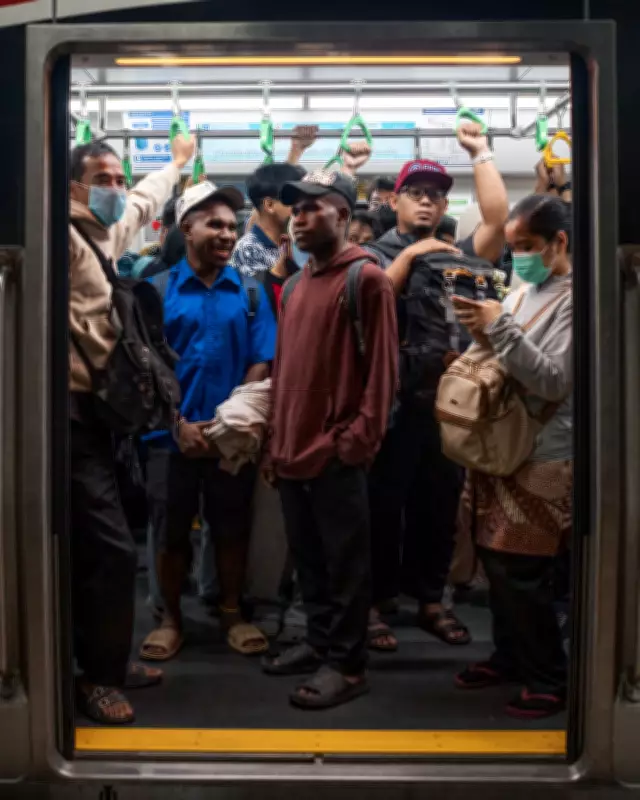
The United Nations has officially designated Jakarta as the world's largest city, home to a staggering 42 million inhabitants. This sprawling megacity, often nicknamed the 'big durian', presents a complex tapestry of daily life, where residents navigate challenges with humour and community spirit. We delve into a day in Jakarta, exploring the stories of its people, from the early morning prayers to the late-night street performances, capturing the essence of this vibrant urban centre.
4am: The Ojek Driver's Dawn
Few symbols are more iconic in Jakarta than the bright green jackets worn by the city's over one million ojek, or motorcycle taxi, drivers. Like millions in this Muslim-majority nation, Dicky Rio Suprapto, a 48-year-old ojek driver, begins his day at 4am with prayer. After dropping his teenagers at school, he embarks on a 12-hour shift through some of the world's most congested streets.
Suprapto, a trained engineer out of formal work since 2017, turned to ojek driving post-Covid-19, utilising ride-sharing apps. In a city infamous for its deadlock traffic, he relies on decades of knowledge of Jakarta's labyrinthine alleyways rather than digital maps. "I have already memorised it," he says, "so it's a shorter time." He transports people, food, and packages through narrow capillaries, viewing his role as an obligation to help others reach their destinations swiftly.

Despite the grind, pollution, and relentless macet (traffic), humour persists. After surviving brain surgery, he jokes about a tube in his head, likening himself to 'Robocop'. He stops work at sunset due to light sensitivity, earning Rp400,000–500,000 daily (US$23-$29), which he deems sufficient for his family's simple lifestyle. "Enjoy while you have it," he reflects.
10am: The Tech Worker's Perspective
Dhewa Radya, a 22-year-old tech worker, represents a different facet of Jakarta: young, highly educated, and integrated into the burgeoning tech sector. He works in artificial intelligence and structures his life to avoid the worst congestion, walking to work from his kost, or shared living space, in West Jakarta, which costs Rp1.6 million ($92) monthly.
The pollution, however, is unavoidable; after a year, a check-up revealed lung spots typical of passive smokers. While Jakarta is not his favourite city, he acknowledges it as the best place for career opportunities. "In Jakarta, you can find everything... so it's really good for an early career," he notes. Originally from Central Java, Radya is among millions migrating yearly for better prospects, with youth unemployment around 17%.
Long-term, he aspires to work abroad before returning to Indonesia to make a positive impact. He expresses concern over growing inequality and, like many young Indonesians, applies a humorous lens to politics. "Even though the government screws us every day, the thing that we can only do is just to enjoy it," he says, "no matter how hard it is, just go with it."
1pm: The Riverside Eatery's Ingenuity
By lunchtime, the city shifts again. Neneng Muslimah, 45, runs a family warteg, or traditional eatery, by a river in Kuningan's central business district, feeding office workers through a clever pulley system. This setup bridges a gap left by a removed bridge, highlighting Jakarta's evolution and stark divides between crowded kampungs (villages) and modern towers.
Starting at 5am, the rush peaks at noon, serving about 100 portions of traditional meals like fried chicken with sambal, rice, and vegetables for as little as Rp10,000 ($0.60). Orders are shouted across the river or sent via WhatsApp, with payments made via smartphone scanners attached to baskets. "We prefer WhatsApp. If you shout, sometimes the order is wrong – our voices get carried away by the wind," she explains, adding that mistakes often lead to laughter.
Despite rising costs and flood risks from subsidence and heavy rains, Neneng finds beauty in Jakarta. "People from outside only know Jakarta for the traffic jams, the dirt, and the pollution... But once you've been here and felt it, then it becomes comfortable. The people are so friendly, so supportive. It is beautiful."

6pm: The Street Performer's Resilience
As the day cools, traffic resurges. At a busy intersection near Monas, the national monument, Faqih Ibnu Ali, 28, paints himself silver and steps into the road as one of Jakarta's 'manusia silver' or 'silvermen', part of the city's vast informal workforce. On good days, he earns about Rp200,000 ($11), working morning and afternoon rushes until midnight.
Behind the metallic paint lies a harder story: a former fisher who lost everything in a ship fire, now living under a bridge with his family and having lost a son in a traffic accident. "It feels sad," he admits, "but that's life on the street, brother." He feels judged and left behind, weaving between luxury SUVs and motorbikes in a city of growing inequality.
Phones are hidden when he approaches, reflecting societal fears. "People are afraid they'll be taken. It's like I am not considered," he says. Yet, he perseveres for his children. "We shouldn't lose hope, don't give up, it's for the sake of the family." This resilience underscores the spirit of Jakarta's millions, navigating the world's largest city with determination and community bonds.