Kosovo's Catholics and Muslims Unite in Rare Ash Wednesday and Ramadan Overlap
Kosovo's rich religious diversity has been prominently displayed this week, as the Balkan nation's Christian and Muslim communities simultaneously embarked on traditional periods of fasting and spiritual reflection. This year marks an uncommon occasion where the start of the Muslim holy month of Ramadan and the Catholic observance of Ash Wednesday have coincided, promoting a spirit of tolerance and mutual understanding between different faiths.
A Young Nation Embracing Religious Harmony
Kosovo, a young nation with a population of approximately 2 million people, is predominantly Muslim, with over 90% of its citizens adhering to Islam. The country is still recovering from the devastating war of 1998-99, during which it fought for independence from Serbia, a nation that is predominantly Orthodox Christian. That conflict resulted in the tragic loss of 13,000 lives. In the aftermath, Kosovo's ethnic Albanian authorities have made concerted efforts to promote religious and ethnic tolerance as part of the healing process.
Observances in Pristina and Prizren
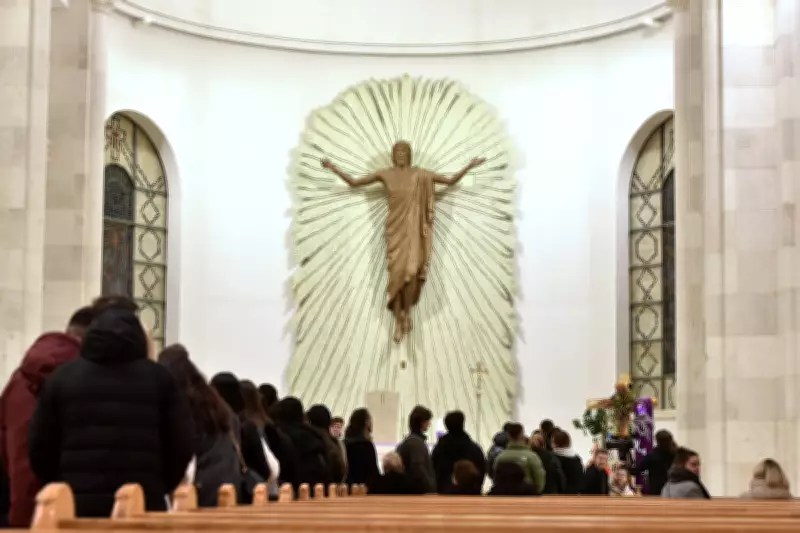
On Wednesday evening, Catholics in Kosovo's capital, Pristina, gathered at the iconic Mother Teresa Cathedral. Worshippers participated in the Ash Wednesday ritual, having their foreheads marked with ashes as a symbol of repentance for sins and humility. For Catholics, this day signifies the commencement of the 40-day Lent period, a time dedicated to penance, solemn reflection, and fasting leading up to Easter.

Simultaneously, the Islamic holy month of Ramadan began in Kosovo on Thursday. Ramadan represents a period of increased worship, prayer, and fasting before the celebration of Eid al-Fitr. The convergence of these two significant religious events has been met with enthusiasm and reflection by community members.
"It is a special opportunity that this year we have Lent and Ramadan together," remarked Dode Palukaj, a Catholic resident. "What unites us is fasting, shared prayer, solidarity, and love."
Historical and Cultural Context
Ash Wednesday and the start of Ramadan coincide approximately every 30 years, due to differences in the Gregorian and Islamic lunar calendars. Ramadan is the ninth month of the Islamic calendar, and its commencement traditionally depends on the sighting of the crescent moon, which can vary among countries.
Don Agim Qerkini, a Catholic priest in Pristina, praised the longstanding tradition of religious tolerance in Kosovo over centuries. He noted that divisions persisting in Kosovo often stem from national rather than religious differences. "Faith is what enriched us for many centuries," he stated. "It is a reality we are proud of, precisely because our history, as we all know, has faced many different hardships."
Serbia continues to refuse recognition of Kosovo's 2008 declaration of independence, and this ongoing dispute remains a source of tension in the volatile Balkans region.
Reviving Traditions in Prizren
In the historically multi-ethnic town of Prizren, located in southern Kosovo, Varis Hashimi, a Muslim resident, has dedicated himself to preserving a tradition dating back to the centuries of Ottoman rule. Throughout the entire month of Ramadan, Hashimi ascends daily to a medieval fortress above Prizren to light fireworks, signaling the end of the daily fast. This practice, which locals say was historically performed with a cannon, now sees Hashimi rushing uphill at sunset to illuminate the sky.
"The idea is to revive an old tradition," Hashimi explained. Down the hill, Prizren's mosques resonate with the call to Iftar, marking the end of the daily fast as the town's restaurants welcome hungry visitors for the evening meal.
This interfaith moment in Kosovo highlights how shared practices of fasting and reflection can bridge religious divides, fostering a sense of community and solidarity in a nation still navigating its complex historical and political landscape.