Majority of Americans Express Fear Over Potential Iran Conflict
A new exclusive poll conducted by JL Partners for the Daily Mail has revealed that more than half of Americans are scared by the prospect of a war with Iran. The survey comes as the Trump administration appears to be inching closer to potential military action against the Islamic Republic, yet public support for such measures remains strikingly low.
Limited Backing for Use of Force
According to the poll, only 32 percent of Americans back the use of force against Iran, with 37 percent outright opposed. This leaves a significant portion of the population uncertain or neutral on the issue. The data shows a sharp partisan divide: among Trump voters, 58 percent support a military strike, while only 15 percent of Democratic voters believe it would be a good idea.
Perceived Motives Behind Potential Attacks
What truly ignites the polling data are the reasons Americans believe are driving possible attacks. While 43 percent think the primary driver would be destroying Iran's nuclear facilities, a remarkable 35 percent believe President Trump's eye is on Iran's vast oil reserves. This motive ranks above stabilizing the Middle East, which 28 percent cite, and saving the Iranian people, supported by 22 percent.

Deep Public Unease and Fear
The findings lay bare a deeply uneasy nation, with 54 percent saying the prospect of war frightens them. This fear rises to 62 percent among women. In a chilling verdict on the human cost, more Americans believe the United States itself would be left worse off by an attack than better off. Specifically, 33 percent answered that they believed the US would be worse off, with 25 percent believing the country would be better off and 24 percent saying a strike would make no difference.
Global and Iranian Perspectives
When asked about the impact on Iran, voters were closely divided: 28 percent said Iran would be worse off if the US got militarily involved, while 26 percent answered better off. More people also believed the world would be worse off after a US strike, with 30 percent expressing this view, compared to 23 percent who said the world would be in a better place. For all three of these questions, Trump's voters were an exception, with a near majority believing a US strike would leave the US, Iran, and the world in a better spot.
Limited Appetite for Full-Scale Military Deployment
The poll found little appetite for a full-scale military deployment. Just 35 percent believed the Army should be involved, with similar numbers for the Navy (29 percent) and the Marines (33 percent). The Air Force received slightly higher approval, with 40 percent saying they should be involved. Additionally, only one in four parents with military-aged sons would support the President going to war in Iran, with 54 percent opposed. Trump-voting parents were split, with 40 percent saying they supported going to war and 38 percent opposed.
Political Repercussions and Public Sentiment
If the President were to seek regime change, 61 percent of voters said they'd like to see Iran hold democratic elections, while 18 percent said they'd like to see the US run Iran. Only 4 percent said they'd want to see Reza Pahlavi, the exiled crown prince of Iran, lead the country uncontested. The President would likely pay a political price too, with more voters saying a war in Iran would worsen their view of Trump than improve it. The poll found that 34 percent said they'd think less of Trump, while just 17 percent would like the President more. Among Trump voters, 40 percent said it would make no difference, while 35 percent said it would improve their view, with just 12 percent saying they'd like him less.
Trump's Statements and Military Buildup
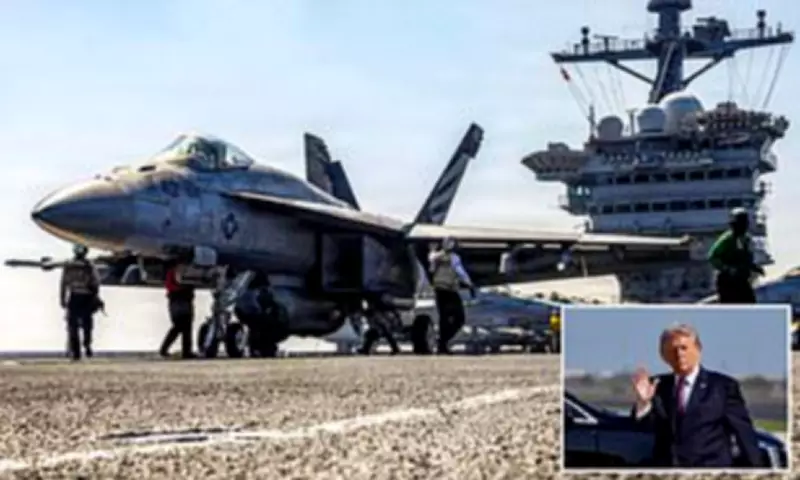
Speaking to reporters outside the White House, President Trump said, 'I'd love not to use' the military to attack Iran, 'but sometimes you have to,' while also stating 'we haven't made a final decision' on whether to strike. This comes as the US Navy has released photos showing the US military buildup in the Arabian Sea, underscoring the heightened tensions and potential for escalation.