Milan's Strategic Bet on Mega-Events for Global Recognition
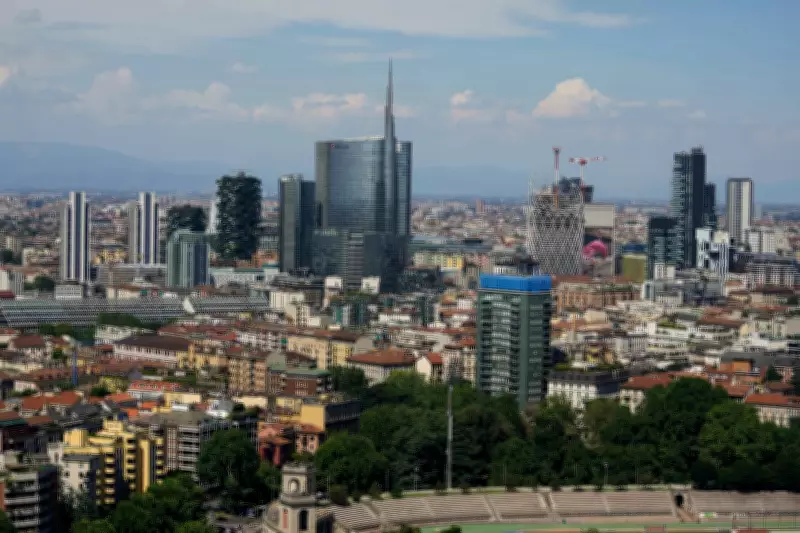
Milan has strategically positioned itself as an Olympic city, adding this prestigious title to its established reputation as Italy's capital of fashion and finance. This development represents the culmination of two decades of sustained growth that has fundamentally transformed the city's skyline while simultaneously attracting substantial investment, increasing tourism, and enriching cultural life.
The Dual Legacy of the Milan Cortina Winter Games
The legacy of the 2026 Milan Cortina Winter Olympics manifests in both tangible infrastructure improvements and intangible enhancements to Milan's international image. This marks the second major event to leave an enduring imprint on the city, following the transformative impact of the Expo 2015 world's fair, which previously brought new investment streams, international tourists, and global talent to the region.
"Milan is progressively developing a distinctive brand capable of attracting an international audience," explained Dino Ruta, who leads a Bocconi University study examining the Olympics' economic impact for the International Olympic Committee, with findings anticipated later this year.

Measurable Infrastructure and Economic Impacts
The physical legacy of the Milan Cortina Olympics was intentionally designed to be relatively modest. The Games were strategically distributed across seven venues spanning cities, valleys, and mountains hundreds of kilometers apart to maximize existing facilities and minimize new construction requirements.
Milan gains the brand new Santgiulia arena, which hosted Olympic hockey events and will now serve multiple purposes for concerts, exhibitions, and sporting competitions. Meanwhile, the athletes' Olympic Village will be converted into housing for 1,700 students, addressing a critical need in a city with ten universities and an ongoing affordable housing crisis.
Preliminary data collected for the Bocconi study indicates approximately 4 billion euros ($4.7 billion) were invested in the Games. This substantial sum covered new and upgraded sports facilities, transportation improvements including roads, metro accessibility enhancements, railway upgrades, and ski lift installations, along with energy costs and administrative expenses.
Specifically in Milan, hosting 90 indoor ice events and the opening ceremony at San Siro stadium cost 735 million euros ($867 million). According to a February 16 report by the Assolombarda business association, visitors were projected to spend around 1 billion euros ($1.2 billion) during the Olympic period.
The Olympics were forecast to boost Milan's 2026 economic growth by 0.6 percentage points to reach 1.7%, accelerating industrial output across the entire Lombardy region, as reported by the association during the Games.
Two Decades of Urban Transformation
Milan's evolution from a provincial city primarily recognized as an industrial and business center began in earnest during the early 2000s. This period initiated a wave of redevelopment projects that dramatically reshaped the urban landscape.
The CityLife district emerged around three iconic skyscrapers designed by renowned architects Zaha Hadid, Daniel Libeskind, and Arata Isozaki. Simultaneously, the Porta Nuova development introduced the flagship UniCredit Tower, completed in 2012 and standing as the city's tallest building at 218 meters (715 feet).
Much of this construction boom coincided with Expo 2015, which attracted 22 million visitors over six months and successfully repositioned Milan as an international tourist destination. Tourism has grown consistently since, increasing 6.5% to reach 9.6 million visitors in 2025, up from just over 9 million the previous year.
"Expo was not an isolated success," emphasized Fiorenza Lipparini, director general of Milano & Partners – YesMilano, the city's official promotion agency. "It marked a systematic shift in how Milan presents itself globally."

Beyond tourism, Expo 2015 triggered a 3 billion-euro investment to transform the former exhibition site into MIND, a cutting-edge science and technology hub. Since then, the number of five-star hotels has tripled, while Milan has added two new subway lines and opened approximately a dozen new museums, including Fondazione Prada, MUDEC, and Pirelli HangarBicocca.
Criticism Amid Rapid Development
Despite these achievements, Milan's rapid ascent has generated significant criticism. Housing activists argue that major events and luxury developments catering to wealthy tenants have substantially driven up real estate prices, leaving many workers effectively priced out of the housing market.
Advocates call for policies to fill vacant public housing units, create more subsidized housing options, and incentivize private owners to make available approximately 80,000 currently uninhabited residences.
"The development model brought by major events like Expo 2015 and subsequently the Olympics prioritizes private interests that don't trickle down to benefit ordinary citizens," stated Angelo Junior Avelli of the Social Forum dell'Abitare housing advocacy group.
Post-Olympic Urban Regeneration
The Olympic Village has accelerated redevelopment in the southern Porta Romana railyard, adjacent to one of Milan's largest former industrial sites. This ambitious 20-hectare (49-acre) project will deliver 100,000 square meters (over 1 million square feet) of housing, with approximately half designated as social housing under city regulations adopted in 2019.
The development will also include parks and public spaces covering roughly half the site. Following the Games, the athletes' village will be converted into student housing, addressing educational accommodation needs.
The area sits opposite Fondazione Prada, one of the initial projects that catalyzed regeneration of the former industrial Symbiosis district, now emerging as a fashion hub with headquarters for Bottega Veneta and Moncler. A new headquarters for Diesel-owner OTB is currently under construction nearby.
"Major events can open global interest toward the city," observed Luca Mangia, general manager of COIMA, the developer behind both Porta Romana and Porta Nuova projects. "We witnessed this phenomenon with Expo 2015 and anticipate similar outcomes from the Olympic Games."
"In this instance, the Games enabled us to accelerate construction of the Olympic Village and advance more rapidly with area regeneration," Mangia added.
Sporting Legacy and Community Impact
Italy's record-breaking 30 Olympic medals is expected to reignite national interest in winter sports, similar to how Jannik Sinner's tennis success has promoted that sport nationally. Additionally, Olympic organizers are collaborating with companies to encourage employees to engage in 30 minutes of daily physical activity, continuing a initiative from the 2024 Paris Olympics.
"Athletes inspire everyone to become everyday athletes," noted Ruta, with economic impacts translating to increased ski ticket sales, equipment purchases, and hotel bookings.
Already, Milan's convention operator, which hosted two temporary skating venues during the Games, has announced plans to maintain a temporary ice rink while studying a project to add a new permanent facility.
"The Olympics have reignited enthusiasm and passion for ice sports—an energy we intend to preserve," declared Giovanni Bozzetti, president of the Foundation Fiera Milano, in a social media statement.