Navajo Nation's Cultural Resilience: Preserving Heritage Amid Modern Challenges
The Navajo Nation, home to the Diné people, spans 27,000 square miles across New Mexico, Arizona, and Utah, making it the largest Native American reservation in the United States. This community exemplifies remarkable resilience as it navigates a rapidly changing cultural landscape and confronts various threats to its ancestral heritage.
Historical Trauma and Language Decline
The legacy of colonialism has left deep scars on Navajo culture, particularly through the forced assimilation of children into boarding schools. Virginia Brown, a 69-year-old elder, recalls the trauma of her childhood: "I was forced into a boarding school when I was six years old. They cut off all our long hair and washed our mouths out with soap if they caught us speaking Navajo." This suppression created a generational gap in traditional knowledge, which the Navajo are now striving to reclaim.
Despite Navajo being one of the most widely spoken Native American languages, UNESCO now classifies it as "vulnerable" due to a 3.4% decrease in fluent speakers in recent years. In response, schools like Holbrook High School have implemented language and culture programs to help sustain this vital aspect of their identity.

Youth Perspectives and Modern Influences
Many younger Navajo express concern about cultural erosion. At a skate park in Tuba City, 14-year-old Victoria observes: "I think our culture is decreasing. Kids my age are being consumed by social media and aren't interested in our own culture. It makes me pretty angry." The influx of large-scale media exposure has shifted focus away from traditional values, with some youth opting for dominant cultural narratives over ancestral ways.
However, not all young people are disengaged. Efforts to maintain heritage are evident in practices like traditional weaving and dance performances, which serve as bridges between generations.
Traditional Practices and Modern Adaptations
Drake Mace, a 40-year-old shepherd and weaver from Whitehorse, New Mexico, embodies the dedication to preserving craftsmanship. He herds Navajo-Churro sheep and weaves intricate rugs on a vertical loom, a skill taught by his grandmother. "I feel I am closest to my grandmother when I am with my sheep," he says, highlighting the emotional connection to his heritage.
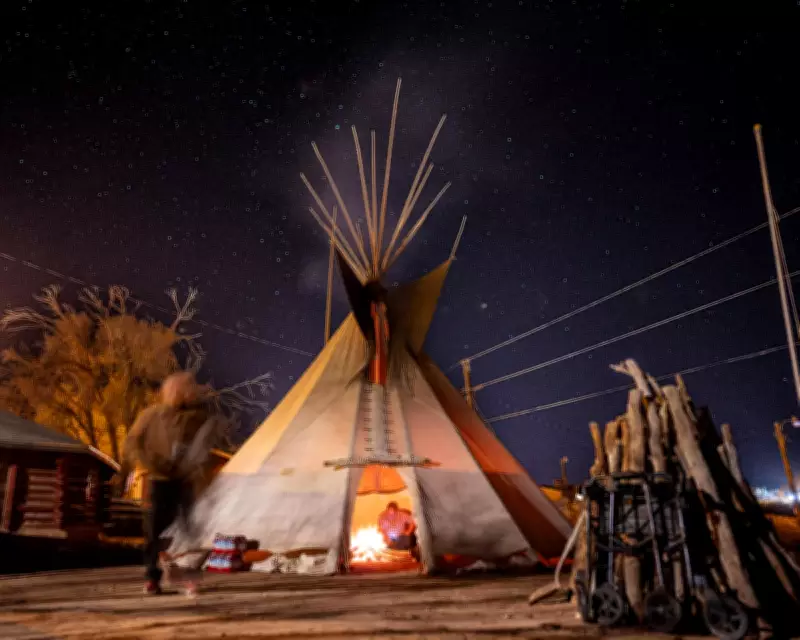
Sacred ceremonies remain integral to Navajo life, aimed at restoring universal balance, known as Hózhó. Jonus Yazzie, 70, prepares tipis for peyote ceremonies in Window Rock, the Navajo Nation capital. These all-night spiritual rituals use the hallucinogenic peyote cactus as a holy sacrament to communicate with the Great Spirit, offering healing during difficult times.
Infrastructure Challenges and Community Resilience
Approximately 30-40% of Navajo households lack running water, forcing residents like Emmet to haul water from public wells. This hardship has led some families to relocate to towns, abandoning ancestral homesteads. Yet, others, such as Tara Seaton, 48, from Dilkon, Arizona, blend traditional living with modern technology. She works remotely for Texas State University using Starlink internet, stating: "I'm more of a traditional Navajo. I ride my horses and try to stay true to my culture. But being able to work from home allows me the best of both worlds."
Cultural Revival and Diaspora Efforts
Dance troupes like the Diné Tah Navajo group perform at schools and public events to keep cultural practices alive. Shawn Rice, the troupe leader, explains: "When we dance, we are healing the wounds of what my father's generation went through. What we have left we are going to cherish." This healing aspect reconnects younger generations with their roots.
Ira, Virginia Brown's son, is passionate about spreading indigenous ways. He notes that his children are fluent in Navajo and has helped revive the wool and textile market by integrating hemp for environmental benefits. "We are on the frontlines of mentorship programmes," he says, highlighting initiatives like the indigenous farmers' cooperative to reopen trade routes.

The Navajo culture is no longer confined to the reservation; practices such as weaving, silversmithing, and language use are preserved by those in "border towns," creating a diaspora that sustains heritage in new environments. As Ira concludes: "Our elders used to say they were surviving. But now we get to say we are thriving."