Omid Djalili Declares: Iranians Will Fight to the Very End Against Oppressive Regime
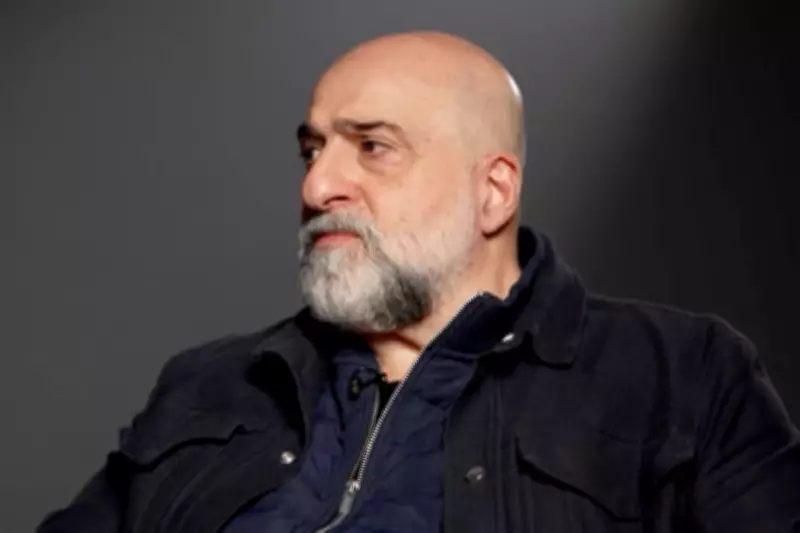
On a late January afternoon, British-Iranian comedian and actor Omid Djalili arrived for an interview wearing a distinctive navy blue military-style jacket. "I'm dressed like Zelensky," the 60-year-old entertainer remarked with the playful humour familiar from his stand-up routines and roles in major films like "The Mummy" and "Gladiator." Yet, since widespread protests erupted in Iran and were met with a deadly state crackdown, Djalili has dedicated himself to a far more serious fight: the struggle for Iran's freedom.
Amplifying the Voiceless Amid Internet Blackouts
Djalili has transformed his social media platforms into channels for the "voiceless" Iranians trapped under an internet blackout imposed by the Islamic Republic. The protests, initially sparked by soaring prices and a collapsing currency, rapidly evolved into nationwide demonstrations demanding an end to the current government.
Human rights organisations, including Amnesty International, report that the internet shutdown was a deliberate attempt by the Iranian leadership to conceal massacres. The blackout began around 8pm on January 8, after which regime forces allegedly began firing lethal rounds at protesters. The true death toll remains obscured, but medical reports gathered by The Sunday Times suggest at least 16,500 to 18,000 fatalities to date.

Djalili cites research from the New York-based International Centre for Human Rights (ICHR), which estimates a staggering over 43,000 killed and 350,000 injured since protests began on December 28, with approximately 10,000 people blinded. The ICHR states its figures are based on investigations, field research, and verified multimedia evidence from within Iran.
A Lifelong Connection to a Troubled Homeland
Born in London to Iranian parents, Djalili has visited Iran only twice—once at age three and finally in 1971 when he was six. Despite this, since achieving fame in the mid-1990s with his breakthrough show "Short, Fat, Kebab Shop Owner's Son," he has remained one of the UK's most prominent British-Iranian voices, consistently highlighting human rights abuses.
"It seems that every time there's an uprising, the people are not just crushed, they're clobbered and killed," he observes. He was profoundly affected by the 2022 "Women, Life, Freedom" movement, triggered by the police custody death of 22-year-old Mahsa Amini, a Kurdish woman arrested for an alleged hijab violation. Djalili's own Baha'i faith has faced systematic persecution in Iran since the 1979 Revolution, with followers often barred from employment and education, and properties confiscated.
International Stance and the Question of Intervention
As tensions flare between Washington and Tehran, with former President Donald Trump deploying a "massive Armada" of US Navy ships near Iran, Djalili believes the time for negotiating with the current regime is over. "It's really important that the armada is there right now," he says, but argues intervention should not be solely an American or Israeli responsibility—it requires a global stand.
He welcomed the European Union's designation of Iran's Islamic Revolutionary Guard Corps (IRGC) as a terrorist organisation following the crackdown, a move he believes will isolate the regime further. While acknowledging legitimate fears that foreign intervention may not guarantee democracy—citing past campaigns in Iraq, Syria, and Afghanistan—Djalili insists, "Iranian people are not going to say no if anyone's going to stand up for them."
A Potential Path Forward and Personal Toll
Djalili does not see himself as a political figure but as a conduit for the Iranian people's voices. From the content he has witnessed, he believes exiled Crown Prince Reza Pahlavi, son of the former Shah, commands significant support among protesters. Should foreign intervention topple the regime, Djalili would welcome Pahlavi as a "custodian of transition" toward a new democratic government, describing him as "a very reasonable, educated person with his heart in the right place."

Advocating for Iranians from Britain carries a heavy personal cost. On the day of his interview, Djalili had driven four hours from a stand-up tour performance in Bridport, Dorset. Before each show, he now addresses audiences about the crisis in Iran, noting that many are unaware or struggle to comprehend the brutality. "People don't believe that security forces in another country can just go up to unarmed civilians and shoot them in the head," he explains.
Some Iranian friends have urged him to reduce his workload, and he admits balancing comedy with activism is challenging. Finding humour amidst tragedy can feel contradictory. However, he draws strength from the resilience of protesters in Iran who risk everything. "When people are together and we're joyful and we're laughing and we're discussing these things, that is exactly what the regime does not want us to do," Djalili states. With defiant resolve, he adds, "And you know what? I’m going to do it."