Pakistan Protests Turn Deadly Following US-Israeli Assassination of Iran's Leader
At least twenty-two people have been killed and approximately two hundred injured during violent protests across Pakistan, triggered by the US-Israeli assassination of Iran's supreme leader Ali Khamenei. The 86-year-old religious and political leader died in coordinated strikes on Saturday, drawing condemnation worldwide and sparking demonstrations particularly among Shia Muslim communities who revered him as a significant religious authority.
Karachi and Gilgit-Baltistan Become Flashpoints
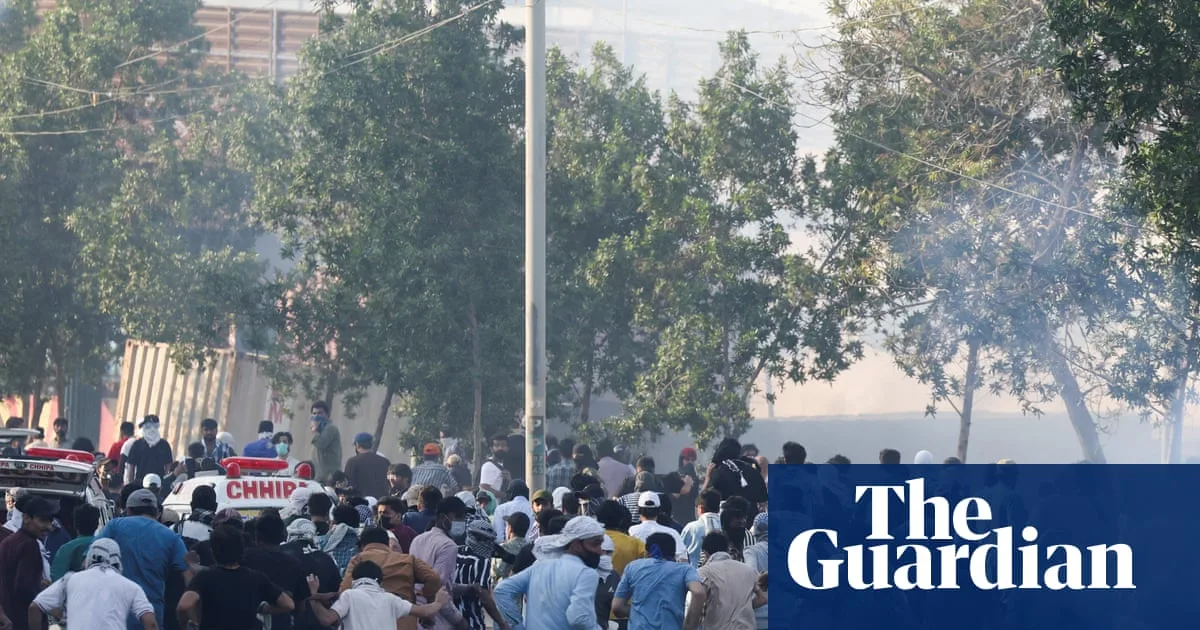
In Karachi, Pakistan's southern port city, at least ten protesters were killed when hundreds attempted to storm the American consulate. Nearly 120 people sustained injuries during these confrontations, with demonstrators also attacking United Nations facilities and government offices. Meanwhile, in the northern region of Gilgit-Baltistan, another twelve people died and about eighty were wounded during clashes with police as thousands took to the streets to protest the US-Israeli military action against Iran.
Pakistani president Asif Ali Zardari expressed profound sorrow over what he termed the martyrdom of Khamenei, conveying official condolences to Tehran and stating that Pakistan stands with the Iranian nation in their moment of grief. Interior minister Mohsin Naqvi appealed for calm, urging citizens not to take the law into their own hands and to demonstrate peacefully instead.
Regional Protests Spread Across Middle East and South Asia
The assassination has ignited protests beyond Pakistan's borders. In Iraq, security forces fired teargas at protesters attempting to enter Baghdad's fortified Green Zone, home to the American embassy. Demonstrators waving flags of pro-Iranian armed groups reportedly hurled stones at security forces as tensions escalated in the capital, with additional protests breaking out across southern Iraq.
In South Asia, Shia mourners expressed grief and anger through widespread demonstrations. In India's Himalayan territory of Kashmir, home to an estimated 1.5 million Shias, tens of thousands of protesters beat their chests in mourning while chanting Death to America and Death to Israel. Similar scenes unfolded in Delhi, where Shia mourners shouted slogans against the Donald Trump administration as they commemorated Khamenei's death.
Iran Vows Retaliation as Thailand Prepares Mass Evacuation
Iranian officials have vowed to launch their most intense offensive operation against Israeli and American targets to avenge the supreme leader's death. Parliament speaker Mohammad Bagher Qalibaf declared that the United States and Israel had crossed Iran's red line and must pay the price, promising devastating retaliatory blows. Iranian forces promptly launched missiles and drones at Israel and American military facilities across Bahrain, Iraq, Jordan, Kuwait, Qatar, Saudi Arabia, and the United Arab Emirates.
Israel reported intercepting many of the dozens of missiles fired at its territory, though medical emergency service Magen David Adom confirmed one woman died after being wounded in a strike near Tel Aviv. This marked the second US-Israeli attack on Iran within eight months, with Iranian state television reporting that alongside Khamenei, the strikes killed several political and military leaders as well as over one hundred schoolgirls.
As the conflict escalates, Thailand announced preparations to evacuate approximately 110,000 of its citizens from the Middle East using military or charter flights. Prime minister Anutin Charnvirakul stated that the Thai government would do everything necessary to bring citizens back safely, acknowledging potential challenges with airspace closures that have already disrupted flights across the Gulf region and stranded thousands of passengers.
The war's expansion has created significant regional instability, with the United States embassy in Pakistan monitoring reports of ongoing demonstrations at consulates in Karachi and Lahore, as well as calls for protests at the embassy in Islamabad and consulate in Peshawar. Iranian president Masoud Pezeshkian condemned the assassination as a great crime, while Khamenei's death marks the end of a 37-year reign during which he held final authority over Iran's political and military apparatus following Ayatollah Ruhollah Khomeini's death in 1989.