Patriarch Filaret, Champion of Ukrainian Orthodox Independence, Dies at 97
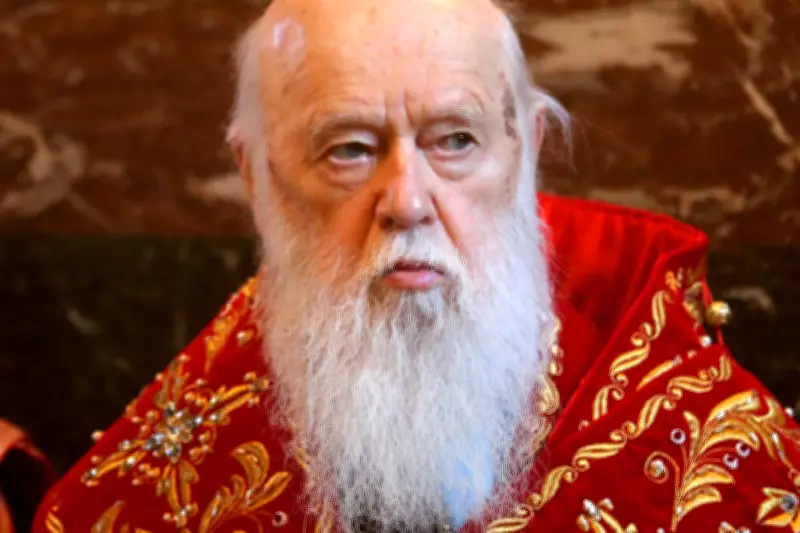
Patriarch Filaret of Kyiv, whose lifelong campaign to establish an independent Ukrainian Orthodox Church free from Moscow's religious authority became a defining schism that anticipated the Russia-Ukraine war, has died at the age of 97. The Orthodox Church of Ukraine confirmed his passing on Friday, attributing it to the "exacerbation of chronic diseases."
A Legacy of Religious and National Struggle
Born Mykhailo Denysenko in 1929 in the village of Blahodatne, Ukraine's Donetsk region, Filaret's journey into the ministry was shaped by his father's death during World War II, compelling him to pursue faith under the officially atheistic Soviet regime. He became a monk, adopting the name Filaret, and rose through the ranks of the Russian Orthodox Church, serving as its leading official in Ukraine from the 1960s onward.
Following the dissolution of the Soviet Union and Ukraine's independence in 1991, Filaret spearheaded a parallel independence movement within the church. He led the declaration of a separate Ukrainian Orthodox Church – Kyiv Patriarchate, a move vehemently rejected by the Russian Orthodox Church, which defrocked and excommunicated him. Filaret consistently refused to acknowledge these sanctions, cementing his role as a defiant figure in the religious landscape.

Recognition and Reconciliation
In 2018, Filaret's breakaway church merged with another group, forming the Orthodox Church of Ukraine, with Filaret receiving the honorary title of patriarch. The following year, the OCU gained official recognition from Ecumenical Patriarch Bartholomew of Constantinople, who also invalidated Filaret's excommunication by Moscow. This recognition added a profound religious dimension to the escalating political rift between Ukraine and Russia, with Russian leaders alleging external interference.
Despite initial clashes over leadership and structure with Metropolitan Epiphanius of Kyiv, who now leads the OCU, the two moved toward reconciliation. In late 2025, they met and prayed together for Ukraine's victory in its war with Russia, symbolizing a unified front amid national crisis.
Tributes and Controversies
Tributes poured in from religious and political leaders alike. Metropolitan Epiphanius praised Filaret's efforts to preserve church life during Soviet oppression and his struggle for autocephaly, stating, "The person and numerous good deeds of the late Patriarch Filaret rightfully occupy a special place in the modern history of both the local Ukrainian Orthodox Church and Ukraine as a whole." Ukrainian President Volodymyr Zelenskyy expressed condolences, calling Filaret's death "a great loss for Ukrainians" and highlighting his role as "one of the most steadfast defenders of the Ukrainian church, independence and statehood."
Filaret's legacy was not without controversy. In 2020, he attributed the COVID-19 pandemic to divine punishment for human sin, specifically citing same-sex marriage. Throughout his life, he received numerous honors, including Ukraine's highest award, the title of Hero of Ukraine, in January 2019.
The OCU's obituary recognizes him as His Holiness Patriarch Filaret of Kyiv and All Rus’-Ukraine, underscoring his enduring impact on Ukraine's religious and national identity. His death marks the end of an era for a church leader whose fight for independence mirrored and influenced the broader geopolitical struggles of his homeland.