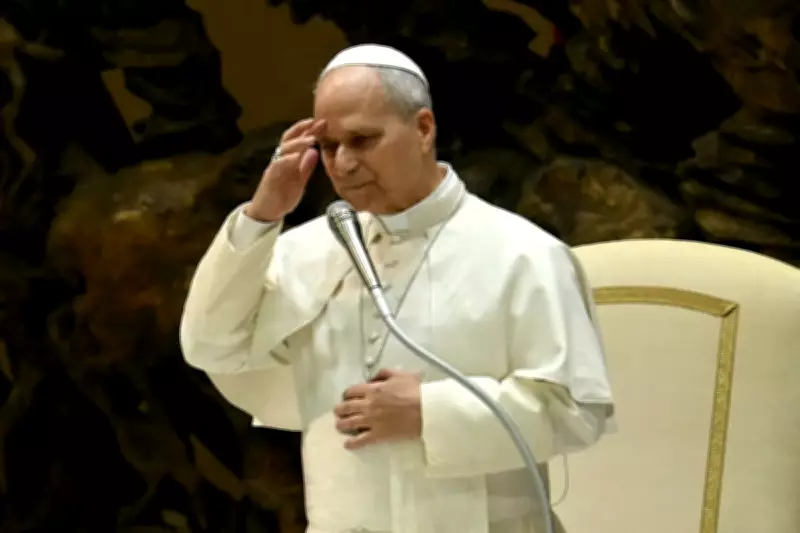
Pope Leo XIV Issues Urgent Appeal for Peace Following Iran Strikes
Pope Leo XIV, the American-born pontiff, has publicly condemned the recent military strikes by the United States and Israel on Iran, expressing deep concern and calling for an immediate cessation of hostilities. In his first official statement from the Holy See regarding the attacks, delivered during his traditional noontime blessing at St. Peter's Square, the Pope urged all parties to engage in "reasonable, sincere, and responsible dialogue" to avert a catastrophic escalation.
Pope's Plea to Halt 'Spiral of Violence'
From his studio window overlooking the iconic square, Pope Leo XIV stated he is "profoundly concerned" about the situation in the Middle East, particularly in Iran during this tumultuous period. He emphasized that stability and peace cannot be achieved through mutual threats or the use of weapons, which he said only sow "destruction, pain, and death." The pontiff made a heartfelt appeal to assume moral responsibility and "stop the spiral of violence before it becomes an irreparable abyss."
He stressed the critical need for diplomacy to regain its proper role, advocating for dialogue based on justice to uphold the well-being of peoples yearning for peaceful existence. The Pope also referenced troubling news of clashes between Pakistan and Afghanistan, issuing an urgent call for a return to dialogue in those conflicts as well. He concluded by encouraging global prayers for peace, describing it as a divine gift essential for healing wounds between nations.

Regional Fallout and International Reactions
The Pope's appeal comes amid escalating regional tensions following the joint US-Israel strikes, which raised fears of a broader conflict. A massive explosion rocked Tehran on Sunday morning as Israel announced it was targeting the "heart" of the city, while Iran continued its retaliation campaign with missile barrages intercepted by Qatar, Kuwait, and Bahrain. Additionally, Oman reported an oil tanker attack in the Strait of Hormuz and a drone strike on its Duqm port, a key logistical hub for the US Navy.
The death of Iran's Supreme Leader Ayatollah Ali Khamenei, who had no designated successor, has thrown Iran's future into uncertainty, exacerbating concerns of further instability. US President Donald Trump called on the Iranian public to "seize control of your destiny" by rising against the theocratic regime, while world leaders globally urged a resumption of talks.
Global Diplomatic Responses and Condemnations
The European Union's top diplomats held an emergency meeting to discuss the Iran situation, with EU foreign policy chief Kaja Kallas condemning Iran's "indiscriminate attacks" and warning they risk dragging the region into a wider war. At a UN Security Council session, Secretary-General António Guterres warned that all efforts must be made to prevent escalation, highlighting the grave consequences for civilians and regional stability.
Many nations, cautious about strained relations with the US, refrained from direct commentary on the joint strikes but condemned Tehran's retaliation. Anwar Gargash, an adviser to the UAE president, urged Iran to "return to your senses" and deal with neighbors responsibly. The 22-nation Arab League labeled Iranian attacks a "blatant violation of sovereignty," while Saudi Arabia privately urged Iran not to target the kingdom after reporting apparent attacks in Riyadh and eastern regions.
Russian leader Vladimir Putin blasted Khamenei's killing as a "cynical violation of all norms of human morality and international law." China's Foreign Minister Wang Yi, in a call with his Russian counterpart, criticized the actions as unacceptable violations of international law and basic norms, warning that attacking a sovereign state without UN Security Council authorization undermines post-World War II peace foundations.
As the conflict intensifies, with three US service members reported dead and hundreds killed in Iran, Pope Leo XIV's call for dialogue resonates amid growing international pressure for de-escalation and a return to diplomatic negotiations to prevent a wider regional catastrophe.