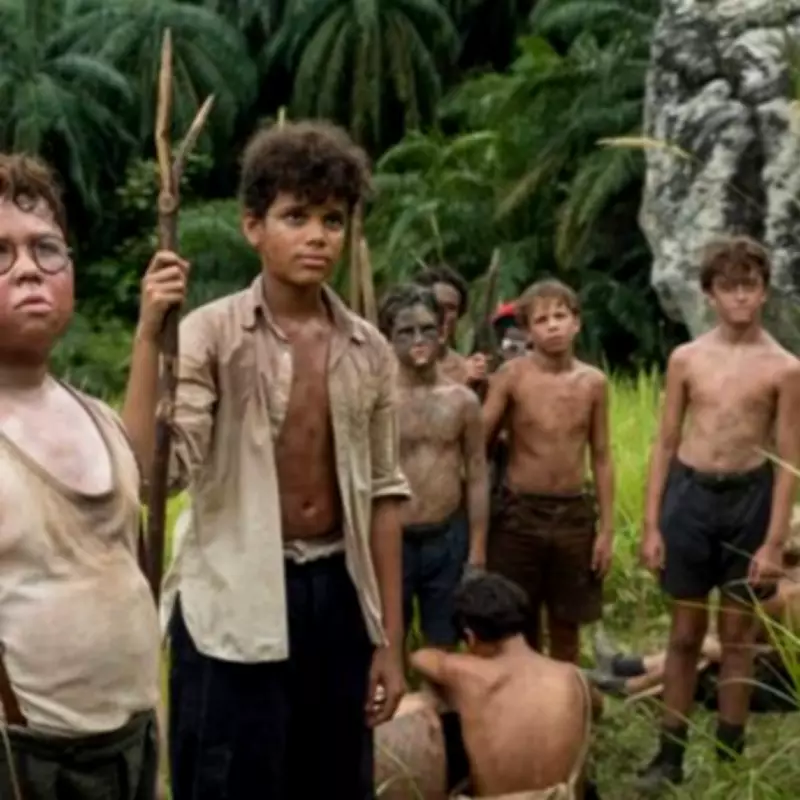
The True Story Behind Lord of the Flies: Six Boys' 15-Month Ordeal
While William Golding's 1954 novel Lord of the Flies depicts a harrowing descent into savagery among stranded boys, a remarkable real-life incident from 1965 offers a strikingly different narrative. Six teenagers from Tonga, who bunked school for a thrill-seeking adventure, ended up stranded on a deserted island for fifteen months, yet their story is one of unity and survival rather than chaos.
A Fateful Decision and a Perilous Journey
In June 1965, six Tongan boys, aged 13 to 18, decided to skip school and embark on a daring voyage. They took a small fishing boat with the intention of reaching Fiji, nearly 500 miles away. However, their plans were swiftly derailed when a violent storm destroyed their vessel, leaving them adrift for eight days without food or fresh water.
Sione 'Ulufonua Fataua, the eldest at 18, recounted the terrifying ordeal to People magazine, stating, "The boat was all torn up — no rudder, no sails — and for eight days we drifted with no food, no rain to drink. We prayed, knowing only God could save us." Their prayers were answered when they spotted 'Ata, an island abandoned since 1863, offering a glimmer of hope.

Survival Through Cooperation and Ingenuity
Contrary to the fictional tale of Lord of the Flies, where boys turn violently on each other, these six teenagers demonstrated extraordinary resilience and teamwork. They established a makeshift society based on mutual care, sharing responsibilities to ensure their collective survival.
Their daily routine involved fishing, harvesting coconuts and wild taro plants, and constructing shelters from banana leaves. They even managed to create fire by rubbing sticks together and maintained their physical fitness by using tree stumps as weights for training sessions.
When one boy suffered a broken leg from a fall, the others ingeniously crafted splints from sticks and leaves, setting the bone themselves. Remarkably, the injury healed completely over time. Sione explained their approach to conflicts: "If anybody had something they didn't like, they talked about it and we say 'Sorry' and then pray and everything's okay. If someone got really mad, you disappear for a few hours, look at the ocean and clear it out of your mind."
Rescue and a Miraculous Return
After fifteen months of isolation, the boys were finally rescued on September 11, 1966, by Australian fisherman Peter Warner. He noticed smoke from the island, which he knew was uninhabited, and investigated. Upon radioing in the boys' names, he was met with disbelief: "You found them! These boys have been given up for dead. Funerals have been held. If it's them, this is a miracle!"
The emotional reunion saw the boys boarding Warner's vessel, overwhelmed with joy. One recalled, "I could not explain how we feel, all of us, we are full of tears, happy, and like we walk through to heaven." Their return to Haʻafeva was celebrated by hundreds, and Warner received gratitude from King Taufa'ahau Tupou IV of Tonga, who offered assistance in return for the heroic rescue.
Legacy and Reflections
Years later, Sione attributed their survival to Tongan culture, telling CBS, "I think the culture where we come from. We are close. Really close family. We share everything. We poor, but we love each other." This real-life story highlights the power of community and cooperation in the face of adversity, offering a poignant counterpoint to Golding's darker exploration of human nature.
As the BBC prepares to air a new adaptation of Lord of the Flies, this incredible tale serves as a reminder that reality can sometimes inspire hope rather than despair. The six boys' ordeal underscores the resilience of the human spirit when faced with unimaginable challenges.