Ancient Roman Era Footprints Discovered on Scottish Beach Before Stormy Seas Erase Them
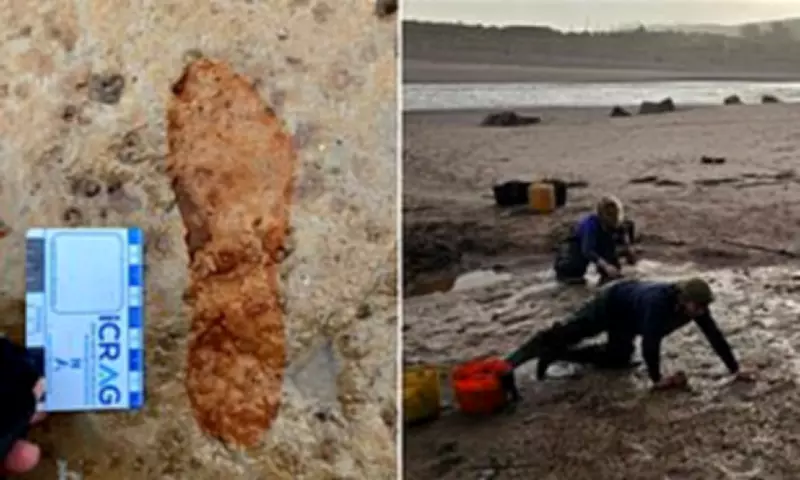
In a remarkable archaeological discovery, footprints dating back to the height of the Roman Empire have been uncovered on a Scottish beach. The 2,000-year-old find was made at Lunan Bay in Angus by two dog walkers, who spotted the distinct markings after shifting sands temporarily exposed them due to recent storms.
Race Against Time to Preserve History
Eagle-eyed Ivor Campbell and Jenny Sneddon discovered the prints while walking their dogs Ziggy and Juno last month. Recognizing the significance of their find, they immediately contacted archaeological experts. What followed was a dramatic race against time as archaeologists worked in windspeeds exceeding 55mph to capture data before the ancient footprints—identified as both human and animal—were reclaimed by the relentless sea.
Professor Kate Britton of the University of Aberdeen, who led the excavation team, described the site as "a really rare site" that "offered a unique snapshot in time." She recounted the challenging conditions: "We had to work fast in the worst conditions I've ever encountered for archaeological fieldwork. The sea was coming in fast, with every high tide ripping away parts of the site, while wind-blown sand was simultaneously damaging it. Within 48 hours the entire site was destroyed."

Significance of the Discovery
This discovery is believed to be a first for Scotland, though similar markings have been identified at a small number of sites in England. Radiocarbon dating has confirmed the footprints were made approximately 2,000 years ago. Ongoing analysis has identified tracks from roe deer, red deer, and other animals, alongside humans who walked barefoot on what is now semi-fossilised clay.
Professor Gordon Noble, who was part of the research team, emphasized the historical context: "It's very exciting to think these prints were made by people around the time of the Roman invasions of Scotland and in the centuries leading up to the emergence of the Picts."
Documentation Efforts and Emotional Impact
Despite the site's destruction, the archaeological team managed to record and map the area comprehensively. They captured detailed 3D models and physical casts of the prints, preserving digital and physical records for future study. Brian Mann, regional archaeologist for Aberdeenshire, Angus, Moray and Aberdeen City councils, reflected on the emotional experience: "Standing there, watching the site being destroyed as the waves crashed over it, was heartbreaking in some ways, but at least we got the chance to record most of it."
The temporary exposure of these ancient footprints serves as a poignant reminder of how natural forces both reveal and conceal historical evidence. While the physical site is now lost to the sea, the data collected will provide valuable insights into life in Scotland during the Roman period and beyond.