Aid Agencies Fear Southern Lebanon Is Becoming the New Gaza
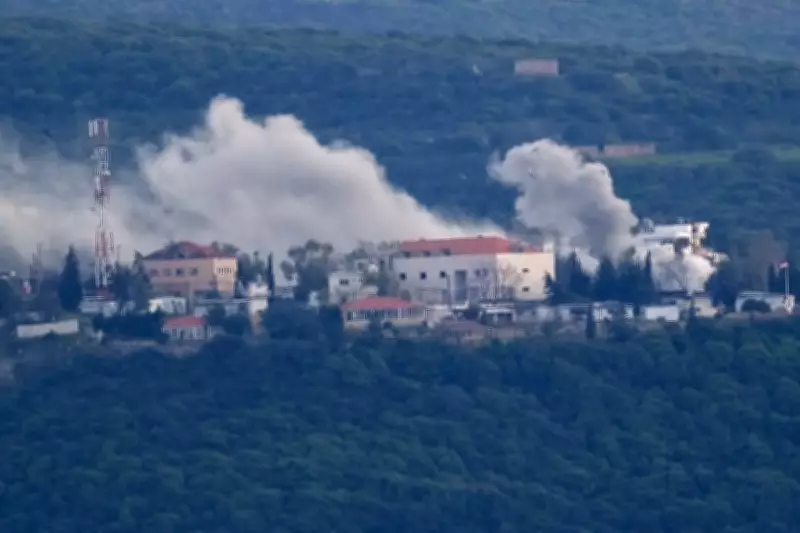
More than a month after war erupted in the Middle East following US-Israeli strikes on Iran, the Israeli Defense Forces (IDF) are pressing ahead with an offensive on their northern border that threatens to drive hundreds of thousands from their homes. Aid agencies have issued stark warnings that attacks on Lebanon mirror tactics used in Gaza and may constitute war crimes.
Escalating Humanitarian Catastrophe
The humanitarian situation in Lebanon is deteriorating rapidly, with nearly 1,100 people killed—including more than 120 children—since the Iran-backed militant group Hezbollah dragged the country into the regional conflict on 2 March. Over one million individuals have been displaced, according to aid organisations, as intense bombing campaigns and ground invasions unfold.
Israeli Prime Minister Benjamin Netanyahu confirmed plans to expand a "buffer zone" into Lebanon, stating in a video on 29 March that this move aims to thwart invasion threats and push back Hezbollah, which has fired almost 5,000 rockets, missiles, and drones at Israel since the conflict began. This strategy echoes Israel's occupation of southern Lebanon from 1982 to 2000 during the country's civil war.

Targeting of Civilian Infrastructure
Defence Minister Israel Katz ordered the military to "accelerate the destruction of Lebanese homes in border villages" to protect Israeli settlements, citing models from Gaza operations. The Israeli military insists Hezbollah uses civilian infrastructure for its activities, but experts highlight alarming similarities with Gaza tactics, including attacks on medical facilities and health workers.
Lebanon's health ministry reports more than 40 health workers killed by Israel, including two young paramedics—22-year-old Ali Jaber and 16-year-old Joud Sleiman—who died on a rescue mission in Nabatieh while wearing uniforms and using a marked ambulance. The World Health Organisation documents 64 attacks on healthcare facilities in the past month, with five hospitals now out of service.
International Concerns and Legal Implications
Ramzi Kaiss, Lebanon researcher at Human Rights Watch, describes the high number of medical worker deaths as "highly concerning," noting patterns similar to those in Gaza, the West Bank, and previous escalations in Lebanon. He emphasises that deliberate attacks on civilians and medical personnel are prohibited under international law and could amount to war crimes.
UN experts have warned that Israel's targeted destruction of Gaza's healthcare system might constitute 'medicide'—the deliberate eradication of medical care—and similar risks exist in Lebanon. Kaiss criticises the international community for failing to pressure Israel effectively, with the US and Germany as top military suppliers and the UK providing crucial components for weapons systems like F-35 fighter jets.
Displacement and Isolation in Southern Lebanon
Evacuation orders have displaced 15 percent of Lebanon's population, primarily in the south and Beirut's suburbs, leaving one in five people homeless and many sleeping in tents on Beirut's streets. Israel's bombing of bridges across the Litani River has isolated southern areas, cutting off cities and villages from essential services.
Despite dangers, hospitals and medical workers continue operating in the south, with facilities becoming sanctuaries for vulnerable populations. Vincent Lovergine, Health Coordinator for the International Committee of the Red Cross in Lebanon, notes that in towns like Bint Jbeil and Tebnine, the ICRC is the only organisation supporting local hospitals by delivering oxygen, fuel, food, water, and medical supplies.
On-the-Ground Realities and Future Risks
Emmanuel Massart, Emergency Medical Coordinator for Médecins Sans Frontières in southern Lebanon, draws direct parallels to Gaza, citing broad evacuation orders, constant displacement, and systematic bombing of densely populated areas. Medical workers in Marjeyoun now live on-site with their displaced families to ensure uninterrupted patient care, though this increases their vulnerability to attacks.

The Independent witnessed destruction in Burj Qalaouiyah, where an Israeli strike on a healthcare centre killed at least 12 medical staff. Aid agencies urge scaled-up international support to prevent a major humanitarian catastrophe, stressing that Lebanon's government must grant jurisdiction to the International Criminal Court to investigate potential war crimes.