Exclusive: Inside Ukrainian Frontline Village Where Displaced Families Have Lost Everything
We visited snow-covered Hnylytsia Persha, located only about 20 miles from active fighting in Kharkiv oblast, and spoke with families who have been forced to flee three times since Russia's full-scale invasion began. This exclusive report reveals the harsh realities facing civilians living in the shadow of the frontline.
A Mother's Wish for Her Children Amid Constant Displacement
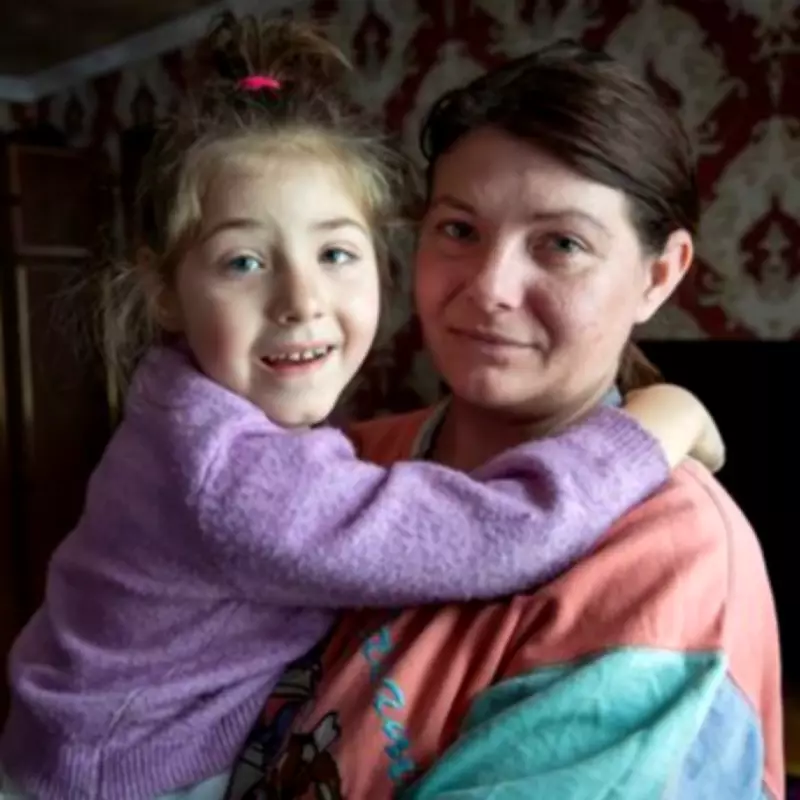
Just miles from the frontline, Ukrainian mother Vika Ivanova expresses her longing to return home, but war keeps chasing her family further away. The 34-year-old and her partner Gena, 45, sought refuge with their four children in this northeastern Kharkiv oblast village five months ago, marking their fourth relocation in as many years.
"Life has changed a lot," Vika explains. "We lost everything we had. We had just bought new furniture and were forced to take only the most necessary things and leave. In the next place, we started to settle down, bought a cow, piglets, chickens. And again, we were forced to leave everything behind and go."

The family's journey began in Milove, close to the Russian border and now occupied by Kremlin forces. They fled at the invasion's start to nearby Zarubynka before moving to Kurhanne and eventually Hnylytsia Persha. Some of the children even fled their first village on horseback, highlighting the desperate circumstances of their escape.
Village Life Under Occupation and Liberation
Hnylytsia Persha itself endured occupation for half a year from the outset of Russia's full-scale invasion. Village head Mykola Vitsota, 55, recalled the settlement's liberation with emotion: "For me it was a huge surprise when Ukrainian soldiers came with flags. It was a big celebration here."
Before the February 2022 invasion, approximately 350 people called this village home, including about 40 children. Today, only 166 residents remain, with just 10 children among them. The youngest is the couple's five-year-old daughter Milana, who struggles to walk or talk much but whose broad smile speaks volumes.
Children's Trauma and Current Conditions
The children have endured significant trauma. Vika describes their previous living situation: "Before, we didn't sleep at night. Now the children have started to calm down. When the children came here to live, they calmed down. [Before]... the children didn't go outside for a while... They didn't go out because FPV drones used to fly over our house and shoot nearby."
She reveals that five rockets fell near their house in Zarubynka, with one landing nearby but failing to explode. Despite still living close to the frontline, life in Hnylytsia Persha is calmer by comparison. The family endures frequent power cuts, including during our visit, with electricity outages lasting up to four days the previous week.
Healthcare Challenges and Humanitarian Response
We traveled to the village with Christian Aid's partner, the Alliance for Public Health (APH), a Ukrainian NGO that sends mobile health teams into rural frontline areas. Their convoy of five specialized white vans provides vital medical support, including doctor consultations and X-ray capabilities.
Dr. Svitlana Denisova, who treated patients in one of APH's vans, emphasized the critical need: "Someone has to treat people; our people need help. It doesn't matter how close the frontline is, they are still our people and someone has to help them. They need help, they are defenceless, they have nowhere to run... as you can see, the roads are difficult to travel on, so it's practically impossible for them to get to a doctor."
Remarkable Stories of Resilience and Heroism
Among those receiving medical care was 76-year-old widow Anna Ivanivna, who has lived in the village for 28 years. After a blood test and heart check-up, the optimistic grandmother declared: "I am very optimistic and I am praying every time, I'm asking God to bring victory to my country." When asked for her message to Russia's leader, Anna responded bluntly: "I wish Putin would die."

The village's feldsher (local health professional), Tamara Mykolaivna, shared remarkable stories of heroism during the occupation, which ended in September 2022. The 62-year-old, whose son, grandson, and son-in-law all serve in the Ukrainian military, described sneaking out after Kremlin-imposed curfews to help people.
"I worked both during and after curfew. If someone is sick, how can you just leave them? You have to help," she explained. "Psychologically, it was difficult. There was a shortage of medicine and people were stressed. Some had high blood pressure, some had heart problems. Everyone was very nervous. We tried to help as much as we could."
During the occupation's first week, Tamara treated five to ten people daily at the clinic, with three to four additional patients at night. Despite her courageous actions, she modestly stated: "I don't feel like a hero, I love my job, my mission is to help people."
Hopes for the Future
Back at Vika's modest home, where ducks roam the yard and the eldest children attend school online, the mother-of-four shares her aspirations: "I want the war to end and for the children to live normal lives. I want them to study and have everything they need... to see the world, and not to see war."
Her family's story represents countless Ukrainian civilians caught in the conflict's crosshairs, repeatedly displaced yet determined to rebuild their lives despite unimaginable losses and ongoing danger.