UN Humanitarian Chief Decries $2bn Weekly Iran War Spending Amid Catastrophic Aid Cuts
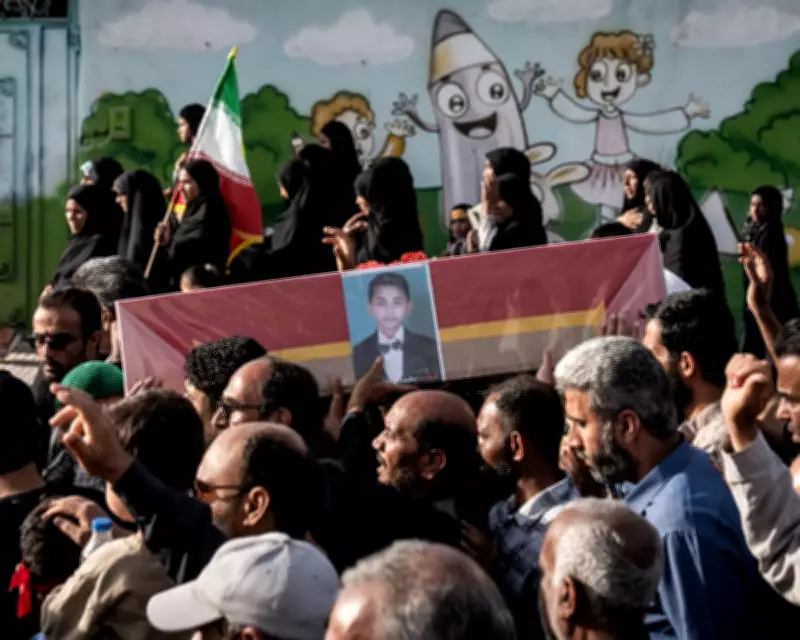
The funeral of Mohammad Taha Jafari, a victim of the bombing at Shajarat al-Tayyiba Primary School, was solemnly held in Minab, Iran, on 30 March 2026. This tragic event underscores the human cost of ongoing conflicts, as highlighted by Tom Fletcher, the head of the UN's humanitarian agency, in a stark address at Chatham House in London.
Reckless War Spending Versus Life-Saving Aid
Fletcher expressed profound frustration that the $2bn (£1.5bn) spent weekly by Donald Trump on what he termed a "reckless war" in Iran could have funded efforts to save over 87 million lives. His hyper-prioritised humanitarian plan, targeting $23bn, remains critically underfunded, with a $10bn shortfall exacerbating a global crisis.
He warned that the normalisation of violent language, such as threats to bomb Iran "back to the stone ages," is dangerously empowering autocrats worldwide to target civilians and infrastructure, blatantly violating international law.

Global Ripple Effects and Aid Budget Crisis
The conflict's impact extends far beyond Iran, with Fletcher predicting that food and fuel inflation nearing 20% will push millions into poverty in sub-Saharan and east Africa for years. This comes as his agency faces a cataclysmic 50% budget cut, driven not only by US policies but also international reductions in overseas aid, influenced by ideology and defence spending demands.
Fletcher criticised the UK's severe aid cuts, noting that its claim to leadership in humanitarian efforts now elicits ridicule at conferences. He lamented the abandonment of the long-standing cross-party commitment to spend 0.7% of gross national income on aid, describing it as a "talismanic" goal now lost.
Statecraft Versus Real-Estatecraft in Diplomacy
Reflecting on his interactions with the Trump administration, Fletcher contrasted traditional statecraft—focused on stability and process—with what he called "real-estatecraft," emphasising personal relationships and unpredictability. He acknowledged some progress in convincing US officials that the UN is not merely "woke, incompetent, useless, exhausted bureaucrats," but highlighted the challenges of working with a team less interested in institutional frameworks.
He also revealed personal dilemmas over accepting US aid with conditions on issues like abortion or transgender rights, questioning whether to prioritise saving lives or adhering to principles.
Call for Accountability and Protection
Fletcher voiced deep concern over the safety of humanitarian workers, noting that more than 1,000 have been killed in the past three years, often by drones. He urged UN Security Council members to move beyond generic statements and actively hold perpetrators accountable, emphasising that humanitarian workers are essential emergency responders who deserve protection.
He concluded by urging the UK to escape its "defensive crouch" and stop vandalising its "crown jewels," such as leadership in aid and soft power, advocating for a return to quiet competence in global affairs.