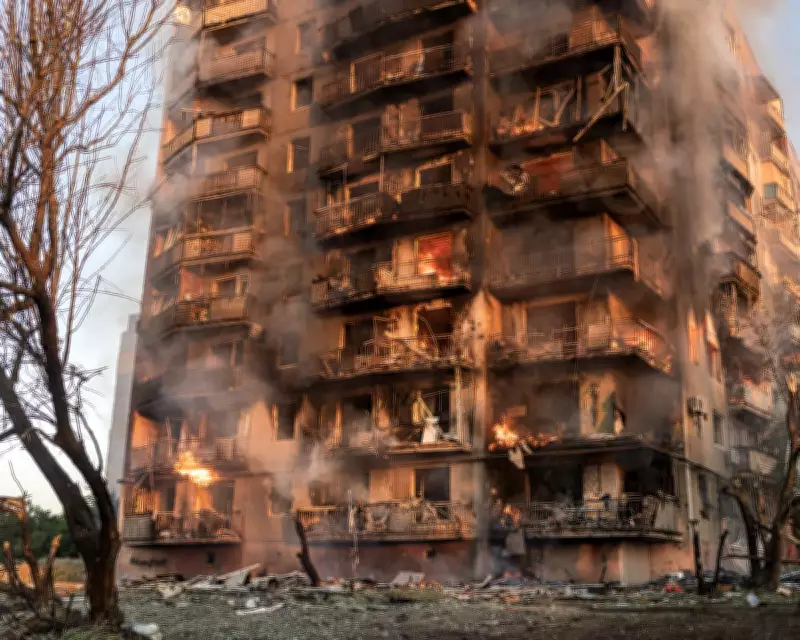
In the aftermath of Russian shelling in Kostiantynivka, Ukraine, during August 2025, a residential building lies in ruins, symbolising the devastating human cost of ongoing aggression. This destruction underscores a broader geopolitical failure, as critics now point to decades of Western missteps that facilitated Russia's rise under authoritarian leadership.
Historical Context of Western Missteps
Richard Taylor, in a recent analysis, highlights that the disappointments and incompetence of Keir Starmer's government pale in comparison to the naive sycophancy shown towards Donald Trump regarding Ukraine and other issues. Simon Tisdall's call for European nations, particularly the UK, to reject Trump's influence and take decisive action in supporting Ukrainian resistance is seen as a crucial step forward.
The Roots of Russian Gangster Capitalism
However, the fault does not lie solely with Trump or his predecessors. During the 1980s and 1990s, when reformers like Mikhail Gorbachev aimed to foster a new Russia and European détente, the West had a golden opportunity. As the USSR collapsed, there was a chance to support democratic reforms and initiate the dissolution of NATO and the Warsaw Pact.

Instead, as Taylor notes, the West ignored the pleas of groups like European Nuclear Disarmament and the wider peace movement, which advocated for backing reform processes in Eastern Europe and adopting peace-oriented foreign policies. This neglect allowed the rise of gangster capitalism in Russia and the eastward expansion of NATO, creating conditions that enabled paranoid authoritarians, notably Vladimir Putin, to consolidate power.
Consequences of Appeasement and Betrayal
Rev Canon John Longuet-Higgins echoes these sentiments, drawing parallels to historical appeasement. He references Eleanor Rathbone's 1939 definition of appeasement as selling friends to buy off enemies, suggesting that today's situation is even worse. The US, alongside Russia, is accused of acting as a predatory hegemon, particularly in regions like Greenland, further complicating global stability.
The chickens, as Taylor puts it, are now coming home to roost, with Eastern Europe bearing the brunt of these policy failures. The ongoing conflict in Ukraine serves as a stark reminder of the consequences when democratic reforms are sidelined in favour of short-term geopolitical gains.
Call to Action for European Nations
In light of these insights, there is a growing consensus that European nations must reassess their foreign policies. Moving beyond mere rhetoric, they need to implement concrete measures to support Ukraine and counter Russian aggression. This includes reducing reliance on American leadership and fostering a more independent, proactive stance in international affairs.
The lessons from history are clear: ignoring peace movements and enabling authoritarian regimes only leads to greater instability and conflict. As the world watches the devastation in Ukraine, the call for a renewed commitment to democratic values and collective security has never been more urgent.