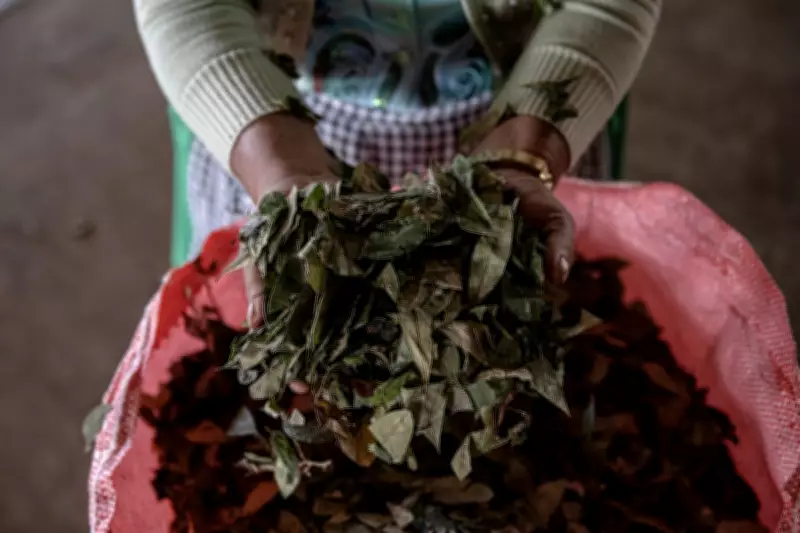
WHO Upholds Global Ban on Coca Leaf, Dashing Andean Growers' Hopes
In a significant blow to Indigenous communities in Bolivia, the World Health Organization (WHO) has refused to reclassify the coca leaf, upholding its status as a restricted substance under international narcotics conventions. This decision, influenced by U.S. pressure as part of the ongoing 'war on drugs', categorises the leaf alongside heroin and fentanyl, despite its deep-rooted cultural and therapeutic significance in the Andes.
Cultural and Therapeutic Significance
For millennia, Andean peoples, such as those near Coripata east of La Paz, have utilised coca leaves to alleviate fatigue, hunger, altitude sickness, headaches, and digestive issues. Daynor Choque, a leader of local coca producers, emphasises the leaf's historical use, stating, "We have been using coca without any problems since the time of our ancestors." He warns that without legal international markets, growers are being forced into the illegal cocaine trade to survive.
The coca leaf is integral to Andean-Amazonian Indigenous culture, featuring in daily social interactions and rituals from birth to death. Celestina Ticona, a coca farmer, encapsulates this sentiment, saying, "Coca is life itself for us." An estimated 5 million people consume it daily as a mild stimulant, comparable to tea or coffee, with the WHO's own critical review acknowledging its antioxidant, anti-inflammatory, antimicrobial, and anticancer properties.

WHO Decision and International Implications
Last December, the WHO rejected a request from Bolivia, supported by Colombia, to reclassify or remove coca leaf from the UN's dangerous drug list, established under the 1961 convention. This list regulates 138 substances and is recognised by 186 countries. Despite the review finding no harm to human health, the leaf, containing 1% or less of the cocaine alkaloid, remains restricted.
Dilkushi Poovendran, a WHO technical officer, cited rising cocaine seizures, use disorders, and its spread to new regions as reasons for the decision. She noted, "While acknowledging the longstanding cultural and traditional value of coca use, particularly in the Andean region, the committee emphasised that scientific evidence on dependence, long-term safety and potential therapeutic applications that would justify broader international trade of coca leaf for medical and scientific use remains limited."
Impact on Indigenous Rights and Legal Markets
Bolivia's former vice-president, David Choquehuanca, who coordinated the reclassification effort, condemned the ruling as a violation of Indigenous sovereignty. He argued, "The WHO's recent historical error has violated our legitimate rights to use our sacred coca leaf as we see fit for therapeutic, nutritional and ritual practices, and to share it with the world." He added that disrespect for culture threatens a country's existence.
John Walsh, director for drug policy at the Washington Office on Latin America, highlighted the contradiction with evolving UN Indigenous rights, stating, "Given the evolution of Indigenous rights within the UN, including the WHO, over the past decades, there is a huge gap between how the WHO is developing its other work and this ruling." Reclassification could have allowed national policies to permit coca-based products like teas and balms, but most countries follow UN guidelines, maintaining bans.
Economic and Social Consequences
The WHO's stance perpetuates a paradox where scientific research into coca's benefits is stifled by its illegal status. Tom Grisaffi, an anthropologist at the University of Reading, explained that coca's illegality offers economic advantages for small farmers in Andean regions, where legal crops like coffee or oranges are less profitable. He noted, "Coca's illegality provides a comparative advantage for small farmers. Given that Andean countries are inserted on such unfavourable terms into global markets, crops such as tea, coffee, oranges, or pineapples just don't make money; illegal coca does."

Increased coca cultivation post-pandemic has led to surging global cocaine production, with wholesale prices halving in recent years. Volker Türk, UN high commissioner for human rights, acknowledged that 'war on drugs' policies have failed to reduce use or crime, pressuring the UN to uphold controls.
Future Prospects and Challenges
The WHO's decision follows a 1995 study that reached similar conclusions but was suppressed after U.S. threats to cut funding. With the U.S. set to withdraw from the WHO in 2026, its influence remains strong. Walsh observed, "US defunding clearly reinforced the WHO's own tendency to maintain the leaf in the same narcotics drug category."
Advocates now seek a country to appeal to the UN Economic and Social Council, but momentum may wane with Bolivia's new conservative government and Colombia's presidential term ending. Choquehuanca lamented, "We see this outcome as another attack on our culture. The WHO refused to consider coca as we have always done: a sacred part of our culture that has nothing to do with cocaine." The future of coca leaf remains uncertain, balancing cultural heritage against global drug policies.