The government has announced a comprehensive ban on deep-fried foods in schools across England, set to take effect from September 2027. This decisive move aims to address the escalating childhood obesity crisis in the United Kingdom by overhauling school dinner menus.
End of Traditional Favourites
From the specified date, popular items such as battered fish and chips, fried chicken nuggets, and jam doughnuts will be completely removed from school canteens. The new regulations will also mandate that all desserts must contain a minimum of fifty per cent fruit, effectively eliminating traditional treats like chocolate sponge cake and jam roly-poly.
Current Standards and Future Changes
Present guidelines restrict schools to serving no more than two portions of deep-fried food weekly, alongside daily requirements for vegetables, salad, and fruit. The upcoming changes represent the most significant revision to school meal standards since the implementation of the School Food Plan in 2013, developed by Leon co-founders Henry Dimbleby and John Vincent.

Ministers are accelerating the introduction of these new standards ahead of the planned expansion of free school meals. Starting in the 2026 academic year, all pupils in England whose families receive Universal Credit will become eligible for free school meals.
South Korean School Meals: A Gourmet Contrast
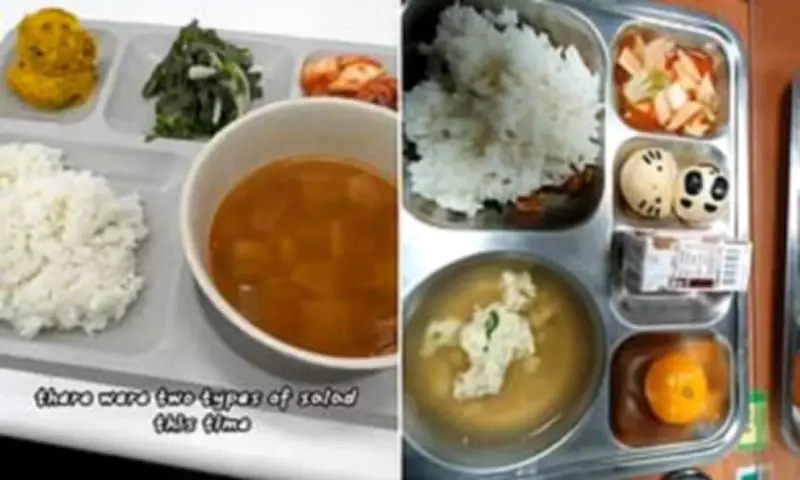
While English schools prepare for these nutritional reforms, the impressive standards of South Korean school dinners provide a striking contrast. Children in this East Asian nation already enjoy healthy gourmet meals featuring diverse options such as noodles, fresh salads, and hearty broths daily.
Social media videos vividly illustrate young students filling their metal trays with freshly prepared curries, multi-grain rice, and an array of side dishes known locally as 'banchan,' including fermented cabbage to enhance the culinary experience. Some meals appear to comprise up to six courses, complete with customised dessert buns, fresh fruit, and flavoured milk.
Cultural Differences in Dining Etiquette
Beyond the food itself, cultural differences are evident in dining behaviour. Far from the chaotic scenes sometimes associated with school canteens, many South Korean students demonstrate polite queuing and respectful bows to dinner staff.
Japanese influencer jukananan727 documented her visit to an all-boys' high school in Yongin-si, south of Seoul, showcasing dedicated cooks who carefully plate meals while tasting for quality assurance. The nutritionist-approved menu featured Anchovy Rice Balls, 'Janchi' Noodles with broth, Beef Meat Pancakes, Gyoza Dumplings, Stir-fried Square Fish Cakes, Cabbage Kimchi, and Fruit Mini Cupcakes.
Universal Free School Meals in South Korea
South Korea operates a universal free school meals system that has evolved since the Korean War in 1953. Initially providing donated milk powder to address food crises in elementary schools, the programme has remained a government priority.
According to the School Meals Coalition, led by Brazil, Finland, and France, nutrition experts are placed in all schools to instil healthy eating habits through the meals provided. The state also connects local farmers and suppliers with schools, emphasising food processing and storage facilities.
As of 2024, the Republic of Korea provides free school meals for approximately five million students in nearly twelve thousand primary and secondary schools, supporting 99.8 per cent of children in both public and private institutions.
University Canteens and International Perspectives
The culinary excellence extends beyond schools to university canteens, where students frequently share and rate their meals. Botswana-born Bontle Nawa, based in Seoul, praised her spread featuring fresh salad and fried cutlet as 'a 100 out of 10.'
French student Mimi revealed that her meal of rice, curry, three side dishes, soup, and a drink cost only 5,500 Korean won, approximately £2.75. Similarly, Sonu from Seoul National University shared a meal of radish soup with beef, rice, and two salads costing 'less than a dollar.'

Impact of England's New Policy
The UK government claims that expanding free school meals will benefit an additional half-million children daily from 2026, putting nearly £500 annually back into parents' pockets and lifting 100,000 children out of poverty across England.
While the new English standards aim to improve children's health, they are unlikely to match the comprehensive gourmet approach seen in South Korea, where nutrition remains a top priority embedded in the educational system.