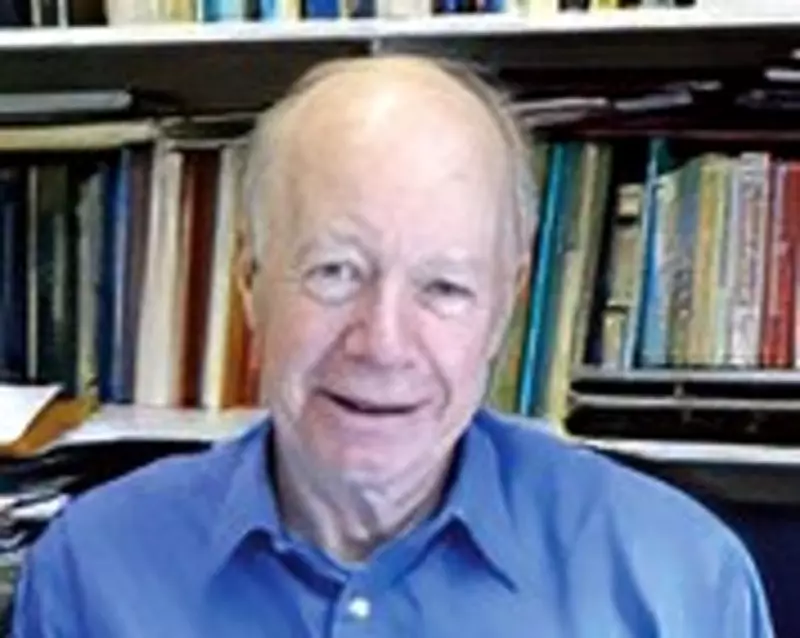
Professor Paul Black, a prominent educationist who played a major role in developing England's national curriculum, has died at the age of 95.
Key Role in National Curriculum
As chair of the Task Group on Assessment and Testing, established by the Conservative government, Black persuaded then education secretary Kenneth Baker to adopt a set of compulsory subjects assessed mainly by teachers, with external moderation and expected attainment levels at the end of key stages. Once the system was agreed, he served as deputy chair of the National Curriculum Council from 1989 to 1991.
Early Life and Career
Black was born in La Cumbre, Colombia, to British parents: Walter, a commercial agent, and Susie (nee Burns), a typist. The family moved to Rhyl, north Wales, where he attended Rhyl grammar school. He earned a degree in physics at Manchester University, followed by a PhD at Cambridge University. In 1956, he became a lecturer in physics at Birmingham University. He married Mary Weston, a history teacher he met through the Catholic church, in 1957.

Academic Achievements
At Birmingham, Black became involved in creating the Nuffield A-level physics course. In 1974, he was appointed to a personal chair in physics. Two years later, he moved to London as head of the Centre for Science Education at Chelsea College, University of London (later merged into King's College London), where he directed a large-scale national survey of science attainment in schools. In 1983, he was appointed OBE. In 1985, he became head of King's College London's school of education, raising its research profile until his retirement in 1995.
Assessment for Learning
His final achievement was pioneering Assessment for Learning, an informal organisation supporting teachers with classroom methods for gathering feedback from students. In retirement, he worked on national and international research projects, including as a visiting professor at Stanford University. Between 1953 and 2018, he authored over 230 peer-reviewed research papers, more than 120 booklets, chapters, and books, and over 500 articles and letters.
Religious and Community Work
While at Cambridge, Black was president of the Union of Catholic Students. Later, he chaired the Laity Commission and served as chair of governors for various Catholic schools in Birmingham and London. In 1974, Pope Paul VI appointed him a Knight of St Gregory.
Mary died in 2025. Paul is survived by their five children, 14 grandchildren, and six great-grandchildren.