University Closure in Southend-on-Sea: A Blow to Coastal Community and Student Futures
The seaside city of Southend-on-Sea, located on England's east coast, presents a grey and quiet scene on a winter afternoon during term-time. Its cobbled high street, adjacent to the university campus, is sparsely populated with market stalls, vape shops, and discount retailers, reflecting an unusual stillness. "There used to be lots of shops, restaurants and youth clubs around here," remarks 23-year-old Nathan Doucette-Chiddicks. Now, the city faces the loss of something it can scarcely afford to be without.
Announcement of Campus Closure
Just before Christmas, Essex University announced it would close its Southend campus this summer, citing a significant decline in international students who pay higher fees. This decision affects 800 students and staff, but its impact extends far beyond, deeply affecting a city that has come to rely on the university in numerous ways.
Doucette-Chiddicks, a student on the adult nursing course, describes himself as Southend "through and through." He wears Southend United merchandise from head to toe and has lived in the town all his life. His mother was one of the university's first students when it opened in 2008. "She used to sneak me into the computer labs so she could study," he recalls. The campus, just a few doors from his home, has long symbolised possibility for local residents. His mother is now an A&E nurse, and he aims to follow in her footsteps. "It's a big loss," he says. "Not just for students – for the city as a whole."

Historical Context and Community Impact
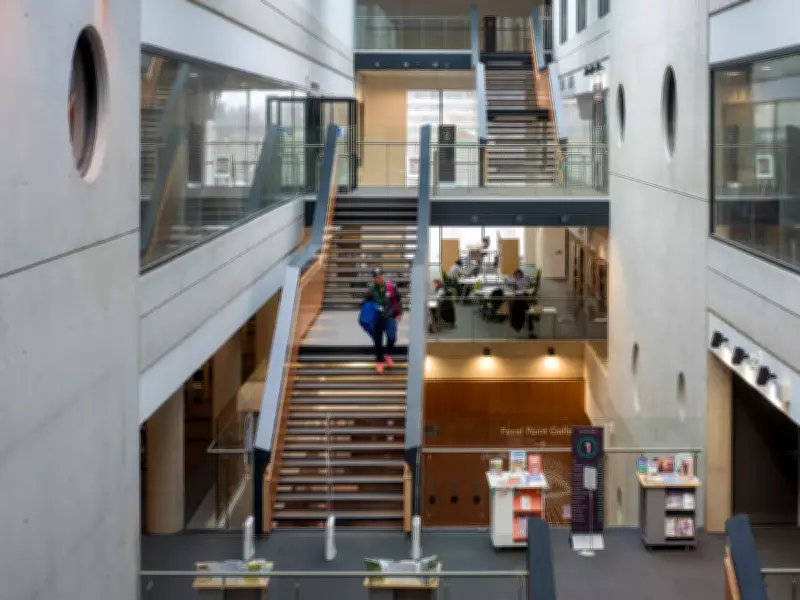
Seventeen years ago, the arrival of a university in the centre of what was seen as a "left behind" seaside resort was positioned as a clear message of hope. Its £26 million glass building, with striking views of the Thames estuary on one side and a derelict office block on the other, was intended to kickstart the town's flagging economy. It signalled that young people growing up here could have bigger aspirations – that Southend was a town on the up.
Colin Riordan, who was vice-chancellor of Essex University at the time, recalls the optimism when they established the Southend campus. "We wanted the university to be a place people felt part of," he says. "We wanted to create a campus feel but one that was there for local people." When it opened, the campus housed a GP surgery and a new dental clinic offering free treatment to locals, followed later by the forum – a library and art gallery shared by the university and community.
Riordan remembers watching a performance of Frankenstein in the church that Southend's acclaimed acting school, East 15, took over as a theatre and performance space. "I remember sitting on the edge of my seat because it was an amazing performance," he says. "And it was extra exciting because this was a town that didn't have much access to culture before." Over a few years, Riordan observed Southend changing: "It really did go from a place that felt like it needed attention to somewhere much more vibrant." Suddenly, it felt like there were "young people everywhere" – and independent shops and cafes opened up to cater for them.
Economic and Social Ramifications
Across Essex University, which also has a campus in Loughton, 18% of students are local, but in Southend, for students training in health or social care, that figure leaps to 52%. Doucette-Chiddicks describes a sense of community rarely found in larger universities. "My lecturers know my mum and they know me," he says. "A lot of them studied here before becoming lecturers."

In Southend today, alongside the concrete impact on students, job losses affecting catering staff, cleaners, and academics, and threats to local businesses, many people are depressed about the symbolism of becoming a city that used to have a university. George Bejko-Cowlbeck, director of Caddies crazy golf, where students come to drink and play, says he has spoken to students who love Southend and do not want to leave. He moved here at 17 and recalls the seaside town "felt fun, like running away to join the circus." Students are big customers for Caddies, and the drama school provides effervescent part-time staff. But he senses Southend will lose more than just cash. "Having the university here was a big part of the city's feeling of youthfulness, and the idea that you can be here and learn and grow."
Lauren Ekins, a Southend primary school teacher who grew up here before the university existed, says: "If I think about what this means for the children who are at school here now, I want to cry. So many children have lost access to their potential futures." During a hospital stay for surgery, Ekins met a former pupil studying to be a nurse. "She was from a deprived background and university wasn't necessarily in her future – but it was here." Southend, only 60 miles outside London, has pockets of wealth, but Ekins notes many families live on the breadline. She is angry that the government bailed out banks but will not step in to save universities in deprived cities like Southend. "I feel like they are leaving us behind," she says.
Political and Practical Challenges
Bayo Alaba, the Labour MP for Southend East and Rochford, sees the university as a "clear ladder to social mobility," noting that students in subjects like midwifery, social care, and nursing are "disproportionately poor members of the local community who often have caring responsibilities." The university is worth over £100 million annually to Southend's economy, Alaba estimates. Small local businesses, including cafes, bars, taxi firms, and shops, brace for the loss of student customers. But he adds: "This sends the subliminal message to people who want to invest in the city or expand their business that they should be looking elsewhere."
Alaba feels the "harsh decision" was sprung on the community without warning. The university informed him and fellow Southend MP David Burton-Sampson out of the blue a fortnight before Christmas, he says. "It wasn't even a sit-down meeting. It was a quick 20-minute Zoom call and the decision had already been made." "They have seen these challenges for a while," he adds. "They should have been putting contingency plans in place and priming the council."
Prof Frances Bowen, Essex University's vice-chancellor, says: "Closing the Southend campus was an incredibly difficult decision, which we only took after reviewing all reasonable alternatives and was a decision we could never previously have imagined." The university has stated all Southend students can finish their courses at its Colchester campus, 45 miles away. But Alaba argues a two-hour commute each way on public transport is not feasible for many students; many cannot afford travel costs or fit it in alongside family care or jobs. "Some students have already dropped out," the MP says. "They have taken on debt for something they thought would change their life."
Personal Stories of Struggle
Radek Hanus, a mature student in his second year of a nursing course, has lived in Southend for four years. He only learned of the closure when he saw an article in the local paper during a nursing work placement shift. "It's a joke," Hanus says. "I've lost two years of time and money and education. People are devastated." Hanus is registered disabled due to Crohn's disease. "Commuting to Colchester will cost me something like £800 a month in petrol. How can I possibly afford that?"
Doucette-Chiddicks already works long hours to pay rent alongside studying. However, he is resolute: "There are some people who have decided to quit, or they've just not been turning up to lessons. But I'm going to finish my degree." By late afternoon, a fine drizzle begins to fall, deepening the gloom along the high street. The owner of a nearby business, who asked not to be named, describes the closure as "catastrophic" and part of a wider decline affecting many coastal places and Britain's young people. "How can you have a city without a university?" he asks. "It's shocking."
This report is part of the Against the Tide series, a collaboration focusing on the lives of young people in coastal communities across England and Wales, highlighting issues of poverty, education, and opportunity in these areas.