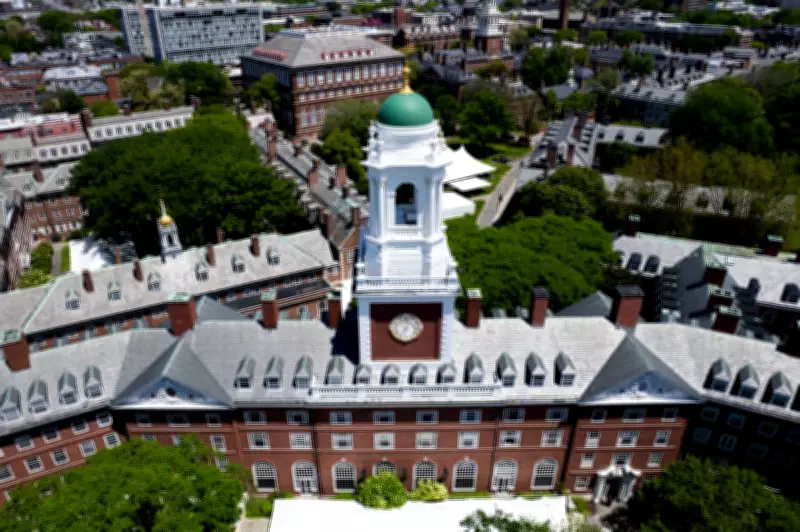
In a significant escalation of his ongoing feud with elite academic institutions, former US President Donald Trump has declared that his administration is pursuing a staggering $1 billion in damages from Harvard University. The announcement marks the latest chapter in a protracted dispute centred on allegations of antisemitism at the prestigious Ivy League school.
A Billion-Dollar Demand
Trump made the claim via a post on his Truth Social platform late on Monday, directly accusing Harvard of being "strongly antisemitic." He further criticised Harvard's president, Alan Garber, stating he "has done a terrible job of rectifying a very bad situation for his institution and, more importantly, America itself." This public declaration follows a report by the New York Times indicating Trump had allegedly dropped a previous demand for a $200 million settlement related to the same allegations.
Wider Campaign Against Higher Education
Since returning to the political forefront, Trump has repeatedly targeted major universities, with Harvard being a primary focus. He has accused these institutions of mishandling antisemitism and permitting alleged civil rights violations on campuses he characterises as dominated by "radical left" ideologies. These charges have been widely denounced by academics and free speech advocates, who view them as a direct threat to academic freedom and institutional independence.

In his social media post, Trump referenced the New York Times article, accusing Harvard of "feeding a lot of 'nonsense' to the failing New York Times," and asserted the university "has been, for a long time, behaving very badly." Without providing specific legal details, Trump stated his administration is "now seeking one billion dollars in damages, and want[s] nothing further to do, into the future, with Harvard University."
Previous Threats and Legal Battles
The $1 billion demand is merely the latest in a series of aggressive actions taken by the Trump administration against Harvard. Previous measures have included:
- Threatening to withhold approximately $9 billion in federal research funding.
- Demanding the termination of Harvard's diversity, equity, and inclusion (DEI) programmes.
- Requiring the reporting of international students who violate campus rules.
- Attempting to block the university from enrolling international students altogether.
In response to these pressures, Harvard initiated legal action against the Trump administration in April of last year. The lawsuit accused the administration of attempting to "gain control of academic decision-making." At that time, President Alan Garber vowed that "the university will not surrender its independence or relinquish its constitutional rights."
Garber's Defence and Legal Rulings
Garber has also directly challenged Trump's accusations of antisemitism. In a statement issued last April, Garber, who is Jewish, said: "As a Jew and as an American, I know very well that there are valid concerns about rising antisemitism. To address it effectively requires understanding, intention, and vigilance. Harvard takes that work seriously. We will continue to fight hate with the urgency it demands as we fully comply with our obligations under the law. That is not only our legal responsibility. It is our moral imperative."
The legal landscape surrounding this dispute has seen significant developments. In September, a federal judge ruled that Trump had unlawfully cancelled $2.2 billion in research grants, thereby barring the administration from cutting Harvard's research funding. Shortly after this ruling, Trump claimed his administration had reached a deal requiring Harvard to pay $500 million to settle the dispute. However, the administration appealed the judge's September ruling last December, indicating the legal wrangling is far from over.
The Guardian has contacted both Harvard University and the White House for comment on the latest $1 billion damages claim. This ongoing conflict highlights a deep ideological divide over the role, governance, and funding of major higher education institutions in the United States.