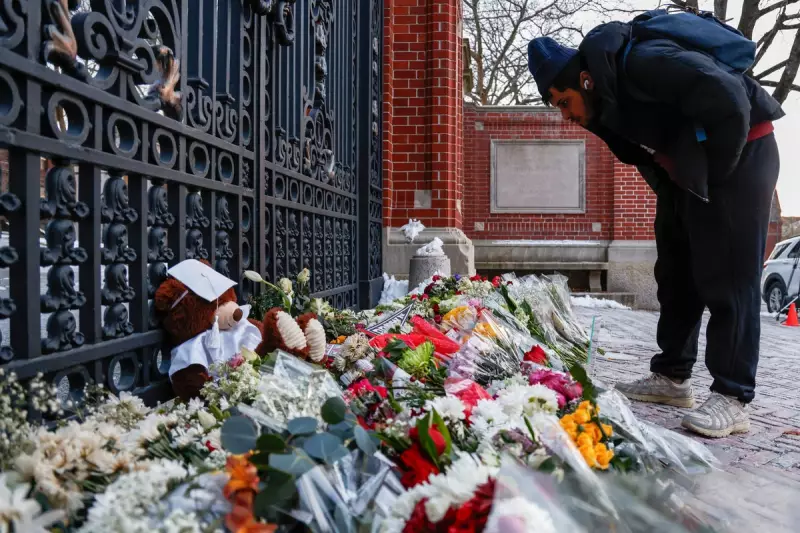
A mass shooting at Brown University in the United States has left the campus community reeling and deeply critical of the official response, as a gunman remains at large days after the attack.
Investigation Struggles Amid Security Failures
The incident occurred on Saturday 14 December 2025 during a busy exam period. A man walked onto the prestigious university's campus in Providence, Rhode Island, and opened fire in a crowded lecture hall within the Barus and Holley engineering building. The attack killed two students and wounded nine others.
Despite an intensive manhunt, the investigation has faced significant hurdles. A day after the shooting, a person of interest taken into custody was released without charges. Law enforcement officials have been left scrambling for new leads, hampered by a critical lack of usable security footage from the scene.

FBI Boston Special Agent in Charge Ted Docks described the process of documenting bullet trajectories and gathering evidence as "painstaking work." The FBI has announced a $50,000 reward for information leading to the shooter's identification, arrest, and conviction.
Campus Security Systems Under Scrutiny
The shooting has exposed glaring weaknesses in Brown University's security infrastructure. While the campus is dotted with cameras, the targeted engineering building had very few. Rhode Island Attorney General Peter Neronha noted the building's older construction as a factor in the security gap.
This lack of footage forced police to canvass local residences and businesses for private security camera videos. Katherine Baima reported that U.S. marshals came to her door on Monday 15 December seeking footage from her street-facing camera.
The security failures have sparked outrage among students. Li Ding, a student at the nearby Rhode Island School of Design, expressed deep frustration: "The fact that we’re in such a surveillance state but that wasn’t used correctly at all is just so deeply frustrating." Hundreds have signed a petition demanding increased security in university buildings.
Community Alert Systems Prove Inadequate
Frustration extends beyond campus to the wider Providence community's emergency alert system. The city switched from a mobile app to a web-based system in March 2025, requiring residents to re-register online—a change many were unaware of.
Emely Vallee, who lives a mile from Brown with her two young children, received "absolutely nothing" in alerts and relied on texts from friends. Mayor Brett Smiley stated his administration sent multiple alerts using the new system, but the confusion highlights a critical communication breakdown during the crisis.
Students on campus reported that the university's alert system kept them informed of the active shooter, but many were left uncertain during a prolonged lockdown. Doctoral student Chiang-Heng Chien described hiding under desks with lights off after receiving an alert at 4:22 p.m. on Saturday, unsure whether to open the door to police.
Hailey Souza, a shop manager a block from the engineering building, never received an emergency alert. She finished her shift minutes before the shooting and later saw a boy bleeding on the sidewalk as panic erupted. One of the victims, Ella Cook, was a regular at her store.
Law enforcement experts like former U.S. Senate sergeant-at-arms Terrance Gainer note that university security forces are often underfunded and less trained than municipal police, potentially hindering rapid response. The tragedy at Brown University has ignited a fierce debate about the balance between an open campus and the imperative to keep students safe from violent threats.