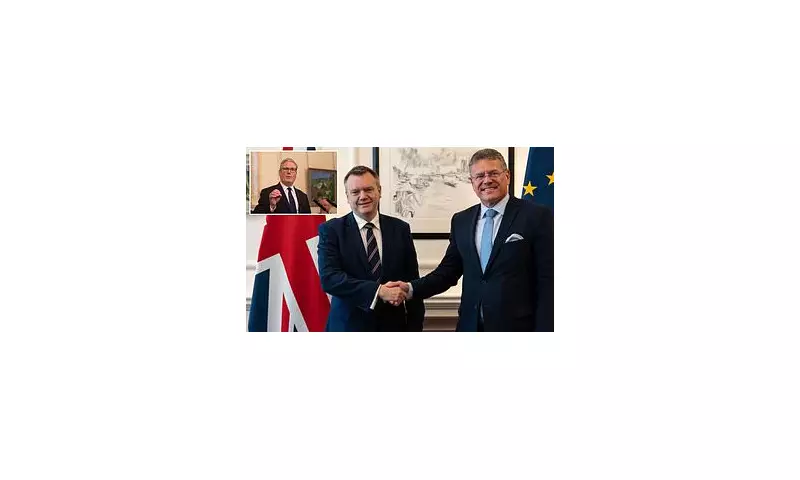
The UK government has finalised a deal to rejoin the European Union's flagship Erasmus+ student exchange programme, agreeing to an initial annual contribution of approximately £570 million. The move, confirmed by Cabinet Office minister Nick Thomas-Symonds, is being touted as a 'first step' towards broader youth mobility and is set to restart in time for the 2027-28 academic year.
Financial Terms and Negotiated Discount
Intensive negotiations between the UK and the European Commission, led by Mr Thomas-Symonds and the EU's Maros Sefcovic, centred on the financial terms of re-association. The UK had reportedly pushed for a 50 per cent discount on the standard membership fee, which is calculated based on a country's Gross Domestic Product. However, the final agreement secured only a 30 per cent reduction for the first year of renewed participation, a deal the government has described as 'fair'.
The confirmed cost of £570 million covers the 2027/28 academic year. Any continued involvement beyond that period will require fresh negotiation for the next EU budget cycle. The government stated any future agreement must be based on a 'fair and balanced contribution'.

A Strategic Shift and Political Fallout
This decision marks a significant reversal of the policy under former Prime Minister Boris Johnson, who withdrew the UK from Erasmus+ and launched the domestic Turing scheme instead. The Johnson government argued that staying in the EU programme would have incurred a net cost of around £2 billion over seven years, as historically far more EU students came to the UK than British students went to Europe.
The move is likely to fuel political debate, with critics alleging it signals Prime Minister Keir Starmer's intent to gradually unwind aspects of Brexit. Sir Keir has previously blamed severed ties with the EU for the UK's economic struggles, and senior Labour figures have hinted at ambitions for closer alignment, including potential customs union membership—a suggestion so far dismissed by Downing Street.
Expanded Opportunities and Economic Benefits
Ministers are championing the deal as a major win for young people from all backgrounds. The revived programme will offer more than just university exchanges. Key features include:
- Vocational training placements and apprenticeships in European firms.
- Exchange opportunities for adult learners, school groups, and sports coaches.
- Job shadowing and training abroad for education staff.
The government aims to maximise participation, particularly among disadvantaged groups, and will establish a UK national agency to administer the programme. It is estimated that over 100,000 Britons could benefit in the first year alone.
Supporters argue the scheme delivers wider economic and cultural benefits, renewing the flow of EU students and staff to UK campuses. Tim Bradshaw, chief executive of the Russell Group of universities, welcomed the return, stating it 'opens up fantastic opportunities' and will renew the 'huge contributions' EU students make.
However, the debate continues on whether this represents a smart investment in youth or a concession on post-Brexit sovereignty. Liberal Democrat universities spokesman Ian Sollom called it a 'welcome breakthrough' but urged it to be a 'first step' towards a closer UK-EU relationship, including a bespoke customs union.