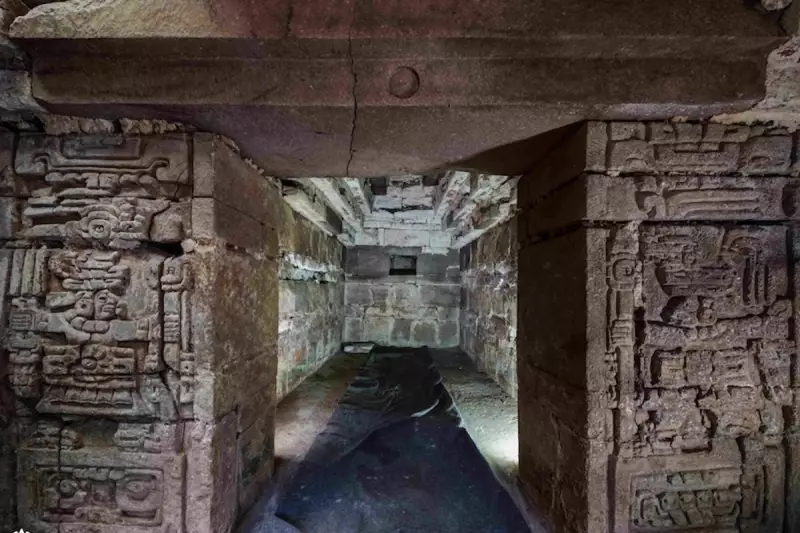
Archaeologists in southern Mexico have made what is being described as the country's most significant archaeological discovery in a decade, unearthing a remarkably well-preserved 1,400-year-old tomb from the ancient Zapotec civilisation.
A Monumental Discovery in Oaxaca
The ancient burial site, dating to approximately 600 AD, was uncovered in the Central Valleys of Oaxaca. Mexican President Claudia Sheinbaum Pardo has officially hailed the find as "the most significant archaeological discovery of the last decade in Mexico", emphasising that it stands as a powerful testament to the historical greatness of the nation.
Intricate Details and Symbolism
The tomb's exceptional state of preservation has allowed researchers to study intricate details that offer unprecedented insights into Zapotec culture. Among the most striking features is a sculpture of a wide-eyed owl, within whose beak rests the plastered and painted figure of a man.

In pre-Hispanic Zapotec culture, the owl symbolised night and death, leading researchers to suggest the man depicted represents an ancestor being honoured within the tomb. The discovery also includes multicoloured murals in ochre, white, green, red, and blue, alongside detailed carvings of calendars and other artistic elements.
Architectural and Cultural Significance
According to Mexico's National Institute of Anthropology and History (INAH), the tomb consists of both an antechamber and a burial chamber, decorated with vivid artistic, sculptural, and pictorial details. The architectural richness preserved at the site provides valuable information about the ancient society's social organisation and funeral rituals.
"It is an exceptional discovery due to its level of conservation and what it shows about Zapotec culture: its social organisation, its funeral rituals and its worldview, preserved in architecture and mural painting," stated Claudia Curiel de Icaza, Mexico's secretary of culture.
Guardian Figures and Processional Art
Archaeologists uncovered stone tombstones engraved with calendar names and figures of a man and woman adorned with elaborate headdresses and artefacts in both hands. These figures are believed to have served as guardians of the tomb and protectors of the deceased.
Within the burial chamber, researchers found "extraordinary" mural paintings depicting a procession of characters carrying bags of copal incense, all walking toward the entrance. This artistic representation provides further clues about Zapotec ceremonial practices and beliefs surrounding death and the afterlife.
The Zapotec Legacy
The Zapotec civilisation emerged around 500 BC in what is now the southern Mexican state of Oaxaca, thriving until the arrival of Spanish colonisers. Today, between 400,000 and over a million people across southern Mexico continue to identify as Zapotec, maintaining vibrant cultural traditions that connect directly to this ancient past.
Secretary of Culture Claudia Curiel de Icaza emphasised that these findings represent "Mexico's millennial greatness" and its central role in the cultural history of ancient Mesoamerica. The discovery not only illuminates Zapotec society but also reinforces Mexico's position as a crucial centre of pre-Columbian civilisation.
Ongoing Conservation Efforts
Archaeological teams are currently conducting conservation and research work at the site, including stabilising the delicate mural paintings that have been surrounded by roots and insects. These preservation efforts aim to protect the tomb's remarkable artwork for future study and public appreciation.
The discovery provides a rare window into the sophisticated artistic traditions, spiritual beliefs, and social structures of one of Mesoamerica's earliest civilisations, offering scholars new material to understand how ancient Zapotec society honoured their dead and conceptualised the journey beyond life.