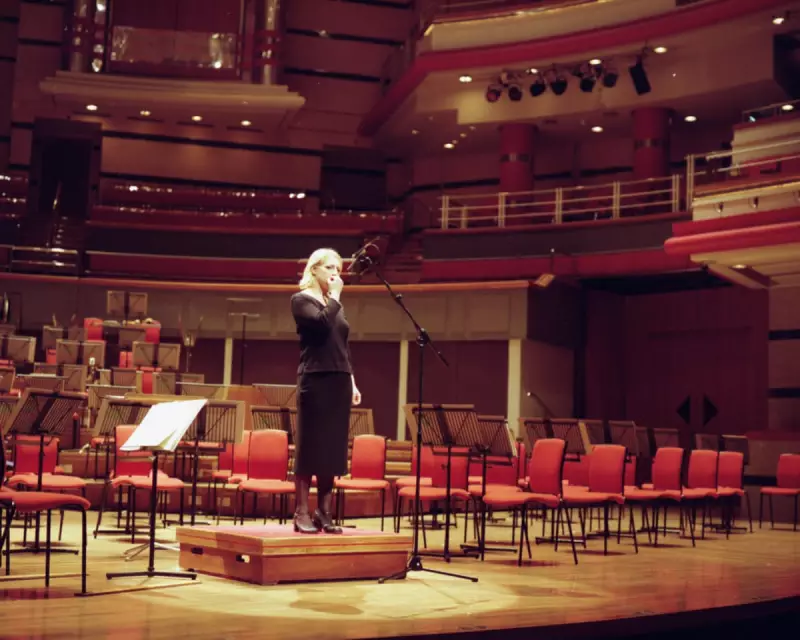
The art world is mourning the loss of Ceal Floyer, the acclaimed British-German conceptual artist known for her deceptively simple and intellectually playful works. She passed away at the age of 56.
A Career Defined by Minimalist Wit
Born in Karachi in 1969 and raised in Britain and Germany, Floyer studied at Goldsmiths College in London, graduating in 1994. She quickly established herself as a unique voice in the contemporary art scene. Her practice was characterised by a sharp, economical use of everyday objects and sounds, transforming them into profound and often humorous meditations on perception and language.
Floyer's work demanded a double-take from the viewer. A famous early piece, Bucket (1996), presented a single bucket sitting beneath a ceiling leak, its title printed plainly on the wall. Another, Automatic (1998), featured a slide projector showing an image of a car's automatic gear shift, while the projector itself advanced slides with an audible 'clunk' reminiscent of a gear change. This elegant layering of image, sound, and meaning became her signature.

Recognition and Major Exhibitions
Her significant talent was recognised with a nomination for the Turner Prize in 2007, where she exhibited at Tate Liverpool. She also represented Germany at the 53rd Venice Biennale in 2009. Her work has been featured in solo exhibitions at prestigious institutions worldwide, including London's Hayward Gallery, the Museum of Contemporary Art in Miami, and the Kunstmuseum Bonn.
Floyer's influence extended to major international exhibitions like documenta 13 in Kassel in 2012. In 2018, she was elected a Royal Academician, a testament to her standing within the British art establishment. Her final major solo exhibition in the UK, Ceal Floyer: Solo Show, was held at the South London Gallery in 2023.
A Lasting Legacy in Conceptual Art
Ceal Floyer's death leaves a void in the world of conceptual art. She was an artist who proved that a powerful idea, executed with precision and wit, could be more impactful than grandiose spectacle. Her work continues to challenge and delight audiences, encouraging them to look and listen more closely to the world around them.
She is survived by her partner, the artist Jonathan Monk, and their son. The art community remembers her as a brilliant, original thinker whose subtle interventions expanded the possibilities of what art could be.