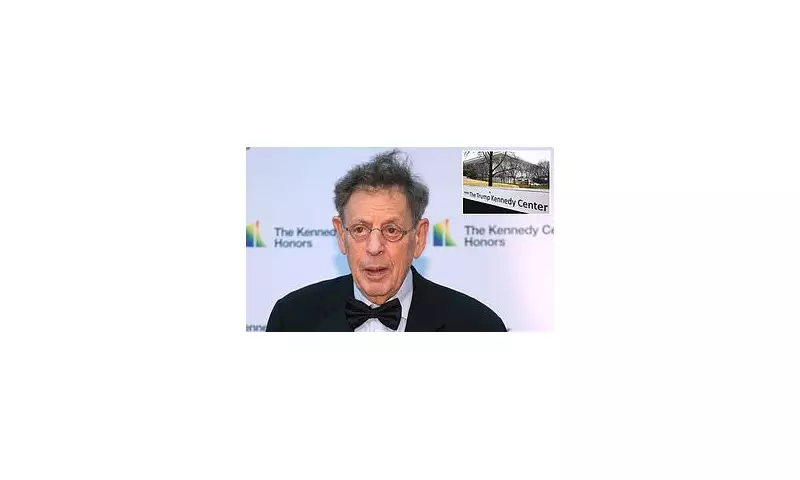
In a significant cultural protest, the acclaimed composer Philip Glass has withdrawn the forthcoming premiere of his Symphony No. 15 from the recently renamed Trump-Kennedy Center for the Performing Arts. The decision follows the fatal shooting of a protester during anti-immigration demonstrations in Minneapolis, highlighting a growing rift between artistic expression and the institution's current political associations.
Composer Cites Direct Conflict with Lincoln's Values
Philip Glass, the 88-year-old musical icon and 2018 Kennedy Center Honoree, announced his cancellation in a public statement on social media platform X. He explicitly linked his decision to the thematic core of his new work, titled 'Lincoln,' which portrays the nation's 16th president. Glass declared that 'the values of the Kennedy Center today are in direct conflict with the message of the Symphony,' feeling a profound obligation to withdraw the premiere under the centre's present leadership.
Minneapolis Shooting Incident Precipitates Action
The composer's move comes directly after a tragic event in Minneapolis last Saturday. Federal agents shot and killed Alex Pretti, a 37-year-old Veterans Affairs nurse, during protests against immigration policies. This incident appears to have catalysed Glass's decision, connecting contemporary political violence with the historical ideals represented by Abraham Lincoln that his symphony seeks to honour.

Kennedy Center Defends Its Position Amid Growing Boycotts
The Kennedy Center's Vice President of Public Relations, Roma Daravi, responded firmly to the cancellation, telling media outlets that the institution maintains 'no place for politics in the arts.' Daravi criticised those advocating for boycotts based on political grounds as 'making the wrong decision,' emphasising that the Center has 'not cancelled a single show' despite mounting pressure.
Daravi further argued that 'leftist activists are pushing artists to cancel, but the public wants artists to perform and create - not cancel under pressure from political insiders that benefit from creating division.' This statement underscores the deepening controversy surrounding the venue since its board, appointed by former President Donald Trump, voted to add his name to the building in December 2025.
Renaming Controversy and Family Opposition
The decision to rebrand the institution as the Trump-Kennedy Center has provoked substantial backlash, particularly from members of the Kennedy family. Kerry Kennedy, niece of former President John F. Kennedy, pledged to take a 'pickax' to the letters forming Trump's name on the building once he leaves office, symbolising the intense personal and political divisions the renaming has ignited.
Impact on National Symphony Orchestra and Independence Celebrations
Symphony No. 15: 'Lincoln' was scheduled for performance by the National Symphony Orchestra in June as part of celebrations marking America's 250 years of independence in 2026. The work had already experienced production delays, having been originally planned for 2022. Jean Davidson, the NSO's executive director, expressed 'great admiration for Philip Glass' while noting the organisation was 'surprised to learn about his decision at the same time as the press.'
Growing List of Artistic Withdrawals
Philip Glass joins a steadily expanding roster of creatives who have cancelled performances at the arts venue since the controversial name change. This trend suggests a widening cultural boycott that challenges the centre's attempt to separate artistic programming from its political rebranding.
Distinguished Career and Previous Honours
Glass, widely regarded as one of the most influential composers of the 20th century, brings considerable weight to his protest. Beyond his Kennedy Center Honour, he received the National Medal of Arts from former President Barack Obama in 2015 and won a Golden Globe in 1998 for his original score for 'The Truman Show.' His withdrawal represents a significant symbolic blow to the institution that once celebrated his contributions to American music.

The cancellation highlights how cultural institutions become battlegrounds for political expression, with artists increasingly using their platforms to respond to contemporary events. As the Trump-Kennedy Center navigates this controversy, the incident raises fundamental questions about the intersection of art, politics, and institutional identity in today's divided cultural landscape.