The tenth edition of the Photo Brussels Festival is currently illuminating the Belgian capital with a profound celebration of creativity, showcasing both local talent and introducing compelling global themes and artists. Amidst the biting winter chill, visitors are invited to find warmth and nostalgia within the flagship exhibition, The House, curated by Lee Shulman at the Hangar Gallery.
A Journey into Mid-Century Nostalgia
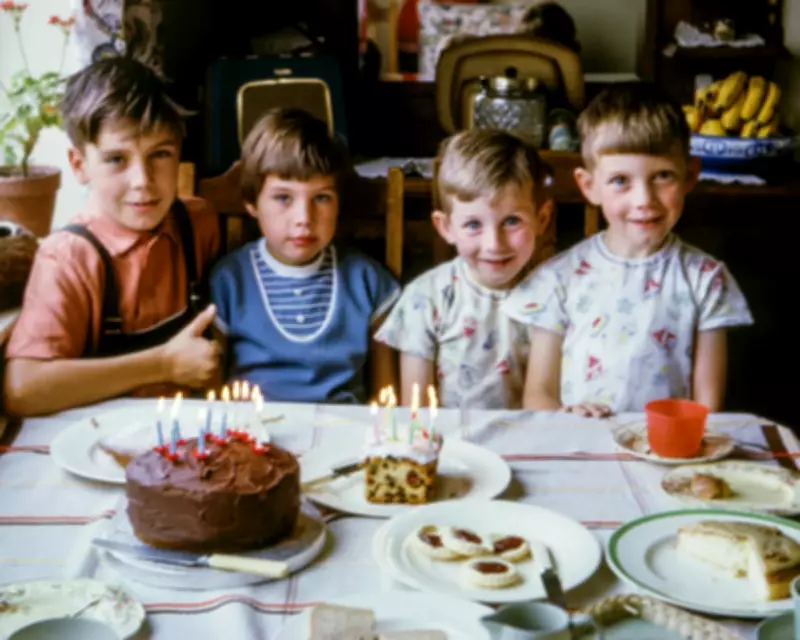
Shulman's creation, The House, serves as a cosy, immersive setting for his renowned collection, The Anonymous Project. This playful curation features an array of found family photographs, capturing moments from holidays to birthday parties, with characters peeping out of kitchen cupboards or lounging on beaches, often viewed through the window of a vintage caravan.
The effect is a seductive step into the past, evoking personal memories and dreams. All furniture used in staging the exhibition has been sourced from secondhand websites, adding authenticity to the mid-century aesthetic. For instance, the 1950s caravan, purchased for only 200 euros, has now travelled further globally than in its heyday, appearing in museums and shows worldwide.

The Origins of The Anonymous Project
Shulman began collecting in 2017 after acquiring a random box of vintage transparency slides. Drawn to the wonder of the people he discovered and the intimate windows into their lives—often funny, surprising, or tender—he embarked on an artistic endeavour to catalogue and exhibit these images. This process breathes new life into forgotten memories, giving them meaning once more.
Since its inception, the collection has flourished, growing to include 400,000 slides in its first year alone. Shulman, a self-confessed obsessive, delighted in the epic task of archiving them, viewing each slide as a miniature painting. He reflects that the images touch something deeply personal, bringing back memories of home life, comfort, boredom, tension, and routines.
Exploring Nuances of Family Life
Upstairs at the Hangar Gallery, the exhibition takes a deeper dive into family dynamics with Brazilian photographer Danilo Zocatelli's powerful project, Dear Father, I believe we found our peace. This moving story explores Zocatelli's disconnection from a traditional masculine upbringing in rural Brazil, as a young gay man leaning towards queer culture.
Remarkably, Zocatelli persuaded his father to participate in a project involving dressing in a wig and makeup. Initially treated as a joke, with his father requesting the best wig, the collaboration evolved into an intimate connection through makeup layering and portrait sessions. Zocatelli came to realise that his father's true motivation was love for his son, leading to reconciliation and understanding.
Global Themes and Environmental Concerns
Beyond family narratives, the festival introduces global themes, such as in French photographer Sylvie Bonnot's series, The Kingdom of Mosquitoes. Venturing deep into French Guiana, Bonnot met local custodians of the Amazon rainforest, addressing colonial memory and education on relationships with the natural world.
As a custodian of a Douglas pine forest in France, Bonnot brings expert knowledge to her work. Her images are immersive, layered artworks created using a technique called moulting, where she peels the silver gelatin skin from photographs, disrupting their fragile fabric. This results in artefacts rather than mere photos, serving as a metaphor for humanity's interference with nature and warning against neglect of preservation.
Wider Festival Highlights Across Brussels
Across the city, 52 exhibitions participate in the festival, offering diverse perspectives. At KlotzShows, a gallery dedicated to contemporary art, Daniel and Geo Fuchs present the Stasi – Secret Rooms project. At first glance resembling a homage to Wes Anderson's aesthetic, it actually provides a disturbing glimpse inside interrogation centres used by East Germany's Stasi secret police.
Growing up in West Germany, the artists consider this one of their most important works, aiming to preserve these places in a time capsule. During photoshoots, visitors, including former political prisoners, often sat and cried, their palpable suffering highlighting the psychological impact of the Cold War era.

Documenting Ukrainian Realities
In a retrospective at Geopolis, photojournalist Oleksandr Glyadyelov presents an epic body of work documenting Ukrainian life during and after the Soviet Union's breakup. This marks the first extensive showing outside Ukraine, featuring striking visual records of a nation grappling with economic turmoil, revolution, war, and hope.
Part of the exhibition focuses on Glyadyelov's images of street children in the 1990s, facing extreme poverty and social neglect. An unflinching record of social transformation, many of these children remain in touch with the photographer today. Glyadyelov, now regarded as a leading global photojournalist, mentors others documenting the current war in Ukraine.
The Photo Brussels Festival runs until 22 February 2026, inviting audiences to explore these multifaceted stories through the lens of photography.