A Sacred Journey to Mina Mina: Finding Holiness in Australia's Great Sandy Desert
In the summer of 2018, a remarkable expedition unfolded in the heart of Australia's Northern Great Sandy Desert. Judith Nangala Crispin, alongside a diverse group of Warlpiri custodians and non-Indigenous companions, embarked on a perilous journey to Mina Mina, a sacred site near Lake Mackay. This remote location, described as belonging to itself, offered a transformative experience that revealed the essence of holiness through ritual, landscape, and deep cultural connection.
The Call to Mina Mina
The idea for the journey originated with Aunty Agnes, a Warlpiri elder who had painted Mina Mina for decades but never set foot on her grandfather's Country. Despite warnings of danger, the group packed old Hilux and Troopie vehicles and set off from Lajamanu, driven by a shared determination to reach this holy place. The route was notoriously treacherous, with no roads, only open desert, and threats ranging from deep sand and shredded tyres to extreme heat and deadly snakes.
Overcoming Challenges in the Desert
The expedition faced immediate hardships, losing 11 tyres and depleting water reserves faster than expected due to the exertion of repairs in blistering heat. Melinda, an anthropologist, grew anxious at the improvisation, while Victoria, a sculptor, fell ill with the flu. Yet, the Warlpiri ladies remained lighthearted, singing and laughing around campfires warded against spirits and wildlife. At a critical juncture, with supplies low and the group going in circles, they nearly turned back, but an unexpected rescue by Alice, Teddy's skin-mother, provided new water and tyres, enabling them to press on.

Arrival at the Sacred Site
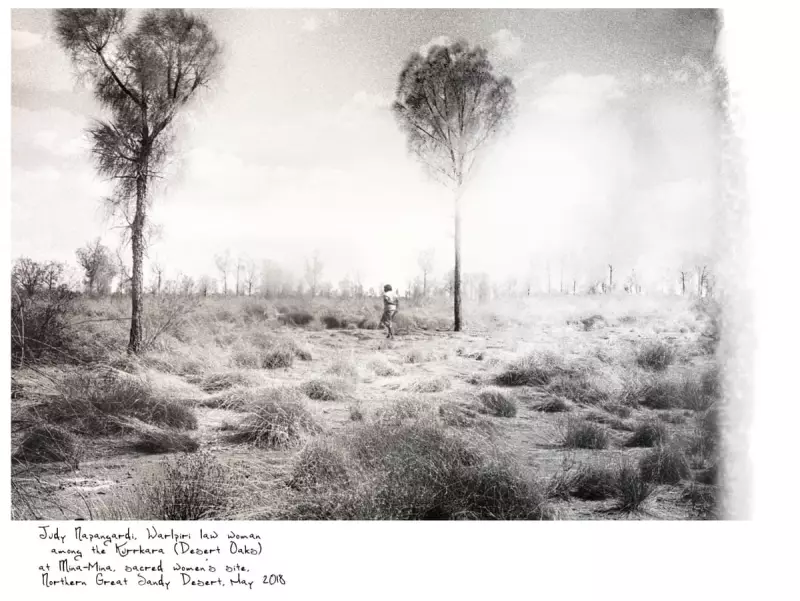
Upon reaching Mina Mina by nightfall, the landscape astonished all. Deep red sand, tall desert oaks, and three vast salt lakes created a stark, beautiful vista. Temperatures soared to 51°C, making hydration a struggle even with electrolytes from dissolved lake salt, and flies swarmed relentlessly. Under the desert oaks, Teddy and the ladies prepared for ceremony, painting and decorating themselves with Yam Jukurrpa designs.
A Moment of Revelation
Judy was the first to walk onto the salt, followed by Agnes, whose legs trembled with emotion. Despite the harsh conditions, Crispin captured the moment on camera before the film melted, as the group stood together on the salt shores. Agnes laughed, screamed, cried, and began to dance, joined by five other elders and wild-haired Teddy. From the dunes, Crispin witnessed the sunset behind desert oaks, with figures dancing in the haze of warding fires, and felt holiness reveal itself as a blend of love, ritual, map-making, salt, and guardian trees.
Reflections on Connection and Identity
This journey deepened Crispin's long-standing friendship with Warlpiri communities, which began in 2011 while she searched for her Aboriginal ancestry. Adopted by the Patrick family in Lajamanu and using the skin name Nangala, she emphasises that while not Warlpiri by blood, they are the people of her heart. The experience, detailed in her work The Dingo's Noctuary, underscores the power of cultural exchange and the enduring memory of sacred places.
Ultimately, the trek to Mina Mina, fraught with danger and discomfort, proved worth every hardship. It offered a glimpse into a world where holiness is etched into both body and land, a testament to the resilience of Indigenous traditions and the transformative power of shared journeys into the heart of Country.