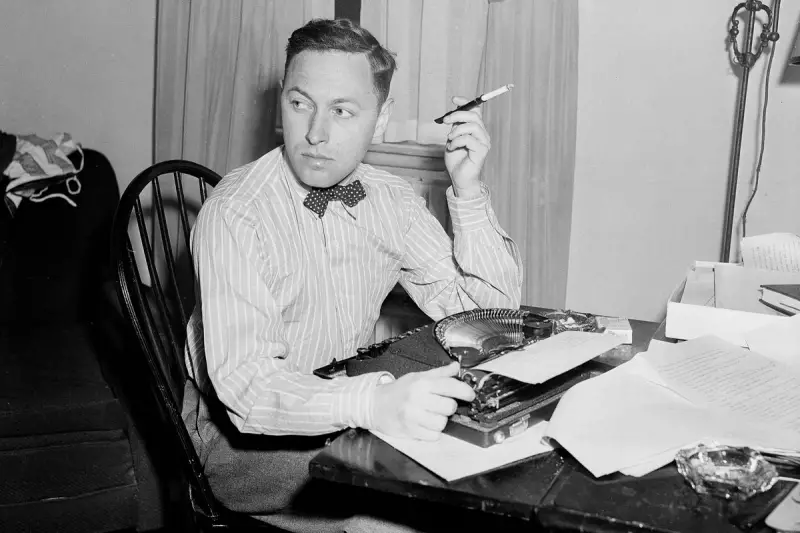
A previously obscure and rarely-heard radio play by the legendary American playwright Tennessee Williams has been published for the first time, casting new light on the gothic origins of his celebrated career. The piece, titled "The Strangers," was written while Williams was a student at the University of Iowa in the late 1930s and appears this week in The Strand Magazine.
The Gothic Foundations of a Playwriting Genius
Long before the era of podcast dramas, radio plays were a vital training ground for many great writers. Figures like Tom Stoppard and Arthur Miller honed their craft through the medium, with seminal works first reaching audiences via the airwaves. For a young Tom Williams—as he was still known—radio work offered both a potential income and a chance to refine his skills in plotting and dialogue.
His contribution to the genre, "The Strangers," is a classic piece of early radio horror. According to Andrew Gulli, managing editor of The Strand, the play is packed with atmospheric tropes: a storm-lashed house perched above the sea, flickering candles, mysterious footsteps, and spectral beings. More significantly, it contains early hints of the profound themes Williams would later master—isolation, fear, and the blurred line between imagination and reality.
Invisible Demons and Personal Hauntings
The play is set in a columned New England manor on the Atlantic coast, described as a "ghostly" home. The titular "Strangers" are invisible demons that haunt the residents, Mr. and Mrs. Brighton. In a key monologue, Mr. Brighton posits that these entities exist just beyond human perception, accessible only if we possessed more than our standard five or six senses.
Williams scholar John Bak notes that the play was one of several radio dramas the playwright worked on in Iowa, where such assignments were compulsory. Bak suggests Williams was influenced by both the commercial popularity of horror radio in the late 1930s and by deeply personal forces. While he initially saw radio plays as an "exercise," his approach grew more serious.
Critically, while writing "The Strangers," Williams was already grappling with the mental health struggles of his sister, Rose. Her condition would later inspire the fragile character of Laura Wingfield in The Glass Menagerie. Bak argues this early work shows Williams beginning his long exploration of madness and society's response to those who perceive a different reality.
A Significant Literary Discovery
The publication in The Strand Magazine places Williams' juvenilia alongside other rediscovered works by literary giants like Ernest Hemingway and William Faulkner. This discovery allows scholars and fans a unique glimpse into the formative creative process of one of the 20th century's most important dramatists.
It reveals how the atmospheric dread and psychological tension that would define classics like A Streetcar Named Desire—where Blanche DuBois famously depends on "the kindness of strangers"—had its roots in this earlier, darker exploration of "the horror of strangers." The play stands as a fascinating testament to how a master's iconic voice began to take shape in the most unexpected of formats.