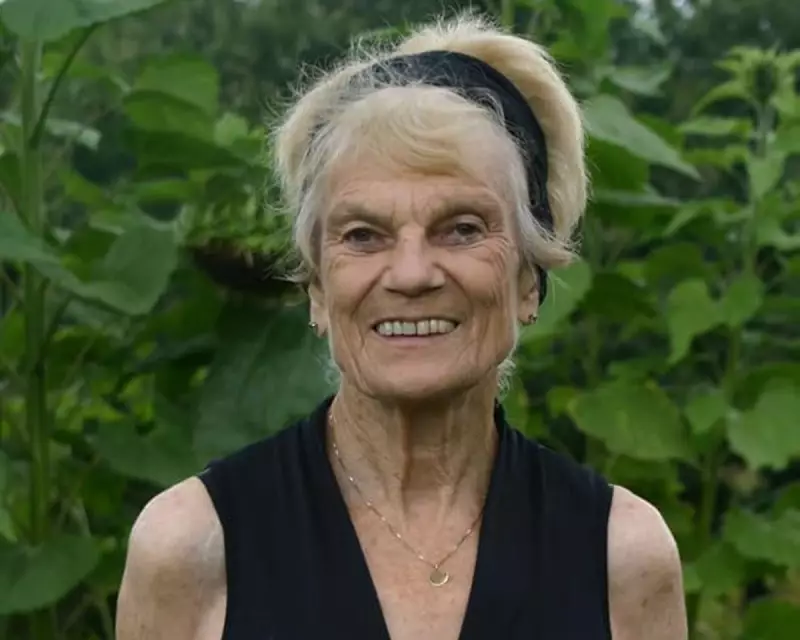
Acclaimed British novelist Sara Banerji, whose unique literary voice masterfully blended magical realism with the quirks of domestic life, has died at the age of 93. Over a three-decade career, she authored ten celebrated novels, leaving a distinct mark on contemporary fiction.
A Literary Alchemist of the Everyday
Banerji's storytelling was defined by its seamless fusion of the mundane and the mythical. Her debut novel, Cobweb Walking (1986), introduced readers to a child named Morgan who could walk on cobwebs, setting a precedent for a career that made the surreal feel tangible. Critics praised her ability to interweave fantasy with the absurdities of daily existence, bringing a fresh and imaginative perspective to the literary scene.
A recurring theme in her work was the absence of a father, a reflection of her own loss when her British army veteran father died during her teenage years. This motif powerfully shaped narratives like the darkly comic Shining Agnes (1990) and Absolute Hush (1991). The latter, set in a grand moated house, was described by The Observer as “a bold, fantastical work … an extraordinary marriage of pyrotechnics and grace.” Her sharp wit drew comparisons to literary giants Evelyn Waugh and Muriel Spark.

From Buckinghamshire to the Indian Hills
Born in Stoke Poges, Buckinghamshire, on 6 June 1932, Sara was one of four children. Her mother, Anita, was a novelist and a descendant of Henry Fielding, while her father, Sir Basil Mostyn, was a baronet and army officer. Her childhood included a period living in rudimentary mud huts on a tobacco farm in Southern Rhodesia (now Zimbabwe) after the war, before the family returned to Britain.
Her life took a decisive turn in 1957 when she married Ranjit Banerji, moving to India for 16 years. This experience profoundly influenced her writing, providing the setting for several novels. The Wedding of Jayanthi Mandel (1987) captured violent wedding-day drama, while The Tea-Planter’s Daughter (1988) explored repression and desire through the eyes of servants. Her final novel, Tikkippala (2015), used magical realism to trace a rajah's family through the 20th century.
A Life of Boundless Creativity
In India, Banerji was not only a writer but also a painter, art teacher, and a successful amateur jockey—strategically timing the births of her three daughters around the Flat racing season. The family left India in 1973 with just £10 after their dairy farm failed amid the Naxalite insurgency.
Back in Britain, she worked various jobs, eventually establishing 'Henfield Lady Gardeners'. Encouraged by client and horror writer James Herbert's success, she redoubled her efforts to publish. She later taught creative writing at an Oxford college until 2014 and ran a writing group until early 2025. Banerji never ceased creating, continuing to paint, sculpt, and write, including a childhood memoir for her family.
Sara Banerji died on 2 November 2025. She was predeceased by her husband Ranjit in 2022 and is survived by her three daughters, Bijoya, Sabita and Juthika, five grandchildren, four great-grandchildren, and two siblings.