The Death of a Global Icon
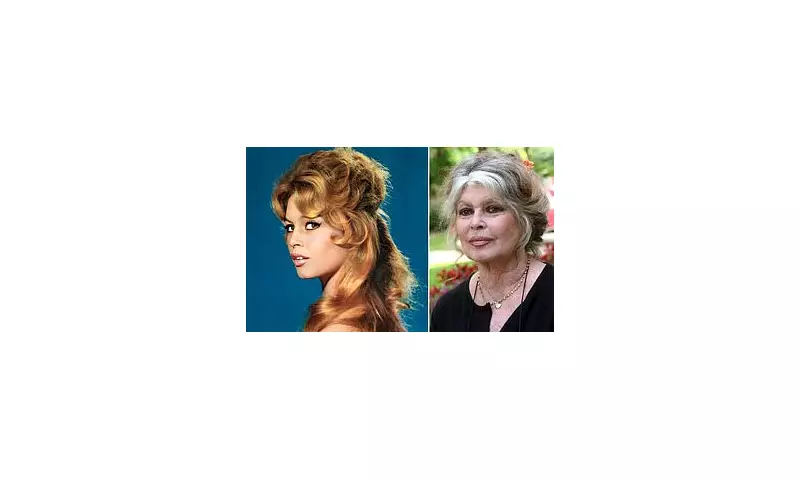
The death of Brigitte Bardot at the age of 91 was announced on Sunday, closing the final chapter on one of the 20th century's most potent and controversial symbols. The French president, Emmanuel Macron, led tributes, declaring she 'embodied a life of freedom' and was 'a French existence, a universal radiance'. Her passing marks the end of an era for a figure who, in the 1950s, achieved a level of global fame and sexual notoriety arguably unmatched even by Marilyn Monroe.
From Ballerina to Global Sex Symbol
Born into a wealthy Parisian family, Bardot began as a model and ballet dancer. Her life changed irrevocably when, at 15, she appeared on the cover of Elle magazine. Discovered by film director Marc Allégret, she was introduced to his assistant, Roger Vadim, who would become her first husband and the architect of her stardom. Despite her conservative parents' fierce opposition—which included a thwarted plan to send her to an English boarding school—Bardot married Vadim in December 1952 after a suicide attempt.
Her transformation was swift. With Vadim's shrewd promotion, including strategic appearances at the 1953 Cannes Film Festival, and her hair dyed blonde, the 'sex kitten' was born. However, it was the 1956 film And God Created Woman, directed by Vadim, that detonated her onto the world stage. Her portrayal of a free-spirited orphan in St Tropez, particularly a barefoot, sweaty dance scene, was explosive for its time.

The film was banned in several American states and denounced by critics; one British review called it 'a crude piece of calculated pornography'. This controversy served as the ultimate publicity, making the 22-year-old Bardot an international sensation. A contemporary survey suggested that 47% of all conversation in France was about Bardot, eclipsing talk of politics.
A Life of Scandal, Passion and Controversy
Bardot's personal life was as turbulent as her rise to fame. Her marriage to Vadim soured during the making of And God Created Woman, when she began an affair with co-star Jean-Louis Trintignant. She went on to marry three more times: to actor Jacques Charrier, with whom she had her only child, Nicolas; to German playboy Gunter Sachs; and finally, in 1992, to businessman Bernard d'Ormale, a former adviser to far-right leader Jean-Marie Le Pen. She was conservatively estimated to have had at least 100 lovers.
Her impact on popular culture was profound. In 1967, she audaciously wore a Napoleonic hussar uniform to meet President Charles de Gaulle, who declared her a 'French export as important as Renault cars'. The following year, she became the first real-life model for Marianne, the symbol of the French Republic. John Lennon famously had her poster on his ceiling, and a star-struck Serge Gainsbourg wrote 'Je t'aime... moi non plus' for her.
Yet, the pressures of fame took a severe toll. Bardot suffered from lifelong depression, had a nervous breakdown, and made several suicide attempts. She abruptly quit acting in 1973 at age 39, stating, 'my soul is not my own any more'.
Activism and a Troubled Legacy
In her later decades, Bardot reinvented herself as a fervent animal rights activist. She founded the Brigitte Bardot Foundation in 1986 and campaigned tirelessly, even supporting a Daily Mail campaign to save a dog in Scotland in 1998. She claimed, 'I gave my beauty and my youth to men. I am going to give my wisdom and experience to animals'.
However, this period was also marred by convictions for inciting racial hatred. She was found guilty five times by French courts for inflammatory comments about Muslims and made derogatory remarks about gay people. She also criticised the #MeToo movement, calling actresses 'ridiculous' hypocrites and defending actor Gérard Depardieu during his assault trial.
Brigitte Bardot's life defied simple categorisation. She was a global sex symbol, a national icon, a passionate activist, and a convicted bigot. As she once said, 'I wanted to be myself. Only myself.' In death, as in life, she remains a uniquely complex and unforgettable figure.