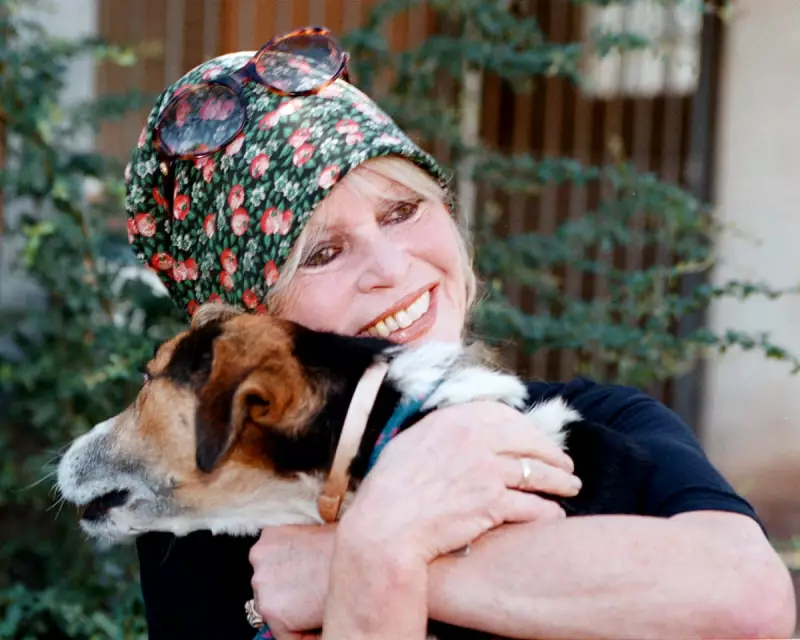
The death of Brigitte Bardot, the iconic French film star turned activist, has reignited a complex debate about her legacy. While she fervently wished to be remembered exclusively for her animal rights campaigning, her decades-long and vocal support for France's far-right political movement presents a deeply contradictory picture.
A Political Alignment Forged on the Riviera
For more than 30 years, from the 1990s until her passing, Bardot was a staunch supporter of the anti-immigration movement in France. She initially backed Jean-Marie Le Pen's Front National and later transferred her allegiance to his daughter, Marine Le Pen, and her rebranded National Rally (Rassemblement National or RN).
Her political convictions were deeply personal. She met her husband, Bernard d'Ormale – a former adviser to Jean-Marie Le Pen – at a dinner organised by the Le Pen family in Saint-Tropez in the early 1990s. D'Ormale remained her husband until her death, solidifying her ties to the movement.

Bardot did not shy away from expressing her views. She was convicted five times for inciting racial hatred over remarks targeting Muslims, describing an "invasion" of foreigners, and making offensive comments about inhabitants of the French island of Réunion.
Animal Rights: The "Sole Cause" and Political Leverage
Bardot consistently declared that the struggle for animal welfare was her only true cause. She leveraged her fame to petition French presidents from Charles de Gaulle to Emmanuel Macron on issues ranging from seal fur imports to elephant poaching.
She claimed a pragmatic approach, willing to work with any politician who advanced animal rights, even praising left-wing figure Jean-Luc Mélenchon for his vegetarianism. However, her political energy was overwhelmingly directed towards the far right.
She praised Marine Le Pen's criticism of halal meat in France and, in her final book published weeks before her death, wrote that the right was the "only urgent remedy to the agony of France."
A Contested Symbol of Frenchness
Bardot's image, once used as a model for Marianne, the national symbol of the French Republic, was co-opted by the far right as an emblem of traditional Frenchness. During the 2016 'burkini' debate, Marine Le Pen declared French beaches were the home of Bardot, not full-body swimsuits.
In turn, Bardot offered robust endorsements, saying Le Pen was "the only woman … who has balls." Following the RN's gains in the 2023 snap election, she praised the party's young president, Jordan Bardella, as "very good." After her death, Bardella paid tribute, calling her an "ardent patriot."
Her controversial stances extended beyond immigration. In her final years, she was critical of the #MeToo movement, defending "talented people who grab a girl's bottom," and in a final TV interview stated, "Feminism isn't my thing."
Bardot's legacy is thus irrevocably split. The global icon of beauty and fierce advocate for animals leaves behind a parallel history of divisive rhetoric and steadfast support for a political movement defined by its stance against immigration. As Marine Le Pen's party eyes the 2027 presidential race, Bardot's complicated political image will remain a significant, and contentious, part of her story.