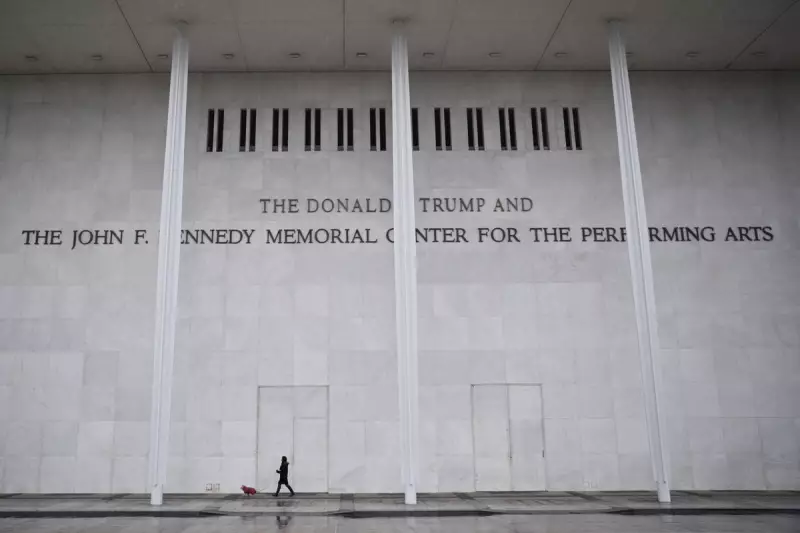
In a significant cultural protest, the celebrated composer Philip Glass has withdrawn the world premiere of his latest symphony from the Kennedy Center in Washington D.C. The decision comes directly in response to the performing arts centre's recent rebranding to incorporate former President Donald Trump's name.
Values in Direct Conflict
The 89-year-old composer, renowned for his minimalist compositions and film scores, announced his withdrawal via Instagram, stating he felt an "obligation" to cancel the premiere under the centre's current leadership. Glass explained that the Kennedy Center's current values stand in "direct conflict" with the message of his new work, Symphony No. 15 Lincoln, which serves as a portrait of Abraham Lincoln.
Premiere Dates Cancelled
The symphony had been scheduled to debut at the performing arts centre on June 12 and 13, 2026. These performances would have marked the first public hearing of Glass's latest major orchestral work, which explores themes of leadership, democracy, and national identity through the lens of America's 16th president.

Glass's withdrawal represents more than just a scheduling change—it constitutes a powerful statement about artistic integrity and political symbolism in America's cultural institutions. The composer's decision highlights growing tensions between artistic communities and politically-charged institutional changes.
Growing Artist Boycott
Philip Glass joins several other prominent artists who have withdrawn from planned performances at the centre following its controversial rebranding. Among those who have cancelled appearances are renowned soprano Renée Fleming and innovative banjoist Bela Fleck, suggesting a pattern of artistic protest against the institution's new identity.
The Trump-Kennedy Center rebranding has sparked considerable debate within cultural circles, with many questioning the appropriateness of naming a national cultural institution after a living, politically divisive figure. Glass's symphony, dedicated to Abraham Lincoln—a president celebrated for preserving national unity during the Civil War—creates particularly stark contrast with the centre's new namesake.
This incident raises important questions about:
- The relationship between art and politics in public institutions
- Artists' rights to control where and how their work is presented
- The impact of political branding on cultural diplomacy
- The future programming of nationally significant arts venues
While the Kennedy Center has not issued an official response to Glass's withdrawal, the cancellation represents a significant loss for the institution's 2026 programming. Symphony No. 15 Lincoln will now need to find an alternative venue for its world premiere, potentially outside Washington D.C. or even overseas.
The controversy continues to unfold as other artists consider their positions regarding performances at the Trump-Kennedy Center, suggesting this may not be the last high-profile cancellation the institution faces.