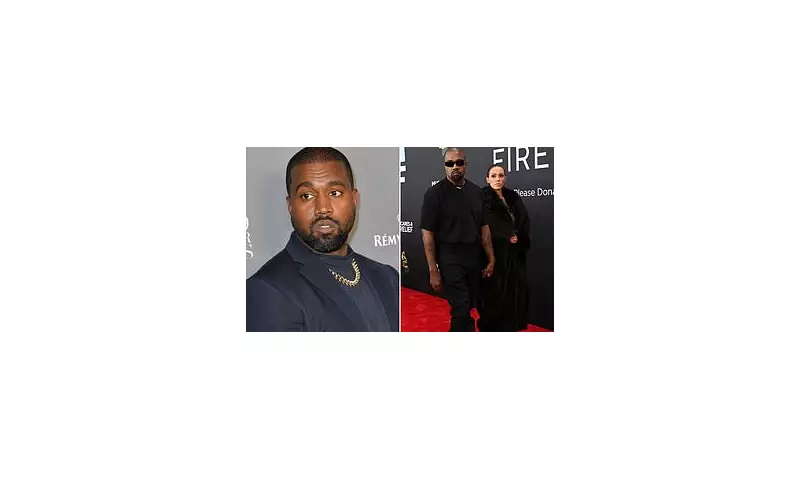
Controversial rapper and fashion mogul Kanye West has broken his silence in a dramatic public apology, revealing a previously undisclosed brain injury as the root cause of his bipolar disorder and the subsequent torrent of antisemitic remarks that have plagued his career in recent years. The 48-year-old artist, legally known as Ye, took out a full-page advertisement in Monday's print edition of the Wall Street Journal to issue a heartfelt mea culpa, directly linking his hateful statements to his mental health struggles.
The Tipping Point: A Wife's Intervention
In an exclusive interview with Vanity Fair, West disclosed that it was his wife, Bianca Censori, who ultimately prompted him to seek professional treatment after recognising he was spiralling into a "deep depressive episode." This critical intervention followed a medication change during what West describes as the tail end of a "four-month-long manic episode" in early 2025. "My wife recognised that, and we sought out what's been effective and stabilizing course correction in my regime from a rehab facility in Switzerland," West explained, emphasising the severity of his condition by noting that bipolar disorder is "one of the most lethal nonterminal illnesses."
Addressing PR Speculation Head-On
Anticipating scepticism about his motives, West vehemently denied that his public apology was a calculated public relations manoeuvre designed to rehabilitate his commercial image. He pointed to his enduring popularity as evidence, revealing that data shows he remained "in the top 10 most listened-to artists overall in the US on Spotify in 2025." Furthermore, he highlighted the anticipation for his upcoming album, Bully, and the continued streaming success of his 2007 album, Graduation. "This, for me, as evidenced by the letter, isn't about reviving my commerciality," West insisted. "This is because these remorseful feelings were so heavy on my heart and weighing on my spirit."

The Unseen Injury: A 2002 Accident's Legacy
The core of West's explanation centres on a traumatic car accident twenty-five years ago, an event he claims has shaped his mental health ever since. In the detailed Wall Street Journal advertisement, headlined "To Those I Hurt," West describes how the 2002 crash broke his jaw but, more significantly, caused an injury to the right frontal lobe of his brain that went completely undiagnosed at the time.
"The deeper injury, the one inside my skull, went unnoticed," West wrote. "Comprehensive scans were not done, neurological exams were limited, and the possibility of a frontal-lobe injury was never raised. It wasn't properly diagnosed until 2023. That medical oversight caused serious damage to my mental health and led to my bipolar type-1 diagnosis." This revelation adds a new dimension to the narrative, suggesting a direct physiological cause for his subsequent psychiatric condition.
The Destructive Spiral of Mania
West's advertisement offers a raw and unfiltered look into the experience of bipolar mania, describing how the disorder's "own defense system" of denial can be utterly persuasive. "When you're manic, you don't think you're sick. You think everyone else is overreacting," he wrote. He detailed how this fractured mental state led him to "gravitate toward the most destructive symbol I could find, the swastika," an action he now calls "deeply mortifying."
He stressed the serious mortality risks associated with the illness, citing World Health Organization and Cambridge University data indicating a life expectancy shortened by ten to fifteen years. "This is on par with severe heart disease, type-1 diabetes, HIV, and cancer - all lethal and fatal if left untreated," West stated, framing his past behaviour as symptomatic of a severe, untreated medical condition.
Apologies to Communities and Family
The rapper issued specific apologies to the Jewish and Black communities, acknowledging the particular hurt his words caused. "I owe a huge apology once again for everything that I said that hurt the Jewish and Black communities in particular," he told Vanity Fair. In his printed letter, he was unequivocal: "I am not a Nazi or antisemite. I love Jewish people." To the Black community, he wrote: "The black community is, unquestionably, the foundation of who I am. I am so sorry to have let you down."

He also lamented the personal wreckage, acknowledging that his words had "tarnished" lifelong friendships and family bonds. "Every day that I wake up, it's a checklist of everything that I said—at least what I can recall—while in a bipolar episode," he confessed, painting a picture of daily remorse.
Road to Recovery and External Response
West described finding unexpected solace in Reddit forums where others share experiences of manic episodes, helping him realise he was not alone. His current treatment in Switzerland involves a new regime of medication, therapy, exercise, and clean living, which he says has provided "much-needed clarity."
The Anti-Defamation League (ADL), a leading organisation combating antisemitism, responded cautiously to the apology. In a statement, an ADL spokesman said the apology was "long overdue and doesn't automatically undo his long history of antisemitism," adding that "the truest apology would be for him to not engage in antisemitic behavior in the future."
This public reckoning follows years of controversial statements from West that began in late 2022, including tweets about going "death con 3 On JEWISH PEOPLE," praise for Adolf Hitler, and the release of a song entitled 'Heil Hitler.' These remarks led major brands like Adidas and Balenciaga to sever ties with him. West's understanding of his own diagnosis has also fluctuated publicly; after years of discussing his bipolar disorder, he asserted last winter that he had been misdiagnosed and had autism instead, before now reaffirming the bipolar diagnosis linked to his brain injury.
The rapper's mental health has long impacted his personal life, notably his previous marriage to Kim Kardashian, with whom he shares four children. Kardashian has publicly addressed his diagnosis in the past, and as recently as October 2025 mentioned on a podcast that the family had not heard from him "for a couple months," though reports indicated a reunion over the Christmas period.
West concludes his message not by asking for sympathy, but for "patience and understanding as I find my way home," signalling a commitment to ongoing treatment and a future focused on "positive, meaningful art."