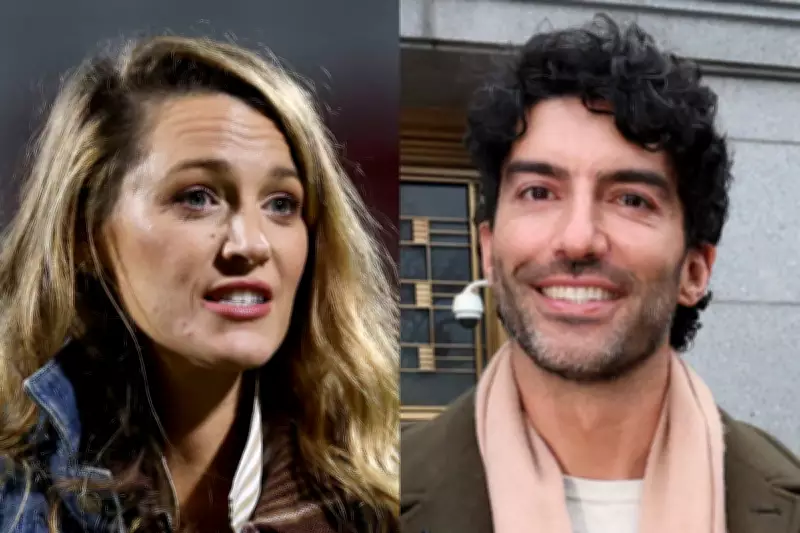
Blake Lively Vows to Persist with Justin Baldoni Lawsuit After Legal Setback
Hollywood actress Blake Lively has made a firm commitment to proceed with her high-profile legal action against director and co-star Justin Baldoni, despite a significant judicial ruling that has drastically reduced the scope of her case. This development follows a decision by Judge Lewis Liman to dismiss the majority of Lively's original claims, including those pertaining to sexual harassment, defamation, and conspiracy.
Claims Dismissed and Proceeding to Trial
In total, only three out of Lively's initial thirteen allegations will advance to trial. These surviving claims specifically relate to breach of contract, retaliation, and aiding and abetting in retaliation. The dismissal of the sexual harassment claims was notably based on the court's determination that Lively was classified as an independent contractor rather than an employee during the production of the film It Ends With Us.
Sigrid McCawley, a member of Lively's legal team, provided a detailed statement to The Independent, emphasizing the core focus of the ongoing litigation. "This case has always been and will remain focused on the devastating retaliation and the extraordinary steps the defendants took to destroy Blake Lively's reputation because she stood up for safety on the set," McCawley declared. "That is the case that is going to trial."

McCawley further elaborated on Lively's perspective, stating, "For Blake Lively, the greatest measure of justice is that the people and the playbook behind these coordinated digital attacks have been exposed and are already being held accountable by other women they've targeted. She looks forward to testifying at trial and continuing to shine a light on this vicious form of online retaliation so that it becomes easier to detect and fight."
Defense Response and Legal Background
In a separate statement, Baldoni's legal representatives, Alexandra Shapiro and Jonathan Bach of Shapiro Arato Bach, expressed satisfaction with the court's decision. "We're very pleased the Court dismissed all sexual harassment claims and every claim brought against the individual defendants: Justin Baldoni, Jamey Heath, Steve Sarowitz, Melissa Nathan, and Jennifer Abel," they told The Independent.
The defense team continued, "These were very serious allegations, and we are grateful to the Court for its careful review of the facts, law and voluminous evidence that was provided. What's left is a significantly narrowed case, and we look forward to presenting our defense to the remaining claims in court."
The legal dispute originated dramatically on December 20, 2024, when Lively filed a comprehensive lawsuit alleging sexual harassment and claiming that Baldoni's conduct caused her "severe emotional distress." The case revolves around the 2024 romance drama It Ends With Us, in which Baldoni both directed and co-starred alongside Lively. The film is based on Colleen Hoover's bestselling novel, which narrates the story of a flower shop owner who becomes involved with an abusive neurosurgeon.
Author's Perspective and Impact
Colleen Hoover, who served as an executive producer on the film adaptation, has publicly addressed the contentious legal proceedings. In a recent interview with Elle, Hoover described the situation as feeling "like a circus" and expressed deep concern over its real-world consequences.
"When there are real people involved, with real feelings and emotions. This actually truly has impacted some of the actors' careers in huge ways. And I just find it all around sad," Hoover revealed. She shared that her novel was inspired by her mother's personal experiences with abuse, adding that the ongoing lawsuit "now gives us PTSD to think about it."

Hoover further lamented, "I feel awful because I almost feel like she's gone through more with the aftermath of this film, more pain than she went through with my dad, just seeing the ugliness of it. I can't even recommend it anymore. I feel like [the lawsuit] has overshadowed it." This poignant reflection underscores the broader emotional and professional ramifications extending beyond the courtroom, affecting both the individuals directly involved and the cultural legacy of the creative work itself.