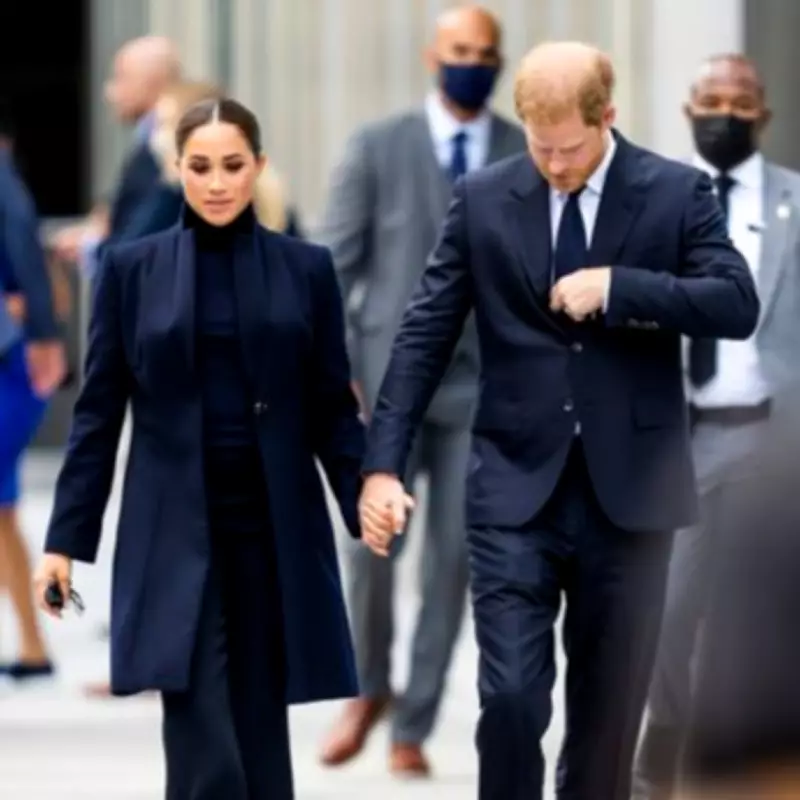
Royal Expert Condemns Meghan Markle's Social Media Post as Privacy Breach
In an exclusive commentary, prominent royal author Ingrid Seward has launched a scathing critique of Meghan Markle's decision to publicly share a photograph of her daughter Princess Lilibet's face on social media platforms. Seward characterizes this action as fundamentally hypocritical and directly contradictory to Prince Harry's repeatedly expressed desire for family privacy.
Contradicting Stated Privacy Principles
Seward emphasizes that Prince Harry will undoubtedly remember his traumatic discussions with the late Queen Elizabeth II during the couple's departure from royal duties, where he specifically articulated their wish to raise their family away from constant photographic scrutiny. "This is incredibly hypocritical because a photograph like Meghan's isn't private," Seward asserts, noting that while sharing images with close friends differs substantially, broadcasting to millions constitutes an entirely separate matter.
The royal commentator suggests that Prince Archie and Princess Lilibet have potentially become extensions of parental vanity, questioning what purpose such public sharing serves beyond displaying attractive offspring. Many contemporary parents consciously avoid exposing their children's images digitally due to permanent visibility concerns, making this decision particularly perplexing according to Seward's analysis.

Harry's Complicated Privacy History
Prince Harry's well-documented childhood experiences with invasive media attention give him unique insight into privacy matters that Meghan Markle lacks, Seward contends. While Harry has openly expressed his profound discomfort with cameras and public exposure, describing himself as fundamentally "a private person," Meghan appears more comfortable with Hollywood-style visibility and the accompanying fame.
"Movie stars are always showing themselves off with their children but you don't expect it from a Prince of the Realm," Seward observes, highlighting the behavioral disconnect between royal expectations and celebrity norms. This fundamental difference in perspective likely generates fiery domestic disagreements about appropriate boundaries for their children's public exposure.
Comparative Celebrity Approaches
Seward draws parallels with George and Amal Clooney, who have successfully maintained their children's privacy despite global recognition. The Clooneys have consistently refrained from publishing photographs or publicly discussing their offspring, demonstrating that famous parents can indeed protect their children from media exposure.
This comparison underscores Seward's central argument: the Sussexes have created precisely the opposite of the private life they originally sought when departing royal duties. "It appears they left the family because they wanted a public life and to earn money," she suggests, characterizing the situation as potentially embarrassing from traditional English perspectives that might view such self-promotion as boastful or ill-mannered.
Irreversible Consequences and Domestic Dynamics
The royal author expresses disappointment that Prince Harry didn't more forcefully oppose the photograph's publication, given its contradiction with their stated privacy values. Once such images enter the digital sphere, they become permanently accessible, creating an irreversible privacy compromise for the young princess.
Seward concludes that Meghan Markle typically prevails in domestic decisions, suggesting she "gets the final word in everything they discuss." Despite both parents' evident devotion to their children, their approaches to fame and privacy remain fundamentally misaligned, with Meghan's comfort on red carpets contrasting sharply with Harry's documented aversion to public scrutiny.