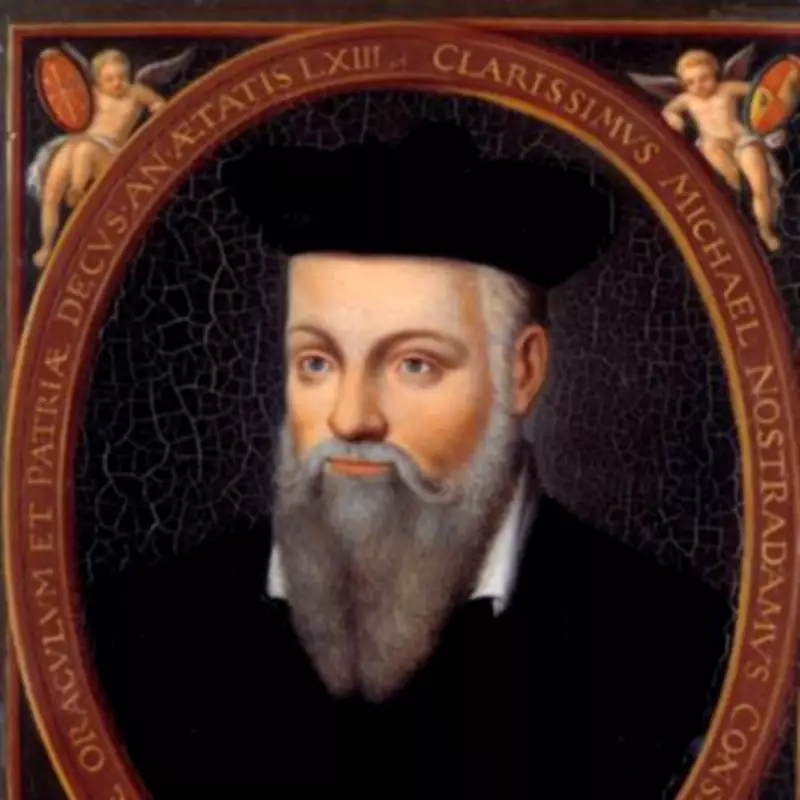
French visionary Nostradamus continues to captivate the modern world with his enigmatic sixteenth-century prophecies, which many believe contain startlingly accurate forecasts of future events. As we approach 2026, renewed attention has turned to four particularly chilling predictions from his extensive body of work, each offering a grim glimpse into what the coming year might hold for global society.
The Seven-Month Great War
Among the most alarming of Nostradamus' forecasts is his reference to a "seven months great war" in which "people dead through evil" and specific mention of Rouen and Evreux. This quatrain has been widely interpreted by contemporary analysts as potentially foreshadowing an escalation or new phase in existing international conflicts, with some drawing parallels to the ongoing warfare between Russia and Ukraine.
Historical precedent lends weight to such interpretations, as Nostradamus is credited by some scholars with having predicted the atomic bombings of Hiroshima and Nagasaki through his reference to "two cities" experiencing "scourges the like of which was never seen." The specificity of the seven-month timeframe adds particular urgency to this prediction as nations worldwide monitor geopolitical tensions.

The Great Swarm of Bees
In one of his more mysterious passages, Nostradamus wrote of "The great swarm of bees" that "will arise by the night ambush." This prediction has gained attention because the verse corresponds numerically to the year 2026, though its precise meaning remains hotly debated among prophecy experts.
Interpretations range from literal insect infestations to metaphorical representations of military drone swarms or coordinated cyber attacks. The nocturnal nature of the predicted ambush suggests sudden, unexpected devastation, though whether this refers to environmental, technological, or social disruption continues to puzzle researchers attempting to decode the seer's intentionally obscure language.
Celebrity Struck by Thunderbolt
The twenty-sixth verse of Century I contains another disturbing forecast: "the great man will be struck down in the day by a thunderbolt." This prediction has sparked considerable speculation about which prominent figure might meet such a dramatic fate during daylight hours in 2026.
Potential candidates range from royalty and world leaders to entertainment celebrities and business magnates. Some interpreters have even suggested this could manifest as a literal lightning strike during a high-profile public event, perhaps on a red carpet or during an outdoor ceremony. The ambiguity of "great man" leaves open whether the victim will be male or whether the term encompasses influential figures of any gender in modern interpretation.
Switzerland Drenched in Blood
Perhaps the most geographically specific of the four predictions concerns Switzerland, with Nostradamus writing that "the Ticino will overflow with blood" following "the favour that the city will show." This grim imagery points directly to Switzerland's Italian-speaking canton of Ticino, known for its picturesque landscapes that contrast sharply with the violent forecast.
Interpretations of this blood reference vary widely, from predictions of mass casualty events and terrorist attacks to natural disasters or even metaphorical representations of political upheaval. The mention of "favour" shown by a city adds another layer of mystery, suggesting some action or decision might precipitate the coming violence in this typically peaceful region.
The Challenge of Interpretation
Critics of Nostradamus' prophecies consistently point to several factors that complicate accurate interpretation. The seer composed all his predictions in cryptic quatrains using Middle French with deliberately ambiguous Latin expressions, creating multiple possible meanings for each passage.
Furthermore, centuries of manuscript copying, transcription errors, and varied translations have introduced additional uncertainty about what Nostradamus originally intended. His 1555 masterpiece 'The Prophecies' contains 942 such quatrains according to historical records, providing ample material for both serious study and sensational speculation.

As 2026 approaches, these four predictions will undoubtedly receive increased scrutiny from believers and skeptics alike. Whether they represent genuine foresight, remarkable coincidence, or simply the human tendency to find patterns in ambiguous texts remains to be seen, but their enduring power to fascinate and unsettle continues undiminished nearly five centuries after their composition.