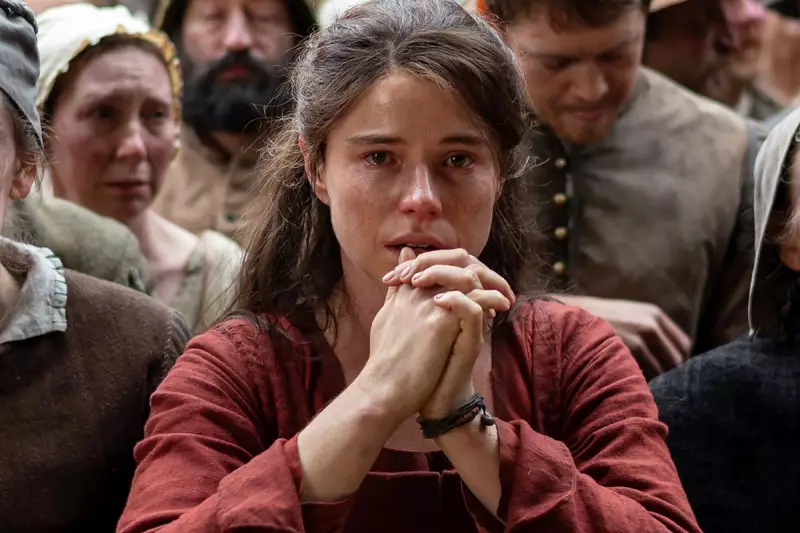
Chloé Zhao's contemplative new film, Hamnet, has positioned itself as a major awards contender, with lead actress Jessie Buckley already tipped for Oscar glory. The movie, a speculative drama about William Shakespeare's family tragedy, arrives in UK cinemas with both acclaim and accusations of emotional manipulation.
A Speculative Portrait of Grief and Art
Adapted from Maggie O'Farrell's celebrated novel, the film explores the profound loss suffered by Shakespeare and his wife, Agnes (historically Anne Hathaway), when their only son, Hamnet, died in 1596. The narrative posits a compelling theory: that the greatest play in the English language, Hamlet, was born from this personal cataclysm. The film suggests the play served as a form of collective catharsis for an Elizabethan audience all too familiar with the plague's indiscriminate harvest of life.
Paul Mescal plays a William Shakespeare rendered inarticulate by grief everywhere but on the page, while Jessie Buckley delivers a remarkable performance as Agnes, a woman connected to the natural world and rumoured to have witch's blood. The young Hamnet is portrayed by Jacobi Jupe, with his older brother, Noah Jupe, pointedly playing the fictional Hamlet on stage.

Visual Poetry Versus Emotional Directness
Zhao, the Oscar-winning director of Nomadland, and cinematographer Łukasz Żal craft a visually stunning world. The film is bathed in the flickering light of candles, its frames composed like Dutch Master paintings, with the camera often lingering on empty spaces as slowly as a theatre curtain being drawn.
However, some critics have balked at the film's more overtly emotional tactics. Zhao includes a scene where Shakespeare recites "to be or not to be" while contemplating the Thames, and employs Max Richter's ubiquitous piece "On the Nature of Daylight" at the climax. While these choices may feel unnecessary to some, they are counterbalanced by the film's immense subtlety elsewhere in depicting a world where death is a constant companion.
Buckley's Award-Worthy Performance
The film's undeniable powerhouse is Jessie Buckley. As Agnes, she channels a grief that feels ancestral and earth-deep. When she speaks, cries, or smirks, it conveys an unfathomable history of loss. Her performance is the conduit for the film's central idea: that grief, while unique, is a universal thread connecting humanity across time, forever seeking a hand to hold in the dark.
Hamnet is a deeply contemplative work that asks how we scour life for meaning in the face of inevitable loss. It argues that great art can be forged in the furnace of personal tragedy, offering solace not just to the artist, but to the stranger in the crowd. The film, rated 12A with a runtime of 126 minutes, is now showing in cinemas across the UK.