On the surface, the prognosis for British culture appears terminal. The music industry is in a state of near-collapse, with 125 grassroots venues closing in 2023 alone, making touring a financially ruinous endeavour for many artists. The comedy world's essential launchpad, the Edinburgh Fringe, faces an existential threat from soaring costs. Both film and television have become perilously dependent on dwindling American investment, with even the BBC lurching from one crisis to another. Yet, paradoxically, 2025 has witnessed a British cultural explosion on the world stage.
The Paradox of Global Success Amidst Local Crisis
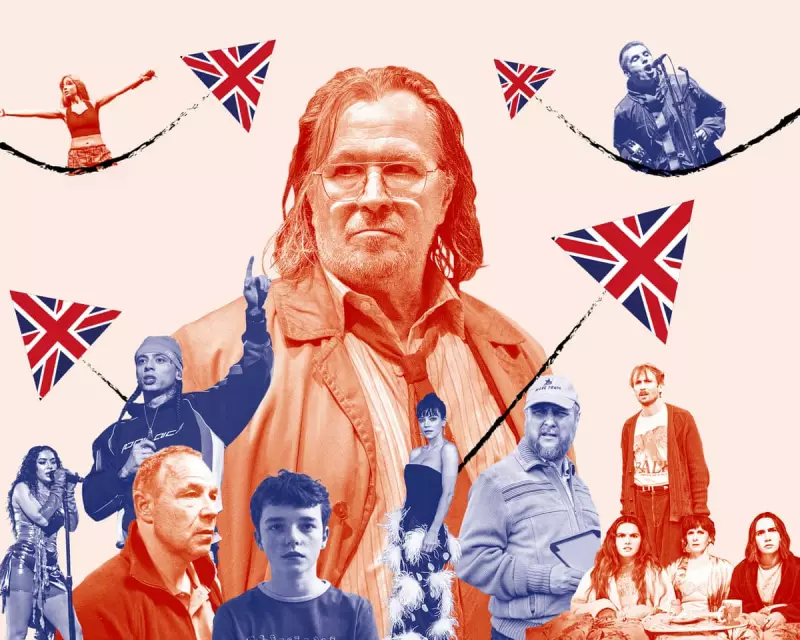
This dominance is not built on bland, export-friendly product. Instead, the world is embracing art that is unapologetically and intricately British. In pop music, the zeitgeist has been defined by two quintessential forces: the monumental Oasis reunion and the continued ripple effect of Charli XCX's 'Brat'. Both projects are steeped in a very specific national character—Oasis in their lad-culture bravado and Beatles nostalgia, 'Brat' in its art-school irony and grounding in UK garage and happy hardcore.
This trend extends across the charts. Lily Allen's acerbic 'West End Girl', Lola Young's chart-topping 'Messy', and Jade Thirwall's debut all trade in a uniquely British blend of candour and caustic wit. Similarly, PinkPantheress has achieved international acclaim by mining a melancholic, rain-lashed British sensibility, overlaying drum 'n' bass and jungle with vocals evoking what she calls "hope and lost hope." In rap, Central Cee made history as the first UK rapper to land a top 10 Billboard album with lyrics referencing Sports Direct and the Uxbridge Road.

Screen Triumphs: From Kitchen-Sink Zombies to Netflix Phenoms
The screen sector tells a similar story of specific Britishness finding a massive global audience. Danny Boyle's '28 Years Later', a zombie film disguised as a Brexit-era kitchen-sink drama, grossed over $150 million worldwide. Tim Key and Tom Basden's critically adored 'The Ballad of Wallis Island', a film steeped in repressed grief and references from Monster Munch to Harold Shipman, became an unlikely international hit.
On television, 'Adolescence' became the second-most-watched show in Netflix history, a socially provocative drama from Jack Thorne and Stephen Graham that recalled the gritty realism of Mike Leigh. Apple TV's 'Slow Horses', built on failure and flatulence in a grimy London, thrived in its fifth series. Even US-backed productions like the BBC's 'Such Brave Girls' and the HBO co-production 'Industry' are celebrated for their pitch-perfect, if often bleak, capture of British life and satire.
Anglophilia Goes Niche: The 'Britishcore' Internet Craze
Beyond traditional media, a new wave of global Anglophilia is flourishing online. Moving past clichés of afternoon tea, international audiences—particularly Americans—are fetishising the mundane specifics of UK life. The #Britishcore trend evolved in 2025, with social media users celebrating everything from Tesco meal deals and 'Wetherspoons' to podcasts about Arsenal Football Club.
This fascination is driven by a romanticised view of the UK as a sanctuary from a turbulent US political climate and unprecedented exposure via TikTok. Figures like YouTuber Amelia Dimoldenberg, with her 'Chicken Shop Date' series, have turned British social awkwardness and dry wit into a successful export, landing her a role as Oscars red carpet correspondent.
Future-Proofing the Renaissance: A Call for "Creative Nationalism"
The critical question is whether this golden moment can be leveraged to solve the systemic crises that threaten its foundation. In January 2025, David Lammy announced a 'soft power' taskforce to strategically monetise these cultural assets, but tangible action has yet to materialise. Some proposals are gaining traction, like a voluntary £1 ticket levy on arena gigs to support grassroots venues, advocated by figures like Wolf Alice's Joff Oddie.

Film director Peter Kosminsky is pushing for a 5% levy on UK streaming revenues to create a British cultural fund. Screenwriter Steven Knight has controversially suggested the need for "creative nationalism"—not an exclusionary jingoism, but a drive for autonomy to prevent permanent dependence on foreign conglomerates, citing Disney's abrupt handling of Doctor Who as a cautionary tale.
The ultimate, very British, irony is that a culture so adept at exploring failure, self-deprecation, and melancholic nuance now faces the un-British task of capitalising on its own success. As 2025 concludes, British culture is simultaneously at its global peak and on a precarious cliff edge, its future hinging on whether it can master the art of sustainable self-belief.