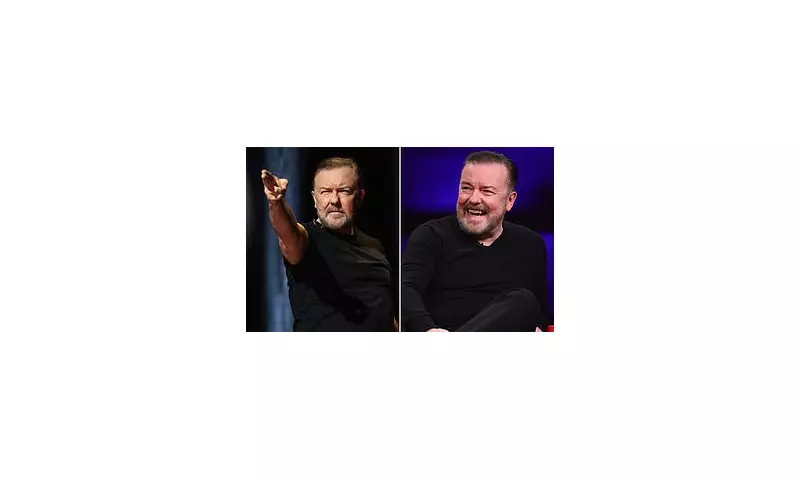
Comedian Ricky Gervais has sparked debate by stating that the only group it remains broadly "safe" for comics to ridicule in modern times is the working class, due to a perceived lack of significant public backlash.
The 'Safe' Target in Modern Comedy
The 64-year-old funnyman, whose latest Netflix stand-up special Mortality was released today, made the comments during an appearance on BBC Radio 4's This Cultural Life podcast. He argued that while societal understanding of other power struggles has evolved, making jokes about disadvantaged socioeconomic groups often goes unchallenged.
"People understand most power struggles," Gervais said. "They understand why racism, homophobia and misogyny are wrong, but they are very disparaging about the working classes. It's the one thing that it seems to be fine to take the mickey out of with no blowback at all."

He defined the working class by traditional markers: reliance on manual labour, low wages, and hourly pay for survival, typically in sectors like construction, retail, and care work.
Reflections on Past Controversy and Regret
Gervais admitted that his own approach has shifted with the times, and he now tries to avoid poking fun at disadvantaged people. However, he expressed no regret for his past material.
"You're a product of your time and you do make things for people of your time," he explained. "I'd put trigger warnings on things, but I wouldn't go back and change something. Do I regret anything? No. Would I do things differently now? Probably."
This reflection comes in the wake of similar reconsiderations from his colleagues. Earlier this year, The Office producer Ash Atalla revealed he felt he had "sold a bit of himself" by allowing Gervais to joke about his disability at the British Comedy Awards in 2001.
Atalla, 53, who uses a wheelchair, had suggested the joke himself at the time. On stage, Gervais introduced him as the show's runner and referred to him as "my little wheelchair friend," quipping he was "just the same as Stephen Hawking, but without all the clever stuff."
Speaking on BBC Radio 4's Desert Island Discs, Atalla recounted: "People in wheelchairs weren't on stages back then. That started the double act of that material on stage." He added that while the jokes didn't bother him then, "they would if they happened now."
The Office's Legacy and Modern Warnings
The Office, the iconic mockumentary created by Gervais and Stephen Merchant, starring Gervais as cringe-worthy manager David Brent, has itself been subject to modern reappraisal. This year, the BBC added trigger warnings to five of its fourteen episodes on iPlayer for "discriminatory language."
Episodes now carrying warnings include:
- Series 1: 'Downsize' and 'Judgement' (2001)
- Series 2: 'Merger', 'Party', and 'Charity' (2002)
Despite this, the show's legacy is secure. It is widely considered one of the best British sitcoms of all time. In 2004, it became the first British comedy to win a Golden Globe for Best Television Series – Musical or Comedy, with Gervais also winning Best Actor. Its success spawned the acclaimed US version, starring Steve Carell, which ran for nine series until 2013.
Gervais's latest comments continue his long-standing engagement with the boundaries of comedy, free speech, and societal change, ensuring his voice remains a prominent, if contentious, part of the cultural conversation.