Maria Grazia Chiuri's Radical Spirit Marks Fendi Debut
Eight months after her departure from Dior, Maria Grazia Chiuri has made a headline-grabbing return to fashion's front bench with her debut collection for Fendi. The Italian designer's first catwalk show in her new role was a drumroll moment, stamped with her distinct identity and values, challenging traditional ego-driven presentations.
A Celebration of Matriarchal Heritage
As Milan Fashion Week commenced, the catwalk was painted with the surprising motto: "Less I, more us." Backstage, Chiuri explained this philosophy as a celebration of Fendi's proud matriarchal heritage. The Roman brand has been led by four generations of women, beginning with founder Adele Fendi, succeeded by her five daughters, and later by granddaughter Silvia Venturini Fendi and great-granddaughter Delfina Delettrez Fendi.
Chiuri, who is also Roman and spent a decade at Fendi as a young designer, framed herself as an upholder of this tradition rather than a disruptor. She described the new motto as honoring "the female way of doing fashion, and also the Italian way of doing fashion, which is about sharing ideas, and craftsmanship, and working in freedom."

Modern Feminism Meets Practical Style
Just as her "We Should All Be Feminists" T-shirt in 2016 marked a pivot from ladylike femininity to modern feminism at Dior, Chiuri's Fendi debut aimed to shake off rich-lady aesthetic codes and engage with contemporary women's lives. The collection featured practical, wearable pieces that reflected modern sensibilities.
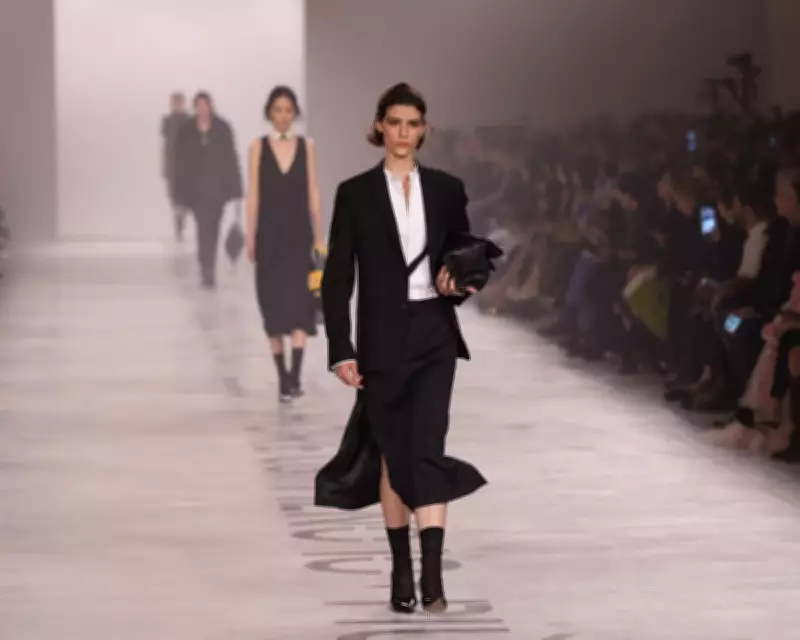
The Italian designer dressed models in oversized black blazers, jeans paired with trenchcoats, and cargo pants with trainers. She herself wore an oversized black blazer on show day, mirroring the first model's outfit. Several models carried two bags in commuter style: a cute handbag accompanied by a tote for overspill, emphasizing functionality alongside fashion.
Addressing Fendi's Fur Heritage
Fendi began as a fur house, a heritage that has become problematic in modern times. Chiuri addressed this by using only archival fur on the catwalk and introducing a new atelier where clients can bring vintage furs to be repurposed. "Fur is very durable," she noted. "To me, fur can be about the softness and sensuality of Fendi."
Echoes of Lagerfeld's Radical Spirit
The bracing, radical spirit that Karl Lagerfeld brought to Fendi in 1965 was evident in Chiuri's collection. Lagerfeld, hired as a freelancer by the Fendi women, streamlined and radicalized the brand, designing the now-iconic double F logo that stood for Fun Fur. Chiuri's show echoed this innovation, with evening gowns worn with Karl-coded starched white collars instead of twinkling necklaces.
Striped scarves printed with a "5 SISTERS" slogan declared allegiance, terraces-style, to the Fendi family, reinforcing the matriarchal theme.
Iconic Baguette Bag Takes Center Stage
As a young designer in Fendi's accessory studio in the 1990s, Chiuri is credited as a co-designer of the iconic Baguette bag, made world famous by Sex and the City. The Baguette was front and center in this show, with highlights including a red-and-ivory zebra striped, bugle-beaded take with a snake print strap. The bag is likely to benefit from fashion's version of the new manager bounce, drawing renewed attention.
Reflections on Gender and Success
Chiuri's strong sales figures at Dior, where revenues almost quadrupled over seven years, were a testament to her business acumen. However, she noted to American Vogue this week that her achievements were not celebrated in the same way a man's would have been. "When a male designer has a big number, he has a business sense. But if a woman designer does a big number, it is because she is commercial," she observed, highlighting ongoing gender biases in the industry.
Overall, Maria Grazia Chiuri's Fendi debut successfully blends tradition with innovation, honoring the brand's matriarchal roots while injecting a modern, feminist perspective that resonates with today's women.