Asia's Coal Revival: Iran War Disrupts LNG, Sparks Fossil Fuel Shift
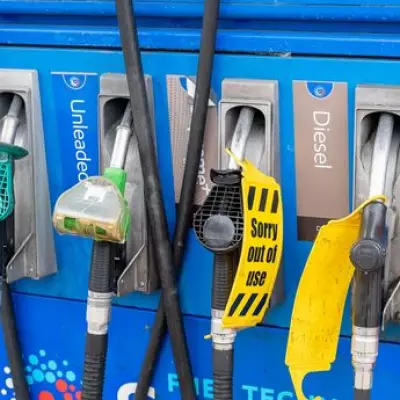
Asian countries are significantly increasing their reliance on coal to maintain power generation as the ongoing war in Iran severely disrupts global supplies of liquefied natural gas (LNG). This strategic pivot marks a stark reversal for a continent that had been gradually transitioning towards cleaner energy sources, exposing deep vulnerabilities in its imported fuel supply chains.
Geopolitical Stranglehold on Energy Imports
The continent's energy security is particularly precarious due to its heavy dependence on imported fossil fuels, much of which must transit through the critical maritime chokepoint of the Strait of Hormuz. This narrow waterway facilitates approximately one-fifth of the world's oil and natural gas trade. LNG, which is natural gas super-cooled into liquid form for easier storage and transportation, had been championed as a crucial bridge fuel in the global shift away from dirtier coal and oil. The United States had actively pursued expanding LNG exports across Asian markets, promoting it as a cleaner-burning alternative, though it still emits significant climate-warming gases, particularly methane.
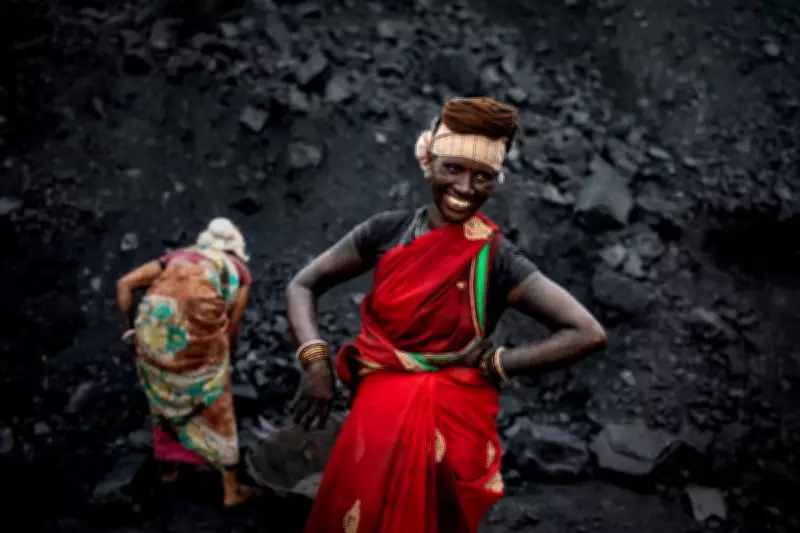
The conflict has forced nations to revert to coal to cover sudden LNG shortfalls. India is burning more coal to cope with heightened summer electricity demand. South Korea has temporarily lifted caps on coal-fired power generation. Indonesia, a major producer, is now prioritizing domestic coal consumption over exports. Meanwhile, Thailand, the Philippines, and Vietnam are all boosting their coal-fired power capacity to ensure grid stability.

Short-Term Fix with Long-Term Consequences
This resurgence in coal use carries severe risks, including worsening urban smog, delaying the transition to renewable energy, and substantially increasing the region's planet-warming emissions. Experts caution that coal is merely a short-term emergency measure, while renewables remain the only viable long-term solution for energy security and climate stability.
"This kind of crisis is a real sort of warning," said Julia Skorupska of the global coalition Powering Past Coal Alliance. "Continued reliance on coal exposes Asia to future shocks."
Coal's Integral Role in Asia's Emergency Plans
Coal has become fundamental to Asia's contingency energy strategies. Its widespread availability across the region makes it the default backup when renewable sources or gas supplies falter, according to Sandeep Pai, an energy expert at Duke University. China, the world's leading coal consumer and producer, has constructed record coal power capacity since 2021 to bolster its energy security, maintaining coal in its national policy despite its massive investments in clean energy.
India, the second-largest global coal consumer, is preparing for an intense summer and will depend more heavily on coal to meet a projected peak demand of 270 gigawatts—nearly double Spain's total electricity production capacity. The country currently maintains approximately three months' worth of coal stockpiles, with specific reserves allocated for small businesses.
While some Indian liquefied petroleum gas shipments have recently navigated the Strait of Hormuz, such imports are likely destined for industrial uses like fertilizer production rather than power generation, Pai noted.
Advocacy for Strategic Diversity and Inherent Risks
Coal advocates, such as Michelle Manook of FutureCoal, argue the energy shortfall would be far more severe without coal and that its future use should be strategic. "The lesson has to be diversity," she emphasized.
However, analysts like Pauline Heinrichs of King's College London highlight a vicious cycle, pointing to China's increased coal use to compensate for hydropower deficits caused by droughts—a move that exacerbates the very emissions driving climate change. "You learn to respond to shocks generated by certain insecurities by reproducing the insecurity," she observed.

Export Restrictions and Price Volatility
Adding to the strain for import-dependent nations, Indonesia, the planet's largest coal exporter, is now favoring domestic consumption over international sales. This policy shift could tighten regional supplies and drive global prices higher, explained Putra Adhiguna of the Energy Shift Institute.
Coal prices are determined on global markets, leaving importing countries exposed to significant price swings and supply disruptions. "More coal does not guarantee cheap or reliable power," warned Russell Marsh of the climate think tank E3G.
Vietnam is already experiencing this volatility. After increasing imports due to weather-related shortages, it now faces uncertainty over Indonesian supplies and is exploring alternatives like coal from the United States and Laos, according to data from energy market tracker Argus Media. The benchmark Newcastle coal price from Australia has surged 13% since the war's onset, impacting Southeast Asia—the world's third-largest coal-consuming region.
Undermining Long-Term Climate Commitments
This renewed dependence on coal threatens to slow and potentially derail long-term efforts to phase out coal-fired power. Indonesia was already struggling to meet targets for early retirement of coal plants, with financing delays predating the Iran conflict. Coal power in Indonesia was 48% more expensive in 2024 than in 2020 due to aging infrastructure and rising operational costs, reports the Institute for Energy Economics and Financial Analysis. Subsidies to the national utility ballooned 24% to $11 billion, consuming about 5% of the national budget.
While Jakarta had promoted LNG as a transitional fuel away from coal, the current coal resurgence "sends a signal" that switching to gas "is not as easy as it sounds," Adhiguna stated.
South Korea, which has pledged to retire most coal plants by 2040 and halve emissions by 2035, is permitting increased coal use during periods of low air pollution and LNG scarcity. However, the country required an annual addition of about 8 gigawatts of new wind power in 2023 to stay on track for its net-zero goals, according to Agora Energiewende. Progress has been sluggish, with renewables supplying just 10% of South Korea's electricity in 2024, far below the global average of 32%.
Over the past eleven years, South Korea has committed $127 billion to fossil fuels—thirteen times more than its spending on renewables—with 60% of export finance directed to LNG and $120.1 billion spent on fuel imports in 2024 alone, revealed Joojin Kim of Solutions for Our Climate. "The concern is not just the decision itself. It is the precedent it sets," Kim cautioned, noting that emergency measures could outlast the immediate crisis.
Public Health Crisis from Dirty Air
Burning coal releases fine particulate matter that penetrates deep into lungs and the bloodstream, elevating risks of heart disease, stroke, lung cancer, and chronic respiratory illnesses, according to the World Health Organization. This is a pervasive problem across Asia, especially when combined with seasonal agricultural burning.
All 1.4 billion Indians breathe air containing particulate concentrations deemed unsafe by the WHO, a report from the Energy Policy Institute of Chicago found. The Indian government has temporarily suspended air-quality regulations, allowing restaurants to burn coal to mitigate gas shortages.
Vietnam also battles severe air pollution, with PM2.5 levels consistently exceeding WHO limits. Despite promoting electric vehicles and setting targets to reduce coal dependence, the immediate reliance on coal raises grave health concerns. Lan Nguyen, a shopowner in Hanoi, expressed daily anxiety for her asthmatic son. "I worry for my son's lungs every day," she said, acknowledging coal's current necessity for electricity but fearing its health repercussions.