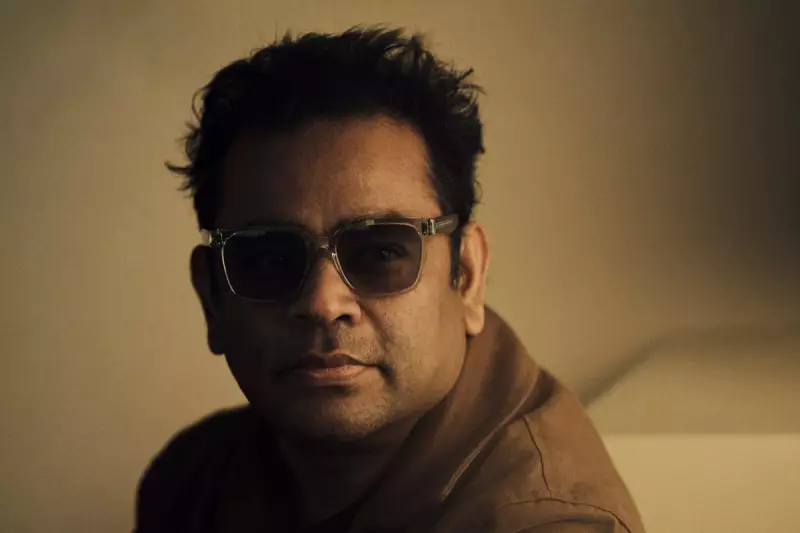
Oscar-winning Indian composer AR Rahman has issued a public apology following a fierce backlash to his comments suggesting a possible religious bias within the Hindi film industry, commonly known as Bollywood.
The Controversial Interview and Immediate Apology
In an interview with the BBC Asian Network, the celebrated musician, born AS Dileep Kumar into a Hindu family before converting to Islam in the early 1980s, reflected on changes in his career. He stated that while he had not faced overt discrimination earlier, the landscape had shifted over the past eight years.
"Maybe in the past eight years, because a power shift has happened and people who are not creative have the power now. It might be a communal thing also, but it is not in my face," Rahman told host Haroon Rashid. He elaborated that he sometimes hears "Chinese whispers" about being passed over for projects in favour of other composers.

The remarks, made on Monday 19 January 2026, ignited immediate controversy across social media, with critics accusing him of implying that religious identity impacts professional opportunities. In response, Rahman posted a video apology on his Instagram.
"Music has always been my way of connecting, celebrating and honouring a culture. India is my inspiration, my teacher and my home," he said. "I understand that intentions can sometimes be misunderstood, but my purpose has always been to uplift, honour, and serve through music." He added that he "never wished to cause pain" and hoped his sincerity would be understood.
Industry Figures React with Fury and Defence
The composer's comments prompted strong reactions from various high-profile figures in India. Actor and ruling Bharatiya Janata Party MP Kangana Ranaut accused Rahman of being "prejudiced and hateful". She claimed he refused to meet her during her 2025 directorial debut Emergency, stating he was told she was making a "propaganda film".
Novelist Shobhaa De told the ANI news agency the comment was "very dangerous", insisting Bollywood has always been free of communal tensions and that talent alone dictates success. Veteran lyricist Javed Akhtar also disagreed, suggesting Rahman's immense stature and presumed busy schedule with Western projects might deter producers from approaching him, rather than any communal element.
However, not everyone criticised Rahman. Lyricist and comedian Varun Grover wrote on X that "the greatest living composer of the last 3 decades" was attacked for stating a mild opinion based on his lived experience and was forced to apologise to "calm the toxic mob down". Former Jammu and Kashmir chief minister Mehbooba Mufti defended him, stating Bollywood mirrors India's social realities.
Broader Context of Rising Tensions
The controversy unfolds against a backdrop of reported rising religious tensions in India. A report by the India Hate Lab, a project of the Washington DC-based Center for the Study of Organized Hate, noted a sharp increase in hate speech incidents targeting religious minorities. Their data recorded 1,165 hate speech events in 2024, marking a 74.4% rise from the previous year. The report further indicated a surge in such speech during 2025 following a border conflict with Pakistan.
Rahman, who maintains he is "not in search for work" and believes he gets what he deserves, has found himself at the centre of a heated debate that extends far beyond the film industry, touching on sensitive issues of identity, power, and inclusion in contemporary India.