The Birth of a Legend: CBGB's Humble Beginnings
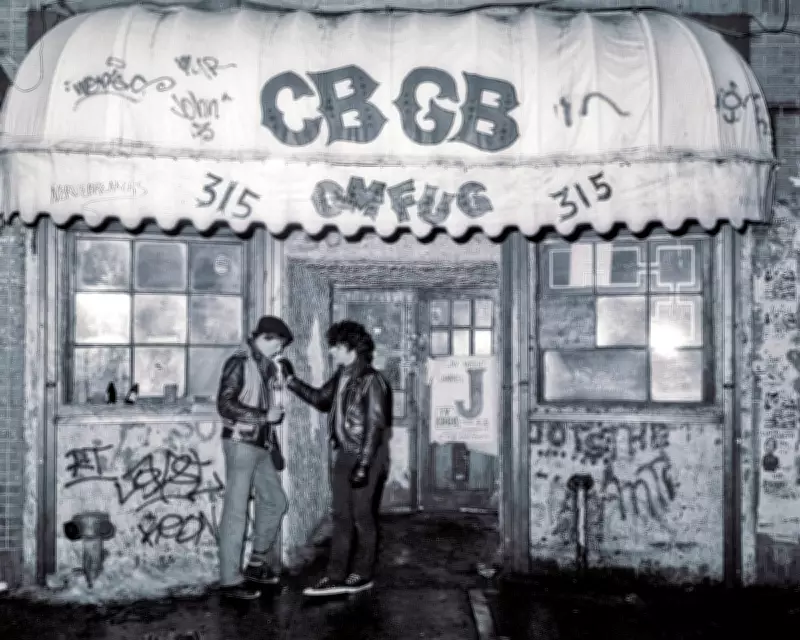
Half a century ago, a nondescript dive bar in New York's East Village began its transformation into the most influential rock venue of modern times. What started as whispers in obscure music magazines soon became a pilgrimage site for musicians, journalists, and cultural influencers drawn to 315 Bowery - the address that would become synonymous with musical revolution.
Hilly Kristal: The Unlikely Architect of Punk
The CBGB story is inextricably linked to Hillel "Hilly" Kristal, a former marine and folk singer who opened the venue in December 1973. Born to Russian Jewish immigrants in 1931, Kristal had previously managed the Village Vanguard jazz club before opening his own Greenwich Village bar. When noise complaints forced its closure, he moved to the Bowery, reasoning that no one would complain about loud music in what was then New York's "skid row."
Initially named Hilly's on the Bowery and envisioned as a roots music venue (with CBGB standing for Country, Bluegrass, Blues & Other Music For Uplifting Gourmandizers), Kristal's plans were disrupted when a motorcycle gang claimed the space as their base, scaring away the jazz crowd. This unexpected turn of events would prove fortuitous for rock history.

The Laboratory of Sound: CBGB's Creative Explosion
In early 1974, the fledgling band Television requested to play the venue. Despite being initially unimpressed by their stark, angular sound, Kristal gave them a Sunday night residency. This decision proved pivotal. For their third performance, Patti Smith and her guitarist Lenny Kaye were in the audience, witnessing what Kaye describes as "a changing-of-the-guard moment."
Soon, CBGB became what Kaye calls "a laboratory of sorts" where bands could develop their ideas and sounds. With Kristal's simple booking policy of "original music only," a scene began taking shape. The Ramones made their CBGB debut on August 16, 1974, with their signature ripped jeans, leather jackets, and fast, sharp songs already fully formed. Blondie followed months later, with Patti Smith performing in February 1975 and Talking Heads in June.
The Punk Sensibility Takes Hold
As more bands played CBGB, the venue became what Lenny Kaye describes as "a locus of art and energy." The first issue of Punk magazine in January 1976 championed CBGB's bands, with posters proclaiming "PUNK is coming!" and giving the burgeoning scene its name.
"What I like about the 'punk' that came out of CBGB is its sensibility," says Kaye. "It meant you were starting over, that you were presumptuous to be able to stand up there and say: 'I'm going to make something new and I'm not going to shy away from it.'"
Celebrity Patrons and Cultural Crossroads
CBGB's growing reputation attracted notable figures from across the cultural spectrum. Lou Reed, Iggy Pop, John Cale, David Bowie (complete with bodyguard), Brian Eno, and Malcolm McLaren became regular visitors. Seymour and Linda Stein, themselves frequent attendees, signed both the Ramones and Talking Heads to Sire Records based on their CBGB performances.
Malcolm McLaren would later model the Sex Pistols' aesthetic on CBGB mainstay Richard Hell, adopting the short, spiky hair, ripped T-shirts with slogans, and Blank Generation-style anthems that defined the New York punk look.
The Gritty Reality of CBGB
Despite its growing fame, CBGB remained resolutely unglamorous. Photographer Gary Green's book When Midnight Comes Around documents the venue from 1976 to 1986, capturing surfaces covered in graffiti and overflowing ashtrays. "New York was gritty, dirty and poor in those days," says Green. "And CBGB reflected that."
The club's toilets became legendary for their filthiness, with Kaye noting they "were never cleaned" and describing them as "gross, but great." Lisa Kristal Burgman, who worked at CBGB in 1976 and 1977, explains that while "the club was bleached every morning," it was "the clientele who made it messy."

International Recognition and Changing Times
By 1977, rising bands from around the world queued to play CBGB. The Damned became the first British band to perform there, introducing UK punk to American audiences. AC/DC made their New York debut at CBGB in 1977, stunning jaded New Yorkers with their fierce attack, while The Police received an enthusiastic response to their 1978 performances despite being unloved and unsuccessful at home.
Kristal maintained his gruff presence at the entrance, answering the phone with "CB's" and dispensing advice to generations of musicians. "Hilly was the Buddha of the Bowery," says Kaye. "He didn't change things and we loved him for it. He never went upmarket. And that's a characteristic of a great club owner: he let it happen."
The End of an Era
As New York City changed, gentrification swept through the Bowery, bringing bankers and boutiques while driving up rents. Kristal found himself in conflict with his landlord, who claimed he owed $90,000. Though Kristal won the court case, he agreed to vacate when his lease ended in 2006.
On October 15, 2006, Patti Smith and Lenny Kaye performed until the early hours in CBGB's final show. During their last number, Smith recited a long list of CBGB denizens who had died across the venue's 33-year existence. After they left the stage, Kristal locked the doors for the final time.
Legacy and Celebration
Kristal announced plans to open a new CBGB in Las Vegas but died of lung cancer on August 28, 2007, before realizing this vision. Today, CBGB lives on through the fashion line Kristal launched (which made him a millionaire), a Brooklyn punk-themed festival, and most importantly, through the music itself.
This legacy is now celebrated with CBGB & OMFUG: A New York City Soundtrack 1975-1986, a comprehensive four-CD box set that captures the venue's halcyon years. From Television and Blondie through to Sonic Youth and Beastie Boys - alongside lesser-known bands like Nihilistics, Marbles, and Peroxide - the collection serves as a remarkably thorough document of CBGB's enduring influence.
As compiler Rob Tannenbaum notes, having played CBGB twice himself, "the bathrooms were just as rank as they are reputed to have been... We didn't care - we knew we were standing on sacred ground." Fifty years after its opening, CBGB remains exactly that: sacred ground where rock music was forever changed by the grimy, glorious energy of New York's most legendary dive bar.