Literary Experts Defend Fennell's Wuthering Heights Adaptation
Emerald Fennell's bold new cinematic interpretation of Emily Brontë's classic novel Wuthering Heights has ignited passionate debate within literary circles, despite achieving remarkable commercial success. The film amassed over $34 million in North American box office revenue during its opening weekend, yet simultaneously faced intense scrutiny for its numerous creative departures from the original 1847 text.
Scholarly Perspectives on Cinematic Interpretation
Lucasta Miller, a distinguished British author and Brontë scholar who penned the preface to the Penguin Classics edition of Wuthering Heights, offered measured commentary on Fennell's adaptation. "It would be meaningless to criticise it for that, just as it would be to criticise a grand opera that plays fast and loose with the plot," Miller asserted. "I wasn't asking for a faithful adaptation of 'Wuthering Heights,' but whether it works on its own terms. And my sense is that it does."
Claire O'Callaghan, a senior lecturer in Brontë studies at Loughborough University, acknowledged the controversy surrounding casting decisions while finding merit in the performances. Regarding Margot Robbie's portrayal of Cathy, O'Callaghan noted: "I was sceptical initially, but having seen the film, it is a good performance, and Margot Robbie really brings out Cathy's spoiled and selfish nature in ways that other adaptations have paid less attention to."

Controversial Creative Choices
The adaptation has drawn particular criticism for several specific creative decisions:
- The casting of Jacob Elordi as Heathcliff, a character traditionally described with dark complexion
- Explicit depiction of sexual tension between Heathcliff and Cathy, which remains subtle in the novel
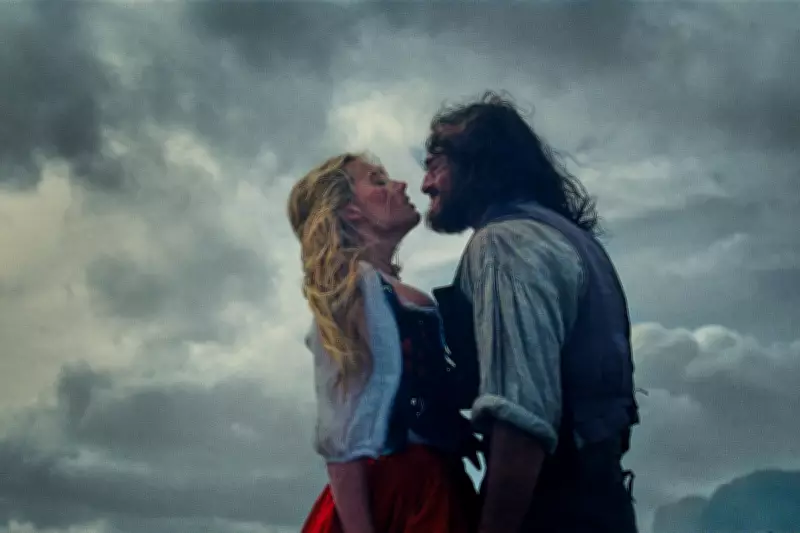
- Margot Robbie's blonde portrayal of Cathy, whose dark hair serves as significant literary symbolism
O'Callaghan observed that "all adaptations choices in terms of casting that don't always fit character or character descriptions — and this film has certainly been in the spotlight for that reason."
The Eternal Adaptation Debate
The tension between literary fidelity and cinematic interpretation represents a longstanding artistic dilemma. Countless adaptations have achieved critical acclaim through innovative artistic license, including:
- Francis Ford Coppola's The Godfather films, widely considered superior to Mario Puzo's original novel
- Billy Wilder's Double Indemnity, which introduced narrative devices author James M. Cain wished he had conceived
- Contemporary Oscar contenders like Paul Thomas Anderson's One Battle After Another and Chloé Zhao's Hamnet
Maggie O'Farrell, whose novel inspired Zhao's Hamnet, described the adaptation process poetically: "You know, the book is mine, it's my baby, but the film is Chloé's adaptation. And the film feels not like my child, more like a kind of niece or nephew. And that's exactly as it should be."
The Challenge of Adapting Wuthering Heights
For Wuthering Heights enthusiasts, expectations of fidelity often run deeper than for other literary adaptations. As O'Callaghan explains, "Some TV versions have attempted to capture the whole book, as have some films, like the 1992 adaptation starring Ralph Fiennes and Juliette Binoche. But what film and TV can't do is maintain the ambiguity in Emily's novel — the fact that her book is both a tragic love story and a revenge novel and a tragedy."
Most cinematic versions, including Fennell's and the 1939 classic featuring Laurence Olivier, effectively omit the novel's entire second half, which extends beyond the central Cathy-Heathcliff narrative across approximately 400 pages.
Director's Personal Connection
Fennell revealed that her adaptation stemmed from deep personal engagement with Brontë's work. "There are things I have added for my own needs, because I loved the book so much and I always desperately needed some kind of sense for it to go a little further," the director confessed.

Miller characterized the film as "a stylised and extravagant fairy tale," praising Fennell's "quite insightful" use of such language. O'Callaghan found it "quite Tim Burton-esque in its surreal perspective," concluding that "I still found it entertaining even if I'm unsure if I'd claim to like it."
The ongoing debate surrounding Fennell's Wuthering Heights adaptation highlights the complex relationship between literary source material and cinematic interpretation, demonstrating how artistic license continues to both challenge and enrich our understanding of classic texts.