Ghanaian Highlife Pioneer Ebo Taylor Dies at Age 90
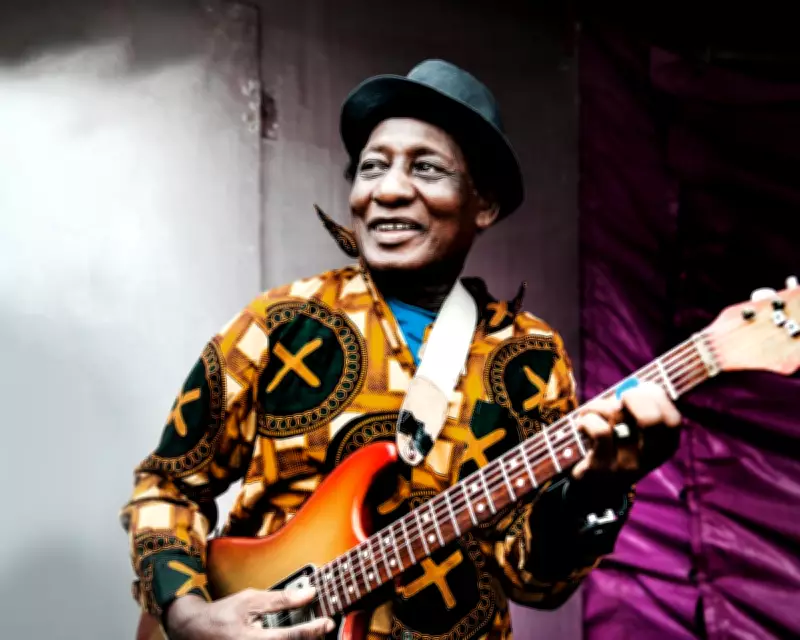
Ebo Taylor, the definitive Ghanaian musician who pioneered the highlife genre and has been called the greatest rhythm guitarist in history, has died at the age of 90. His passing was announced on Sunday by his son Kweku Taylor, who described his father as "a colossus of African music" whose light would never fade.
A Legacy That Transcended Borders
The death comes exactly one month after Taylor's 90th birthday and just one day following the launch of the Ebo Taylor music festival. A spokesperson for the Ghanaian president told the BBC that Taylor would be remembered as one of the nation's greatest musicians ever, a man who worked tirelessly to put Ghanaian music on the global map during an era when other musical genres dominated international attention.
Taylor's influence was frequently compared to that of his friend and contemporary Fela Kuti, with the Ghanaian musician doing for his country's music what Kuti accomplished for Nigerian sounds. In a recent interview with Passion of the Weiss, Taylor was hailed as "the greatest rhythm guitarist in history" for his complete originality in incorporating diverse rhythmic traditions from Ghana's Ga, Ewe, Dagomba, and Akan peoples into his compositions.

Musical Journey From Cape Coast to Global Recognition
Born Deroy Taylor on Ghana's Cape Coast on January 6, 1936, Taylor began playing piano at just six years old. His early musical tastes were shaped by American and English influences during Ghana's colonial period under British rule. As highlife music blossomed during his youth, Taylor switched to guitar while in college and joined several bands including the Stargazers, whose members Teddy Osei and Sol Amarfio would later form the influential Afro-rock band Osibisa.
Taylor became renowned for his rare ability to bridge highlife—typically played in major modes—with Afrobeat's minor mode traditions. His musical education took him to London's Eric Gilder School of Music in the early 1960s, where he studied Dvořák and cited the Czech composer's complexity as an influence. However, Taylor maintained that he learned more outside the classroom by sitting in with bands and attending jazz and highlife jam sessions, where he met acts including the Beatles and Rolling Stones.
Collaboration With Fela Kuti and Genre Innovation
During his time in London, Taylor developed a friendship with Nigerian musician Fela Kuti, who was studying at Trinity College. The pair bonded over their shared interest in highlife and often jammed together. Both musicians shared aspirations to become like jazz greats Miles Davis, Charlie Christian, or Kenny Burrell, creating what Taylor described as "the same mood." He remembered Kuti as a playful and lively person who encouraged him to write distinctly African music.
In 2014, Taylor explained to the BBC how both musicians became genre innovators: "With the advent of James Brown and funk music there was the opportunity to develop highlife music. Fela did a lot of work introducing the funk into the Yoruba music while comparatively I did almost the same thing in Ghana."
Career Highlights and Later Years
After forming the Black Star Highlife Band in London in 1964, Taylor returned to Ghana a year later and established several bands including the New Broadway Dance Band and the Blue Monks, both of which featured fellow Ghanaian musician Pat Thomas. In the early 1970s, Taylor worked as in-house guitarist, arranger, and producer at the Essiebons label, recording several of his own albums and working on records for artists including Thomas and Gyedu-Blay Ambolley.
The 1980s saw Taylor step back from fronting his own bands to focus on producing other artists' records, while in the 2000s he taught music at the University of Ghana. His international breakthrough came with the 2010 album Love and Death, which prompted renewed activity including the albums Appia Kwa Bridge (2012) and Yen Ara (2018), along with international touring.

Health Challenges and Final Projects
In 2018, Taylor suffered a stroke that impaired his ability to speak English. Despite this challenge, he collaborated on the 2025 album Ebo Taylor JID022 with Ali Shaheed Muhammad and Adrian Younge's Jazz Is Dead organization, with his son Henry facilitating communication between the musicians. By age 90, Taylor was no longer able to play guitar but continued to be celebrated in his coastal hometown of Saltpond, where he was affectionately known as Uncle Ebo.
Throughout his career, Taylor received multiple lifetime achievement awards from organizations representing Ghanaian and highlife music. Contemporary Ghanaian singer and rapper Black Sherif paid tribute, stating: "We lost a legend whose contribution to music has created worldwide ripples. I take solace in the fact that I witnessed greatness in Uncle Ebo Taylor's art form. Rest In Power!"
Taylor's music experienced renewed international interest in recent decades thanks to reissue records, compilations, and sampling by global artists including Usher, the Black Eyed Peas, Kelly Rowland, Jidenna, and Vic Mensa. His unique fusion of Dvořák and Davis influences with strong Ghanaian and Malian musical traditions created a legacy that will continue to inspire generations of musicians worldwide.