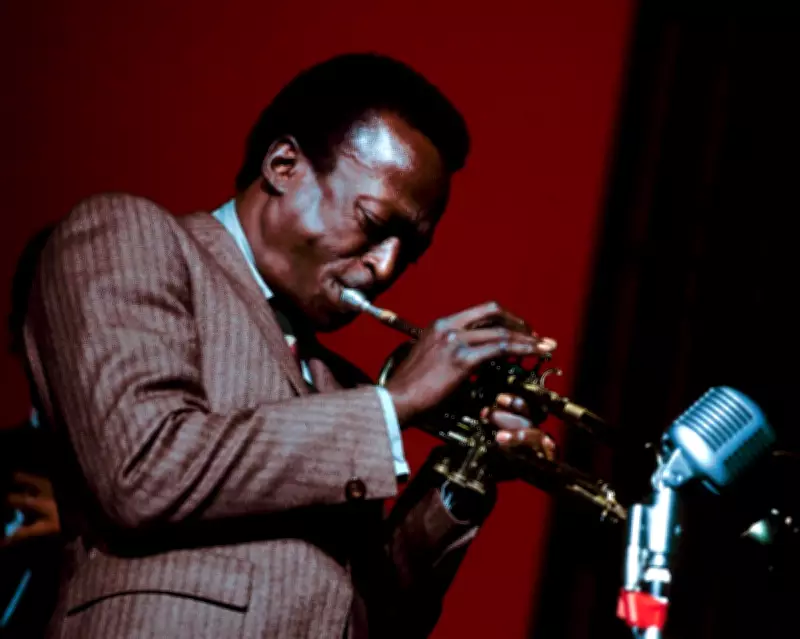
As the 2026 centenary of Miles Davis's birth approaches, the towering figure of jazz continues to cast a long shadow over the genre. The architect of the bestselling jazz album of all time, 1959's Kind of Blue, Davis's career spanned five decades and numerous stylistic revolutions, from bebop to cool jazz, modal explorations, electronic fusion, and beyond. His piercing trumpet tone, innate melodic sensibility, and uncompromising bandleading forged a legacy that remains profoundly influential today.
Collaborators and Contemporaries Pay Tribute
To mark this impending milestone, several of Davis's surviving collaborators and contemporary jazz stars have shared their personal reflections on his greatest recordings and enduring impact. Their insights paint a vivid portrait of a musician who was as much a visionary leader as a masterful performer.
Sonny Rollins: The Nickname and The Discipline
Now 95, saxophone legend Sonny Rollins played with Davis in the 1950s and recalls a deep, formative friendship. "He moved to uptown New York, where I was living, and he'd come by my house to talk about music and the state of jazz," Rollins remembers. A chance comment in a taxi, where Davis said Rollins resembled baseball star Don Newcombe, led to the lifelong nickname "Newk".

Rollins emphasises Davis's intense seriousness: "We knew that when you played with Miles you better not make any mistakes! He would hear every note each person played." He highlights the composition Four as a pivotal early work that set a new pace and swagger for jazz, establishing a template for future innovation.
Terence Blanchard: A Sound Beyond Technique
Trumpeter and composer Terence Blanchard describes Davis's approach as uniquely personal. "Miles didn't play the trumpet like a trumpet; he produced a personal sound," he observes, noting a focus on melody and phrasing over technical flash. Blanchard recalls being struck by the live album Four & More as a teenager, particularly Davis's choice to play softly amidst a tradition of high-volume virtuosity.
A backstage meeting in the 1980s left a lasting impression. "He had that signature raspy voice and just said: 'Terreeeeence, keep doing what you're doing, motherfucker,'" Blanchard recounts. He sees the best tribute to Davis as playing with one's own voice, embodying the fearlessness Davis always displayed.
John Scofield: The Fearless Bandleader
Guitarist John Scofield, who joined Davis's band in the early 1980s, speaks of the honour of learning from him. "He would record every gig we did and sometimes he would call you up the next day to talk about your playing," Scofield reveals, illustrating Davis's meticulous and engaged leadership. He emphasises Davis's mastery of rhythm and space, noting how his music never feels dated.
Melissa Aldana: Space and Spirituality
Saxophonist Melissa Aldana points to So What as a genius composition built on just two chords, creating vast improvisational possibilities. "He set the tone for modern jazz by creating such a sense of space and silence in his sound," she says. Aldana also notes the telepathic communication within his bands, particularly with Wayne Shorter, and the spiritual quality inherent in his instantly recognisable sound.
Jay Phelps: The Deliberate Evolution
Trumpeter Jay Phelps defends Davis's technical prowess, citing the 1951 live recording of Lady Bird as evidence of his early bebop excellence. "He's like Picasso being able to paint and draw proficiently before going down another path," Phelps analogises. He credits Davis with redefining the trumpet's melodic potential, using it as a "songbird" rather than merely an instrument for staccato brilliance.
Bill Evans: Trust and Instinct
Saxophonist Bill Evans, who played in Davis's 1980s groups, highlights the personal connection Davis fostered. "Miles had a way of writing a song or putting a band together that felt like he was playing to just one person," Evans notes. He recalls Davis's empowering advice: "'You, Wayne Shorter, Herbie Hancock – I don't worry about you guys. There will always be a place in music for you. Be yourself.'"

Ambrose Akinmusire: The Constant Reinventor
Trumpeter Ambrose Akinmusire views Davis less as a traditional composer and more as a producer or conductor, constantly reinventing his sound and aesthetic. "I love his later 80s period when he is wearing leather, embracing electronics, backbeats and hip-hop," he says. For Akinmusire, Davis's legacy is one of perpetual questioning and evolution, a commitment to change he sees reflected in Davis's former band members who continue to mentor younger musicians.
Yazz Ahmed: Ahead of His Time
Trumpeter and composer Yazz Ahmed praises the album Live-Evil for its ahead-of-its-time editing, blending live and studio tracks. She notes its hip-hop-like phrasing years before the genre's popular rise and its innovative use of effects like the wah-wah pedal. "Whenever I've taught jazz students, there's still a reverence for Miles and they're very aware of Kind of Blue," Ahmed observes, underscoring his enduring educational influence.
Brandon Woody: Intensity and Intention
Trumpeter Brandon Woody, at 27, represents the younger generation still drawing inspiration from Davis. He highlights the album Sorcerer and the profound cohesion of Davis's second great quintet. "The intensity is not in the volume of the sound, it's in the intention behind it," Woody remarks, a lesson he says many young musicians must learn. He admires how Davis's groups were always intergenerational, keeping the music relevant across eras.
A Legacy of Uncompromising Innovation
From his early days in New York to his leather-clad electronic explorations, Miles Davis remains a paragon of artistic evolution. As these reflections from across generations demonstrate, his influence extends far beyond technical mastery. It resides in his fearless leadership, his unique sonic signature, and his unwavering commitment to moving jazz forward. As the centenary of his birth approaches, his music continues to sound not like a relic of the past, but a living, breathing inspiration for the future.